
To test your heating system, set the thermostat to HEAT above the room temperature, check the filter, and confirm the furnace switch and breaker are on. Then clear the registers and return grilles, and watch and listen to the first ten minutes of the run. The whole check needs no tools and takes about fifteen minutes: five for the checks, ten for the watched run. Do it in October, before the first cold night, while a problem is still a scheduled fix and not a no-heat call.
- The Heating System Check, Step by Step
- What Is Normal on the First Run of the Season
- Two Extra Checks for Heat Pump Owners
- What the Homeowner Check Cannot See
- Frequently Asked Questions
That's the whole homeowner check. It runs in the order that rules out the simple causes first: a wrong thermostat setting looks exactly like a dead furnace (our guide to the best winter thermostat setting gives the right number), and the filter, the power and the registers can each keep the heat off on their own. At Sacramento Executive Airport the normal overnight low drops from 50.3°F in October to 42.7°F in November (NOAA 1991-2020 climate normals). November also averages 11 nights below 40°F against half a night in October, so run the check in October. What it can't see, the heat exchanger, gas pressure, combustion and venting, is the job of a heating tune-up. And if the test turns up a problem, why a furnace won't turn on matches each no-heat symptom to its likely cause.
Key Takeaways
- Set the thermostat to HEAT with the setpoint above the room temperature and the fan on AUTO. Trane notes that a fan left on ON blows cold air whenever the furnace isn't running.
- A burning-dust smell on the first run of the fall can be normal. Trane's advice is to wait it out because it "should dissipate relatively quickly." Plastic, electrical or gas smells are not that smell.
- The homeowner check stops at the furnace panel, because ENERGY STAR's maintenance checklist puts gas pressure, burner combustion and the heat exchanger on the contractor's list. Alpha Mechanical's flat $99 heating tune-up covers them.
When to stop troubleshooting and call. Stop if you smell gas: leave the house now, then call 911 and PG&E at 1-800-743-5000 from a safe distance, the order PG&E gives. Stop if a carbon monoxide alarm sounds: get everyone outside to fresh air, then call 911, as CPSC advises for suspected CO poisoning. Stop if the breaker trips again after one reset, or if the furnace lights and shuts off more than twice in a row; none of those is a thermostat or filter problem. Alpha Mechanical answers the phone around the clock, and weekday no-heat calls across the Sacramento area get a same-day slot whenever one is open. The flat $89 diagnostic is credited to the repair: book heating repair, call (916) 848-5980, or contact us online.
The Heating System Check, Step by Step
Do these in order, with the furnace panels closed; none of them needs a tool. ENERGY STAR's maintenance checklist gives the homeowner the filter and gives the contractor the electrical connections, the gas pressure and the burners, and this check keeps to that line.
1. Set the thermostat to HEAT, above room temperature
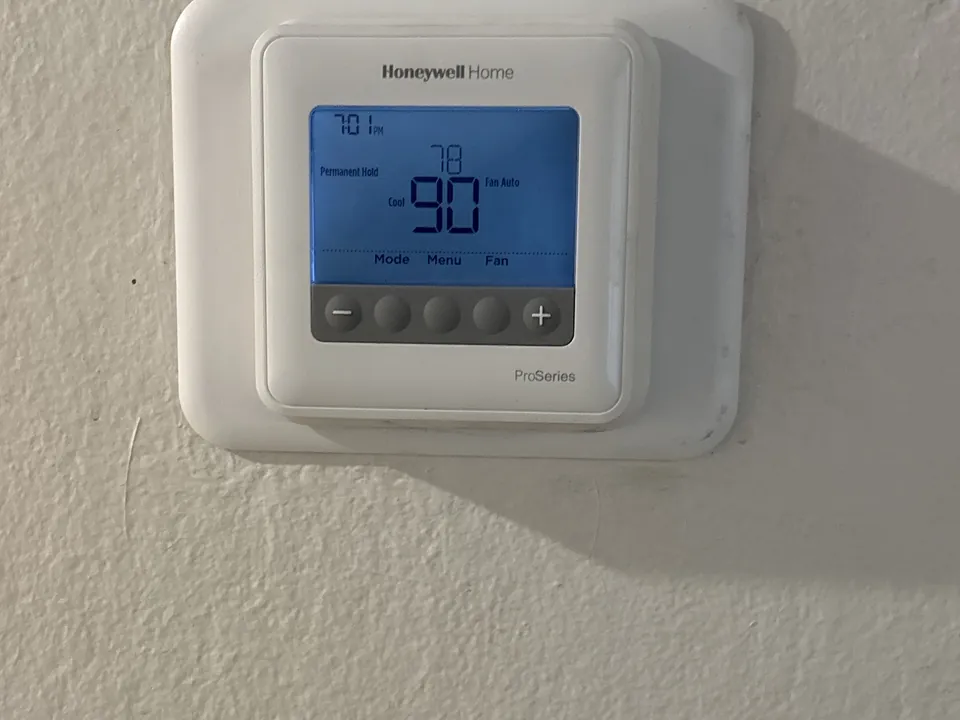
Switch the thermostat to HEAT and raise the setpoint a few degrees above what the room reads now; for example, if the room reads 64°F, set it to 68°F. That's Trane's first check for a furnace that won't start: the mode on Heat and the room colder than the setpoint. Then set the fan to AUTO, not ON, because on ON the blower keeps running between heating cycles and pushes unheated air out of the registers, which feels like a broken furnace when it isn't. If the display is blank or dim, replace the thermostat batteries before you go further, and if it stays dark, our blank thermostat guide traces the power loss.
2. Check the air filter
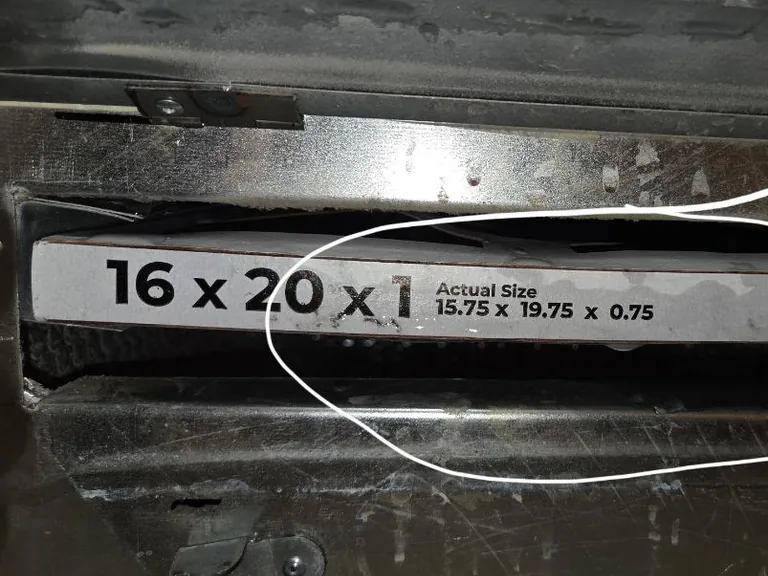
Pull the filter at the furnace or behind the return grille (where to find your HVAC filter). If it's gray and matted, or you can't remember when it went in, replace it. ENERGY STAR tells homeowners to inspect, clean or change filters once a month, and Trane's filter guide puts a lower-MERV filter at about 30 days and a thicker, higher-MERV filter at about 90. Copy the size from the old filter's frame before you shop.
For example, the filter in the photo below is labelled 16 x 20 x 1 but measures 15.75 x 19.75 x 0.75, and the label is the size you buy. Slide the new one in with the arrow on its frame pointing toward the furnace. If you're not sure which filter your system takes, our indoor air quality service fits the right-spec filter and can put you on a recurring change schedule. Starting the season on a clean filter is also Trane's advice for the first-run smell.
3. Confirm the furnace switch and the breaker are on
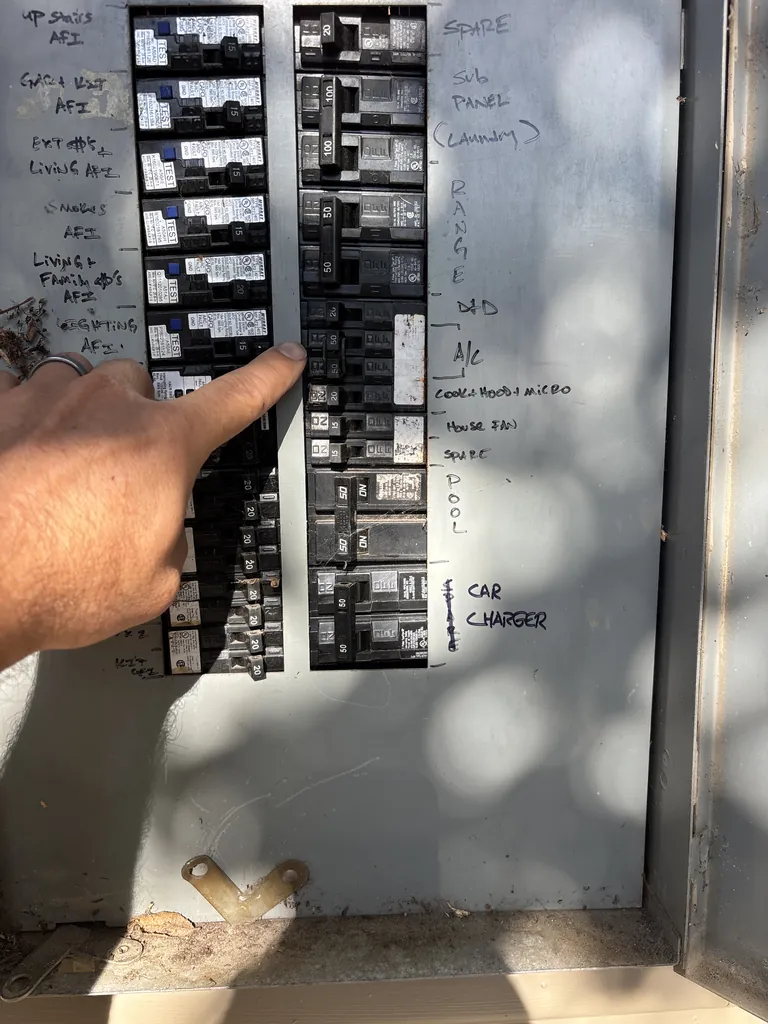
A gas furnace still runs on electricity to start and to drive its blower. The service switch is the furnace's own power switch, and it looks like a light switch. Find it on the side of the furnace, on a nearby wall or on a ceiling joist, and make sure it's on. Then check the furnace breaker in the panel, the next item on Trane's list. If the breaker has tripped, reset it once. If it trips again, stop there: Trane's furnace checklist calls a second trip an electrical issue, and Alpha Mechanical treats it as a repair call, not another reset.
4. Open the registers and clear the returns
Walk the house and open every supply register. Then find the return grilles and move anything pushed up against them. Return grilles are the larger grilles that pull air back to the furnace. A furnace needs air moving through the house to run, and Trane's furnace checklist says to make sure no couches, chairs or drapes are blocking heat registers or return air vents.
5. Watch and listen to the first ten-minute run
With everything set, let the furnace run for ten minutes and stay close enough to hear it. You should feel warm air at the registers nearest the furnace, and the furnace should keep running until the house reaches the setpoint. Trane puts a normal furnace cycle at 7 minutes or longer, so a furnace that stops much sooner is worth watching. Short cycling is when a furnace shuts off after a minute or two, before the house warms, and our short cycling guide covers the causes.
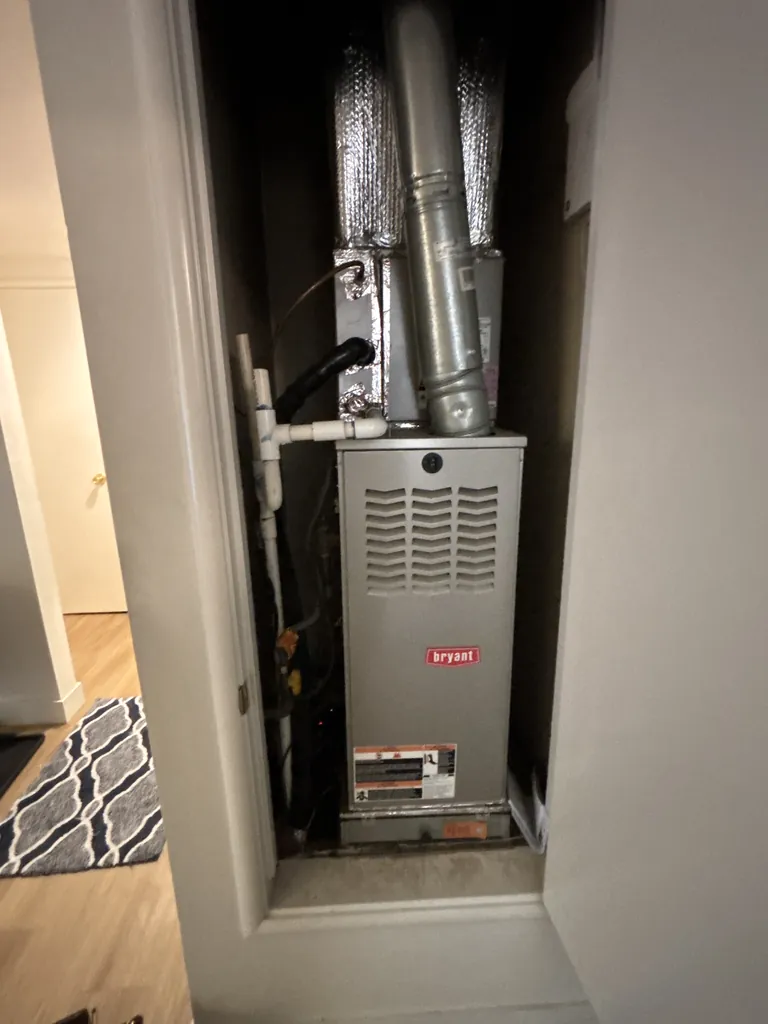
Four things on that first run need attention:
- Cold air from the registers. Check the fan is on AUTO, then work through why a furnace blows cold air.
- A new hum, rattle, grind or squeal as it starts up. Our inducer motor guide covers the start-up noises and what each one points to.
- It lights, runs briefly, shuts off and tries again. If that happens more than twice in a row, stop and call; it is not something to keep resetting.
- Nothing happens at all. No blower, no click and no flame after ten minutes means the furnace never started its ignition sequence, and our guide to why a furnace won't turn on works through the causes.
While you're there, test the carbon monoxide alarms and replace weak batteries. CPSC also calls for battery-operated alarms, or alarms with battery backup, on every level of the home and outside sleeping areas.
What Is Normal on the First Run of the Season
A burning-dust smell on the first run of the fall is the one smell that can be normal. Dust collects on the furnace and in the ductwork, and it burns off when the furnace first heats up in the fall. Trane's guidance is to wait it out, because the smell "should dissipate relatively quickly." If it lingers past that first run or comes back strong on later cycles, treat it as a different smell.
These are not the normal first-run smell:
- Burning plastic or a hot electrical smell. Trane points to the casing on the furnace's electrical wires and says to turn the furnace off and call for repair, so use the service switch if it's safe to reach.
- Any smell with visible smoke. Turn the furnace off at the switch and call, since Trane's advice for persistent odors or smoke is to call right away.
- Rotten eggs or sulfur. That's natural gas, so leave the house first. PG&E says not to use light switches, phones or anything else that could spark until you're a safe distance away, then call 911 and PG&E.
Our furnace burning smell guide walks each smell to its likely cause and what to do first.
Two Extra Checks for Heat Pump Owners
A heat pump gets the same thermostat, filter, breaker and register checks, plus two of its own. Walk out to the outdoor unit, clear leaves and debris off the top and trim back plants growing close to it. Trane lists restricted airflow at the outdoor unit as a cause of a heat pump that won't heat well. And don't be alarmed by cool air on a cold morning. In defrost mode a heat pump blows cool air for a while, and Trane's advice is to wait for it to finish. Our guide to a heat pump blowing cold air shows how to tell defrost from a fault.
What the Homeowner Check Cannot See
Everything above is what you can see and hear from the room. The parts that decide whether a furnace is safe sit behind the panel: ENERGY STAR's maintenance checklist puts gas connections, gas pressure, burner combustion and the heat exchanger on the contractor's side, along with tightening electrical connections. That's why no step here opens the furnace. For the cleaning you can do yourself, our homeowner-safe furnace cleaning steps stop at the burner panel.
Alpha Mechanical is a licensed HVAC contractor (CSL# 967727), and you can read more about us before you book. Our heating tune-up is a flat $99 and covers those checks, including a carbon monoxide test and a heat exchanger inspection. The HVAC tune-up checklist lists every item on the visit, and service members get the fall furnace tune-up as part of the membership. A crack in the heat exchanger is the one fault no homeowner check can rule out, so learn the cracked heat exchanger warning signs. For the longer case for a yearly visit, read why regular furnace maintenance matters.
Frequently Asked Questions
How much does it cost to have a heating system checked?
The homeowner check in this guide costs nothing and takes about fifteen minutes: five for the checks and ten to watch the first run. A professional heating tune-up from Alpha Mechanical is a flat $99 across Sacramento and Fair Oaks, or $89 with the heating tune-up coupon through November 30, 2026 (one per household). It covers what a homeowner cannot check: gas pressure, combustion and venting, a carbon monoxide test and the heat exchanger. Service members get the fall furnace tune-up as part of the plan.
How often should a heating system be checked?
Run the homeowner check once a year, in October: the normal overnight low at Sacramento Executive Airport falls from 50.3°F in October to 42.7°F in November (NOAA 1991-2020 normals). Look at the filter every month through the heating season, as ENERGY STAR recommends. Book one professional heating tune-up a year as well. With the spring AC visit, that is one visit per system and two seasonal visits a year.
What do I need to perform a heating system check at home?
No tools. You need to reach the thermostat, the furnace filter, the furnace service switch, the breaker panel and every register and return grille. Have a replacement filter in the right size and fresh batteries for the thermostat and the carbon monoxide alarms. Leave the furnace panels closed: gas pressure, combustion and the heat exchanger are technician checks.