
- Why Does a Clean Furnace Matter?
- How Often Should You Clean Each Furnace Component?
- Safety First: Carbon Monoxide Risks
- What Tools and Materials Do You Need?
- How Do You Clean a Gas Furnace? 8 Steps
- What Is the Draft Inducer Fan and Does It Need Cleaning?
- Do Air Handlers and Heat Pumps Need Different Cleaning?
- Should You Clean Your Furnace Yourself or Hire a Pro?
- How Much Does Furnace Cleaning Cost?
- What Do Sacramento Valley Homeowners Need to Know?
- FAQ
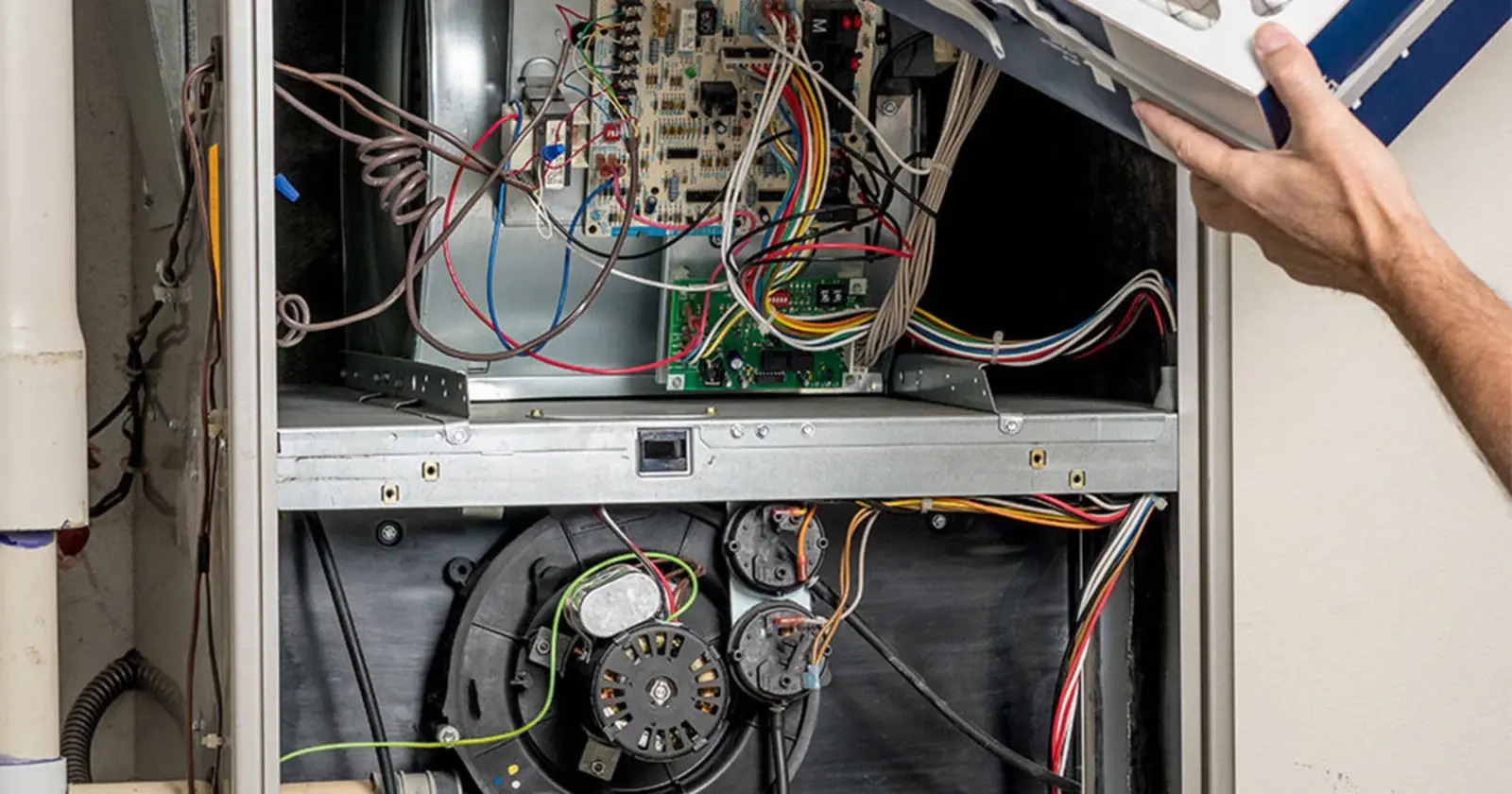
A clean furnace heats more evenly, uses less gas, and lasts years longer. The core DIY tasks—vacuuming the blower, polishing the flame sensor, and swapping the filter—take about 90 minutes once a year and prevent the most common no-heat service calls.
Key Takeaways:
- Shut off power and gas completely before opening the cabinet.
- Replace the air filter every 1–3 months; Sacramento Valley dust and wildfire smoke load filters faster than the national average.
- Clean the blower, flame sensor, and burners annually—these three account for most heating failures.
- Leave the heat exchanger, ignitor, and flue venting to a licensed technician.
- Professional cleaning costs $70–$300 in Sacramento; well worth it on systems 10+ years old.
Why Does a Clean Furnace Matter?
Keeping your heating system in top shape is crucial for any Sacramento homeowner. The U.S. Department of Energy estimates that a clogged filter alone can raise energy consumption by up to 15%—and when Valley dust and pollen build up on the blower and burners, the system works even harder for the same heat output.
The lifespan difference is significant. A well-maintained gas furnace lasts 15–20 years; a neglected unit often fails at 10–12. Annual cleaning is the most cost-effective thing a homeowner can do to protect that investment.
If your unit starts blowing cold air, a thorough clean often resolves it without a service call. Local technicians check the heat exchanger, blower motor, burners, draft inducer, and error codes at a full tune-up. Never attempt to clean the ignitor yourself—the hot-surface element is fragile and breaks on contact.
How Often Should You Clean Each Furnace Component?
Different parts of your furnace foul at different rates. Follow this schedule:
| Component | DIY Frequency | Professional Frequency |
|---|---|---|
| Air filter (1-inch panel) | Every 1–3 months | — |
| Air filter (4–5 inch media) | Every 6–12 months | — |
| Blower wheel | Inspect annually; clean if dusty | Annual deep clean |
| Flame sensor | Annual inspection + polish | Replace every 2–3 years |
| Burners | Annual light vacuum | Annual professional clean |
| Combustion chamber | Annual vacuum | Annual inspection |
| Heat exchanger | Visual only—look for cracks | Annual professional inspection |
| Draft inducer fan | Annual inspection | Annual cleaning |
| Flue vent pipe | Annual visual | Annual professional inspection |
Sacramento note: Inspect your 1-inch filter monthly from October through March. Valley agricultural dust and wildfire smoke load filters here far faster than in cleaner-air markets.
Safety First: Carbon Monoxide Risks
Carbon monoxide (CO) is colorless, odorless, and produced any time a gas appliance burns incompletely. A cracked heat exchanger, clogged flue, or dirty burners can push CO into your living space instead of out the flue. The EPA estimates indoor pollutant levels are 2–5× higher than outdoor concentrations—and CO is the most dangerous of them.
Symptoms of CO exposure: Headache, dizziness, nausea, and confusion. If multiple household members feel suddenly unwell near the furnace, get out and call 911.
Before you start any furnace cleaning:
- Install a CO detector within 10 feet of any sleeping area and within 15 feet of your furnace.
- Never run the furnace if you smell gas—leave the house and call your gas company from outside.
- Shut off both the electrical breaker AND the gas valve before opening the cabinet.
- If you see a cracked heat exchanger or excessive soot, stop and call a licensed tech. A cracked heat exchanger is not a DIY repair.
What Tools and Materials Do You Need?
Gather these before you start so you’re not hunting for supplies mid-job.
Tools
- Various screwdrivers (Phillips and flathead)
- Ratchet and socket set
- Shop vacuum with upholstery brush and crevice tool
- Small stiff-bristle brush
- Flashlight or headlamp
Materials
- Fresh air filter (correct size—check the old filter’s label)
- Emery cloth (for polishing the flame sensor rod)
- Light machine oil (only for older motors with oil ports—see Step 6)
I am considering an alternate heat source — what are my options?
How Do You Clean a Gas Furnace? 8 Steps
These steps cover a standard residential gas furnace. If you have a heat pump with an air handler, see Air Handler Cleaning below—the process differs significantly.
Step 1: Turn Off Power and Cut Off Fuel Supply
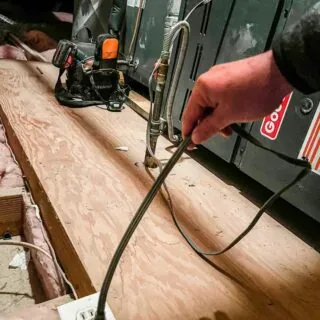
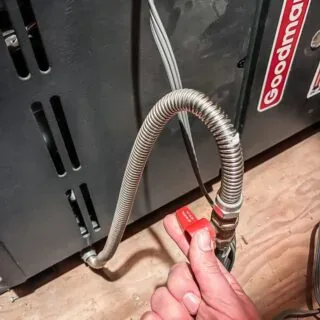
Flip the breaker that feeds the furnace and close the gas valve a quarter (¼) turn so it’s perpendicular to the pipe—fully shut. Wait a full minute before opening the cabinet. Safety always comes first when working inside a gas appliance.
Step 2: Clean the Furnace Exterior and Combustion Chamber
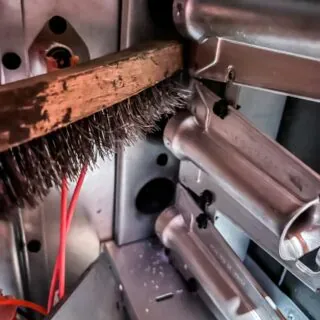
Remove the access doors and burner cover. Use your shop vacuum with the crevice tool to reach every corner of the combustion chamber. Work carefully around the burner tubes—a light pass with the brush removes loose dust without dislodging connections.
Watch for soot deposits. A thin grey coating is normal. Heavy black soot, especially near heat exchanger seams, is a red flag that warrants professional inspection before you run the furnace again.
Step 3: Remove and Clean the Blower Assembly
Unscrew the control panel if needed to reach the blower compartment, then slide the blower assembly out along its track. Take a photo first—it’s easy to forget the wire routing.
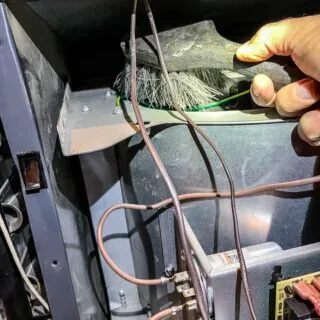
Vacuum the blower wheel blades one by one with the brush attachment. Don’t bend the blades—an unbalanced blower causes vibration and premature bearing wear. If blade deposits are heavy, a soft brush dipped in mild soapy water works well; let the assembly dry completely before reinstalling.
Step 4: Clean the Flame Sensor
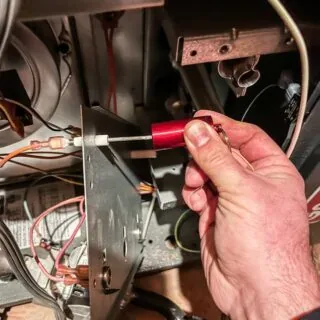
The flame sensor is a thin metal rod with a porcelain base mounted near the burner. It tells the control board that ignition was successful—if it’s coated with oxidation, the furnace will light and then immediately shut off, causing a frustrating no-heat cycle.
Slide out the sensor rod (one screw), lightly rub the metal portion with emery cloth until it shines, then reinstall. Don’t touch the porcelain insulator with the emery cloth. This 5-minute task prevents more “furnace won’t stay on” service calls than almost anything else.
Step 5: Clean the Burners
Remove the burner assembly cover and slide the burner tubes out. Use the shop vacuum to clear dust from each tube, paying attention to the small ports along the tube where gas exits. A clogged port causes uneven or yellow flames.
If your burners show light rust or scale, a soft brass brush clears it without damaging the metal. Avoid stiff-wire brushes—they can enlarge the ports and affect the gas-to-air ratio.
Step 6: Lubricate the Fan Motor (Older Units Only)
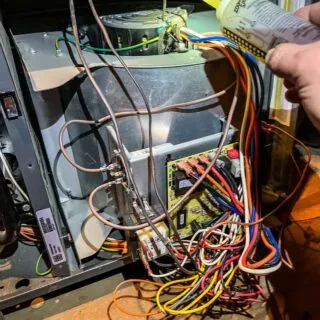
Older furnaces (15–20 years) with oil ports on the motor bearings benefit from 2–3 drops of light machine oil. Look for small rubber caps on the motor housing—those are the oil ports.
Newer brushless motors are permanently sealed. Adding oil to a self-lubricating motor attracts dust and causes problems. If you don’t see oil ports, skip this step.
Step 7: Replace the Air Filter
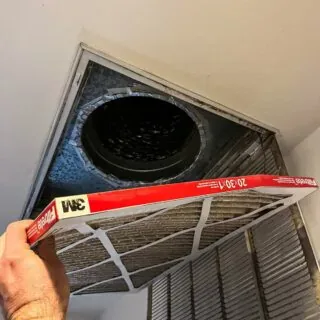
Slide the old filter out and note the airflow direction arrow on the frame—the new filter goes in the same orientation. Swap it every 1–3 months; monthly in winter if you have pets, allergies, or live where wildfire smoke is common (Sacramento qualifies on all counts).
Upgrading to a MERV 11–13 filter improves air quality in the Central Valley. Check your HVAC manual for the highest MERV rating your system supports—most residential furnaces handle up to MERV 13.
Step 8: Reinstall Everything and Test
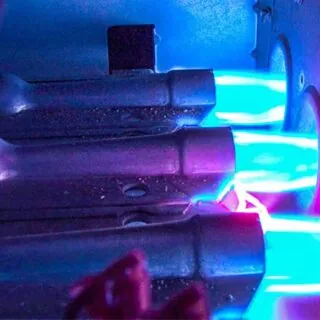
Slide the blower back into its track, reconnect wires, reinstall access panels, and restore gas and power. Raise the thermostat 5 degrees above room temperature and watch the startup sequence. For a full post-cleaning system check, see our heating system test guide.
Look for steady blue flames in all burner tubes. Yellow or orange flames mean the gas-to-air mixture needs adjustment—let the burners run 30–60 seconds first (residual dust can cause a brief yellow flash that clears). Persistent yellow flames need a professional.
Listen for the blower to ramp up smoothly within 1–2 minutes. Any new rattles or vibration after cleaning usually mean a blower blade is bent or a panel screw is loose.
What Is the Draft Inducer Fan and Does It Need Cleaning?
The draft inducer is a small motor and fan mounted at the top of the heat exchanger. Its job is to pull combustion gases out of the heat exchanger and push them into the flue before ignition starts—it’s part of your CO safety system.
Over time, soot and debris accumulate on the fan blades and around the shaft. A dirty draft inducer triggers the pressure switch and prevents the furnace from starting (a common cause of the error code “pressure switch stuck open”). In the worst case, poor draft means combustion gases linger longer than they should inside the heat exchanger.
DIY check: With the furnace off and power cut, locate the draft inducer housing near the flue connection at the top of the unit. Remove the cover if accessible. Look for soot on the fan blades and vacuum lightly with a brush attachment.
When to call a pro: Loud squealing or grinding on startup (bearing wear), or a pressure switch error code when the inducer is visibly dirty. Replacing a draft inducer motor runs $150–$300 in parts and labor—but catching a failing bearing early avoids an emergency call on a cold night.
Do Air Handlers and Heat Pumps Need Different Cleaning?
A note on California law: California Title 24 prohibits new electric furnace installations in the state. If your Sacramento home has electric heating, you almost certainly have an air handler—the indoor unit of a heat pump or split system—not an electric furnace. Air handlers may include electric heat strips for auxiliary or emergency heat, but that’s very different from a standalone electric furnace.
Air handlers are cleaned differently from gas furnaces:
| Task | Gas Furnace | Air Handler (Heat Pump) |
|---|---|---|
| Shut off gas supply | Yes — required | Not applicable |
| CO / combustion risk | Yes | No |
| Burner cleaning | Yes | No |
| Heat exchanger inspection | Yes | No |
| Flame sensor polishing | Yes | No |
| Draft inducer check | Yes | No |
| Evaporator coil inspection | No | Yes — call a pro for deep clean |
| Heat strip inspection | No | If equipped — visual for scorching |
| Blower cleaning | Yes | Yes |
| Filter replacement | Yes | Yes |
What you can do yourself: Replace the filter and vacuum the blower wheel using the same steps above. The evaporator coil (the A-shaped coil above the blower) should be inspected annually—light dust on the fins is normal, but a clogged coil needs professional coil cleaner and shouldn’t be sprayed with water by a homeowner.
Heat strips: If your air handler has electric heat strips (used as backup when the heat pump can’t keep up on cold nights), a visual inspection for scorching or broken elements is all that’s needed on your end. Any strip replacement is a professional job—live voltage is present even when the thermostat is off.
Should You Clean Your Furnace Yourself or Hire a Pro?
Basic cleaning is DIY-friendly if you’re comfortable shutting off the gas and following the steps above. Anything involving the heat exchanger, ignitor, or flue should go to a licensed tech.
| Task | DIY? | Notes |
|---|---|---|
| Replace air filter | ✅ Yes | Most important task; do it every 1–3 months |
| Vacuum blower wheel | ✅ Yes | Annual; don’t bend blades |
| Polish flame sensor | ✅ Yes | Annual; emery cloth on metal rod only |
| Vacuum combustion chamber | ✅ Yes | Light pass; stop if heavy soot |
| Light burner cleaning | ✅ Yes | Vacuum + soft brass brush only |
| Inspect draft inducer | ✅ Inspect | Visual + light vacuum only |
| Deep burner descaling | ⚠️ Better with pro | Chemical descaling, port reaming |
| Heat exchanger inspection | ⚠️ Visual only | Cracks require immediate pro attention |
| Ignitor cleaning / replacement | ❌ Pro only | Extremely fragile—one touch breaks it |
| Flue vent inspection / cleaning | ❌ Pro only | CO risk; requires combustion analysis |
| Gas pressure adjustment | ❌ Pro only | Licensed tech only; legal requirement |
Want to learn why your furnace won’t turn on?
How Much Does Furnace Cleaning Cost?
Professional furnace cleaning in Sacramento typically runs $70–$300, depending on what’s included:
| Service Level | Cost Range | What’s Included |
|---|---|---|
| Basic tune-up | $70–$130 | Filter change, visual inspection, startup test |
| Standard cleaning | $130–$300 | All basic + blower, burners, flame sensor, heat exchanger visual |
| Extended service | $300–$500 | All standard + duct cleaning or component replacement |
| Homewyse market estimate (Sacramento, Jan 2026) | $182–$464 | Labor + heat exchanger tubes + vent cleaning |
Is it worth it? Yes—especially on systems 10+ years old. A $150 annual cleaning that catches a $30 flame sensor before it causes a $500 emergency call on Christmas Eve pays for itself several times over. Alpha Mechanical offers service membership plans that include annual visits at a discounted rate with priority scheduling.
If your system is 15+ years old, SMUD offers up to $3,000 in rebates for Sacramento customers who convert from a gas furnace to an electric heat pump system (2026 program). That can significantly change the math on replacement.
What Do Sacramento Valley Homeowners Need to Know?
Sacramento sits in the Central Valley—one of the top 10 U.S. cities for air pollution, driven by agricultural dust, industrial particulates, and wildfire smoke from fires across Northern California. That environment hits your HVAC system harder than the national average.
What this means for your maintenance schedule:
- Inspect your 1-inch filter monthly from October through March. The national 90-day default was written for cleaner-air markets.
- Consider a MERV 11–13 filter if anyone in your home has allergies or asthma—the Valley’s particulate load makes the upgrade worthwhile on most modern furnaces.
- Schedule your annual professional cleaning in September—before heating season, while HVAC companies still have availability. Once the first cold snap hits, wait times stretch.
- Sacramento’s mild winters (average December–January lows around 38°F) mean your furnace runs fewer total hours than systems in colder climates. Annual cleaning is typically sufficient here; twice-yearly service is standard in Minnesota, not Fair Oaks.
SMUD and PG&E rebates in 2026: If you’re weighing whether to keep your aging gas furnace or upgrade, check current programs before deciding. SMUD currently offers up to $3,000 for gas-to-heat-pump conversions and up to $1,000 for electric-to-electric heat pump upgrades. PG&E offers separate rebates for qualifying systems. Alpha Mechanical can walk you through what your system and utility provider qualify for.
Consider Alpha Mechanical Your Trusted Partner
For dependable furnace support, Sacramento homeowners trust Alpha Mechanical. Serving from Lincoln to Elk Grove since 2011, we offer fair pricing, financing, and honest assessments on repairs, installs, and indoor air quality.
Our experienced team handles heating and cooling repairs, full system installations, furnace replacement services, indoor air quality improvements, and much more—with flexible financing options and coupons and rebates to help bring costs down.
According to the ENERGY STAR Maintenance Checklist, regular professional tune-ups and monthly filter checks can help your furnace run more efficiently and safely. Keep in mind—regular maintenance is essential; without it, warranties can end up voided. If you’ve got an existing system, you can still join our service membership plans for routine check-ups and priority support. We’re here to keep your home comfortable all year long.
Real-Life Example
A family in Fair Oaks reached out last fall because some rooms stayed chilly while others got too warm, and they were noticing more dust around the house. Our technician did a complete furnace inspection and cleaning—removing built-up dust from the blower, polishing the flame sensor, clearing the draft inducer housing, and swapping the filter.
Right after, the heat spread evenly through every room, the air felt cleaner with less dust settling on furniture, and the furnace ran much quieter. No big repairs or replacement needed—just routine care that made a clear difference all winter long.
Looking to extend the life of your HVAC unit?
Frequently Asked Questions
How do I know if my furnace needs cleaning?
Watch for uneven heating, strange noises, higher gas bills, dusty or musty air from vents, or a yellow flame instead of steady blue. If it has been over a year since the last service, clean it now—don’t wait for symptoms.
How often should a furnace be cleaned?
Schedule a full professional tune-up once a year, ideally in September before heating season. Change the air filter every 1–3 months, or monthly if you have pets, allergies, or live in the Sacramento Valley where wildfire smoke and agricultural dust load filters faster.
Can I clean my furnace myself?
Yes, for the basic tasks: vacuum the blower, polish the flame sensor with emery cloth, clean the combustion chamber, and replace the filter. These are safe with the power and gas shut off. Leave the ignitor, heat exchanger, flue venting, and gas pressure to a licensed technician.
How much does professional furnace cleaning cost?
Professional furnace cleaning runs $70–$300 in Sacramento for standard service. Extended cleaning with duct work or component replacement runs $300–$500. Homewyse’s January 2026 market estimate for the Sacramento area is $182–$464.
What happens if I never clean my furnace?
Dust buildup forces the system to work harder, raising energy bills by up to 15% (U.S. Department of Energy). Dirty blowers cause overheating and short cycling. Oxidized flame sensors cause repeated no-heat calls. A neglected furnace typically fails at 10–12 years instead of the expected 15–20.
Can a dirty furnace cause carbon monoxide poisoning?
Indirectly, yes. A dirty combustion chamber, clogged flue, or blocked draft inducer impairs complete combustion and exhaust flow, which can raise CO concentrations inside the home. A cracked heat exchanger—often caused by years of overheating from a clogged filter—is the most dangerous CO risk in a residential furnace. Install a CO detector and schedule annual professional inspections.
How do I clean a furnace flame sensor?
Shut off power and gas first. Locate the flame sensor rod near the burner assembly (held by one screw). Remove it and rub the metal rod portion gently with emery cloth until it shines. Do not sand the porcelain insulator. Reinstall snugly. This 5-minute task prevents most furnace ignition failures.
Should I clean my furnace before or after heating season?
Before—ideally in September or early October when HVAC companies still have available appointments. Cleaning before you need heat means you find problems while the weather is still comfortable, not during a cold snap.
How long does furnace cleaning take?
A DIY cleaning covering the blower, flame sensor, filter, and combustion chamber takes 90–120 minutes the first time and about 45 minutes once you’re familiar with your unit. A professional tune-up typically runs 1–2 hours depending on system age and condition.
Is it safe to clean a furnace myself?
Yes, the DIY tasks in this guide are safe when you follow the shutdown procedure: cut power at the breaker and close the gas valve before opening the cabinet. The unsafe tasks—ignitor handling, heat exchanger inspection beyond a visual, and flue venting—should always go to a licensed technician.