
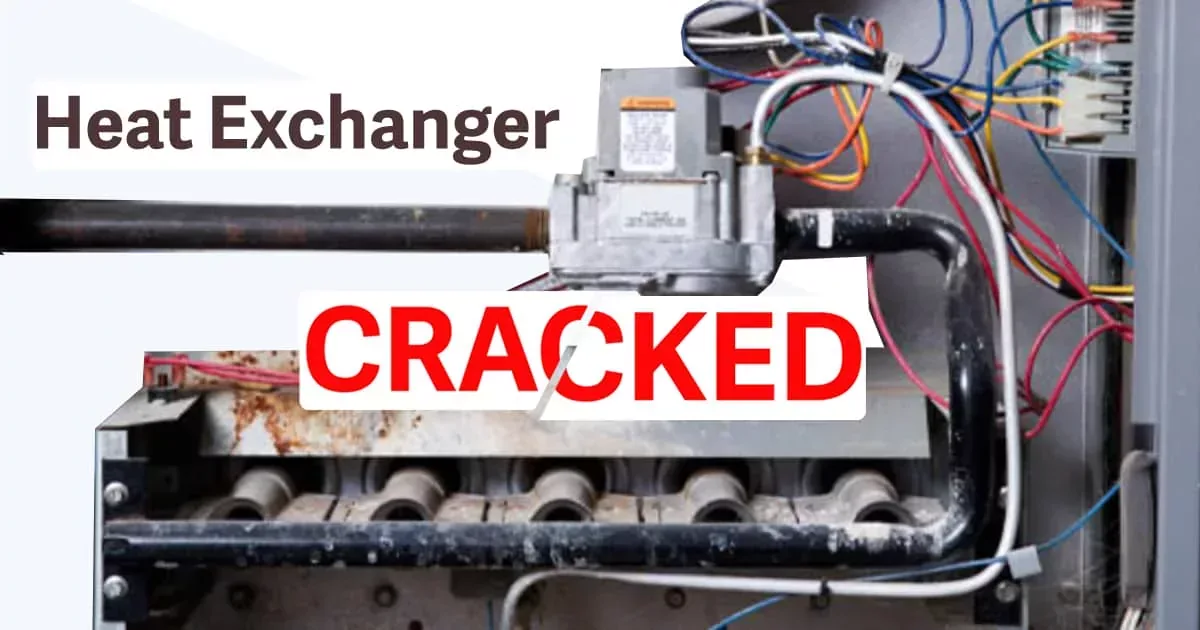
A cracked heat exchanger is a breach in the furnace's metal barrier between combustion gases and household air. Five symptoms are flame color changes, soot, chemical odors, unusual noises, and visible cracks or corrosion. There is no homeowner fix; a technician must confirm the crack.
If you are still narrowing down the fault, the symptom table in why a furnace won't turn on sorts each no-heat symptom to its likely cause. This page explains the heat exchanger warning signs and the flame test Alpha Mechanical uses when inspecting residential furnaces in Fair Oaks, Sacramento, and nearby suburbs.
- What Is a Heat Exchanger in a Gas Furnace?
- Common Causes of Heat Exchanger Cracks
- 5 Cracked Heat Exchanger Symptoms and What They Mean
- How to Tell if a Heat Exchanger Is Cracked Without Opening Anything
- How to Prevent Your Heat Exchanger from Cracking
- Is a Cracked Heat Exchanger Really Dangerous?
- How Much Does It Cost to Repair or Replace a Cracked Heat Exchanger?
- Alpha Mechanical Inspection and Furnace Care
- Cracked Heat Exchanger by Brand
- Frequently Asked Questions
When to stop troubleshooting and call. This is the one furnace fault with no homeowner step. If a carbon monoxide alarm sounds, get everyone outside and call 911. If you see a wavering yellow flame, soot streaks or smell exhaust while the furnace runs, shut it off at the switch and leave it off. A suspected crack is confirmed by a technician's inspection, not by eye. Alpha Mechanical runs same-day weekday no-heat calls across the Sacramento metro (next business day in peak weeks), and the flat $89 diagnostic is credited to the repair: book heating repair or call (916) 848-5980.
What Is a Heat Exchanger in a Gas Furnace?
A furnace heat exchanger transfers heat from burning gas to the air circulating through the home while keeping those two streams separate. A crack breaks that separation. Alpha Mechanical treats a suspected breach as a reason to stop using the furnace and arrange a professional inspection.
The burners heat the metal exchanger, and the blower moves household air across its outside surface. Combustion gases follow the exhaust path. High-efficiency furnaces often add a secondary heat exchanger to recover more heat from the exhaust, as Carrier's heat exchanger resource describes.
Common Causes of Heat Exchanger Cracks
Heat exchangers crack when repeated heating and cooling, overheating, corrosion, or installation stress damages the metal. Carrier's heat exchanger resource identifies overheating from restricted airflow and normal metal fatigue as causes of cracks. Missed maintenance leaves developing problems uncorrected. Alpha Mechanical recommends addressing airflow and maintenance problems before a visible warning sign becomes a reason to stop using the furnace.
- Metal fatigue: The exchanger expands as it heats and contracts as it cools. Repeated cycles stress the metal over time.
- Restricted airflow: Dirty filters and blocked vents reduce airflow across the exchanger and can let it run too hot.
- Installation stress: Poor setup can place uneven stress on the exchanger.
- Corrosion: Condensation or chemicals can weaken the metal.
- Missed maintenance: Developing airflow, combustion, or corrosion problems can remain unnoticed between inspections.
5 Cracked Heat Exchanger Symptoms and What They Mean
The five cracked heat exchanger symptoms are changing flame color, soot buildup, chemical odors, unusual furnace noises, and visible cracks or corrosion. Each warrants attention, but none identifies the failed component by itself. Alpha Mechanical recommends leaving a suspect furnace off until a technician checks the exchanger and the surrounding combustion system.
Symptom #1: Furnace Flame Color Changes
A steady blue flame is the normal comparison. Yellow, orange, or wavering flames indicate a combustion problem that needs inspection. Do not keep cycling a suspect furnace or remove panels to investigate it.
Flame problems also occur outside the exchanger; furnace gas valve troubleshooting explains that part of the ignition chain.
If an older furnace's pilot keeps going out, the pilot light troubleshooting guide covers that separate symptom and the limits of safe relighting.
Symptom #2: Soot Buildup
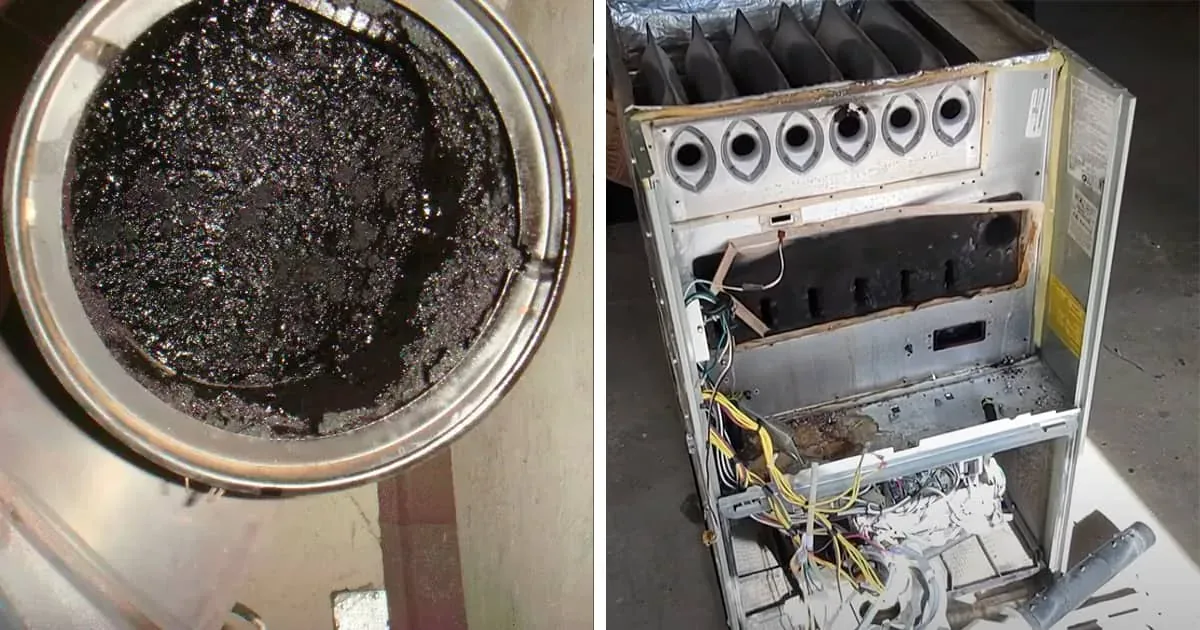
Black soot around the furnace or burners signals that fuel is not burning cleanly. Leave the furnace off and arrange an inspection. Soot identifies a combustion concern; it does not prove a crack exists.
Draft problems also need evaluation; furnace pressure switch troubleshooting explains how venting faults can interrupt the heating cycle.
Symptom #3: Strong Odor in the House
Carbon monoxide itself has no smell; the CPSC calls it the invisible killer because it is colorless and odorless. A chemical or metallic smell while the furnace runs is a separate combustion signal that Alpha Mechanical treats as a reason to shut the furnace off and inspect.
If an exhaust-like or chemical odor appears during furnace operation, stop troubleshooting and leave the house for fresh air. Call for help from outside. An absence of odor does not establish that the furnace is safe.
Symptom #4: Loud Sounds from the Furnace
Banging, popping, or rattling during a heating cycle can accompany thermal stress. Timing helps separate the possible causes. Tell the technician whether the noise begins before ignition, when the burners light, or when air starts coming through the registers. A sound alone does not confirm a cracked exchanger.
For grinding or rattling that begins with the motor, bad furnace inducer motor signs explains how motor noise differs from exchanger symptoms.
Symptom #5: Visible Cracks or Corrosion
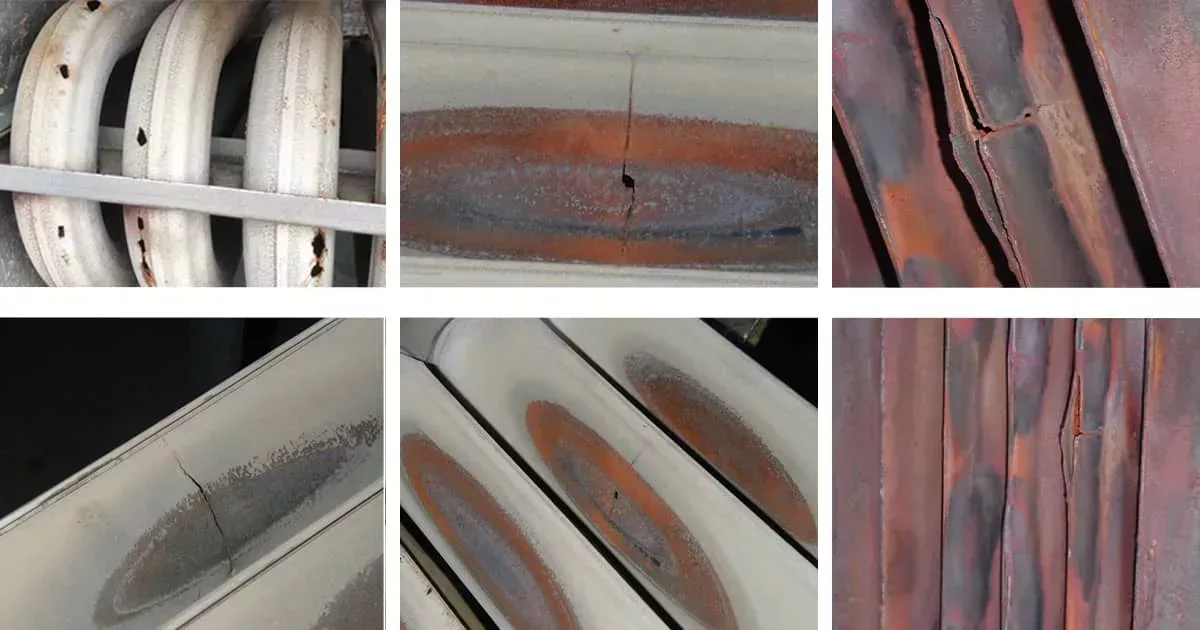
Rust and corrosion on visible furnace parts warrant closer inspection, but an exterior cabinet mark is not proof of an internal exchanger crack. A technician uses inspection tools to check the exchanger itself.
If the furnace simply does not start and none of these warning signs is present, follow the furnace won't turn on diagnostic chain to understand the other possible causes.
If the furnace runs but blows cool air from the registers, the furnace blowing cold air guide covers that separate symptom.
How to Tell if a Heat Exchanger Is Cracked Without Opening Anything
There is a check that does not require a camera, a scope, or taking the furnace apart, and it is the one our technicians run before anything else. It is a technician's check, not a homeowner test, but you can stand beside the technician and watch it happen. Until then, leave a suspect furnace off.
The technician runs the furnace in heating for about fifteen minutes first. This matters. Metal expands as it heats, and a crack that is invisible on a cold heat exchanger opens up once the metal is at temperature. Testing a cold furnace is how a real crack gets missed.
Then the technician watches the burner flames at the moment the blower fan starts. That is the whole test. The blower pressurises the air side of the heat exchanger. If there is a crack, that pressure reaches the combustion side and the flame reacts to it.
On a cracked heat exchanger the flame moves. It leans and bends. It can change colour, and it can pull forward. The size of the movement tracks the size of the crack: the bigger the breach, the bigger the sway.
On a sound heat exchanger the flame does not move when the blower starts. It stays where it is. That is the comparison the whole test rests on, and it is why the fifteen minutes and the timing matter more than any single observation.
If the flame moves, the furnace is shut off and stays off. A crack big enough to disturb the flame is big enough to put combustion products into the air your blower is circulating through the house. The next step is a repair or replacement decision, not more testing.
If a carbon monoxide alarm is sounding or you smell gas, nobody runs this test. Leave the house and call PG&E at 1-800-743-5000 or 911 from a safe distance.
We do own a camera and we use it to confirm and document what the flame test indicates. But the flame tells us first, and it tells us on your furnace, in front of you.
How to Prevent Your Heat Exchanger from Cracking
Regular maintenance reduces avoidable stress on a heat exchanger by addressing dirty filters, blocked airflow, and developing combustion problems. It cannot guarantee that metal will never crack. Alpha Mechanical recommends annual professional furnace care and keeping filters and vents clear between visits, with prompt inspection when a warning sign appears.
Replace dirty filters and keep supply and return openings unobstructed. These are routine care steps for an otherwise operating system, not remedies for a suspected breach. Leave a furnace with soot, abnormal flames, or exhaust odors off until it has been evaluated.
Why regular furnace maintenance matters explains the prevention work that supports airflow, combustion, and exchanger inspection.
Before the heating season, how to check your heating system separates routine readiness checks from faults that need professional attention.
For the visit itself, review what an HVAC tune-up includes and Alpha Mechanical's furnace cleaning and maintenance service.
Is a Cracked Heat Exchanger Really Dangerous?
Yes, a cracked heat exchanger compromises the barrier between combustion gases and household air, so Alpha Mechanical recommends leaving a suspected furnace off while a technician evaluates it; carbon monoxide is poisonous and odorless, according to the CPSC Carbon Monoxide Information Center.
CPSC estimates 274 unintentional, non-fire carbon monoxide deaths associated with consumer products in 2022, including 76 associated with heating systems (28% of the total), with installed natural-gas furnaces accounting for 11 of the 15 natural-gas heating deaths. Across 2020 to 2022, 59% of those consumer-product CO deaths occurred in November through February; these figures cover product-associated deaths, not a count of deaths attributed specifically to cracked exchangers (CPSC report). NFPA recommends CO alarms outside each sleeping area and on every level of the home, with interconnected alarms offering the best protection. CPSC recommends an annual professional inspection of fuel-burning heating products, including furnaces, boilers, fireplaces, wood stoves, water heaters, chimneys, flues, and vents.
How Much Does It Cost to Repair or Replace a Cracked Heat Exchanger?
A confirmed crack calls for replacing the exchanger or the furnace, not patching the metal. Exchanger replacement is labor-intensive and can cost as much as a new furnace. Alpha Mechanical recommends checking the diagnosis, furnace age, and warranty coverage before comparing the two options for the same home.
Check the warranty before pricing anything: Trane publishes a 20-year heat exchanger term on furnaces (Trane warranties explained) and Goodman a lifetime heat exchanger limited warranty on registered furnaces (Goodman gas furnace warranty); other brands differ, so read the certificate for your model. Confirm the terms for the specific model, including component and labor coverage.
Older systems may make furnace replacement the more practical option.
Existing SMUD HVAC rebates can offset new high-efficiency system costs.
Alpha Mechanical Inspection and Furnace Care
A second opinion checks whether the evidence supports the proposed exchanger or furnace replacement on the equipment in your home. Alpha Mechanical uses the flame observation and inspection findings to explain that recommendation. Ask what was tested, what changed during the test, and how the findings identify your furnace.
The guide to HVAC scare myths and second opinions explains why a cracked-exchanger diagnosis needs evidence before it becomes a replacement decision.
What a Second Opinion Usually Looks Like
The call we get most often on this subject is not from someone who suspects a crack. It is from someone who has already been told they have one and has been quoted a new furnace.
Customers have shown us the photos they were given, willingly and unprompted, and in more than one case those photos were not of their furnace. We do not know how that happens and we are not going to guess. What we can say is what we do about it: we run the test below on the equipment in front of us, and if the flame does not move, the heat exchanger is doing its job.
That is where the money is saved. Not by catching a crack early, but by not replacing a furnace that did not need replacing.
Arranging Furnace Care
Alpha Mechanical serves Fair Oaks, Sacramento, and nearby suburbs; check the service area when arranging a visit. For a suspected crack, book heating repair and describe the warning signs without restarting the furnace. If replacement is confirmed, heat pump replacement is another option to discuss for the home, and the heat pump vs gas furnace guide compares the two for a Sacramento house.
Cracked Heat Exchanger by Brand
Brand-specific warranty terms help frame the decision after a technician confirms the fault. Alpha Mechanical services Trane and American Standard, Goodman and Amana, Carrier, Bryant and Payne furnaces in Sacramento and Fair Oaks. The guides below separate manufacturer coverage from labor, explain what diagnostic evidence to request, and identify the paperwork needed before comparing exchanger replacement with a new furnace.
Frequently Asked Questions
A cracked heat exchanger is confirmed by inspection and requires replacement of the exchanger or furnace; airflow and annual service reduce avoidable stress that can cause cracks. The answers below cover the five symptoms, the danger, replacement, and inspection frequency. Alpha Mechanical recommends a professional diagnosis whenever a cracked exchanger is suspected. The same rule applies across the questions: symptoms justify an inspection, a confirmed breach needs replacement, and an alarm requires an immediate emergency response.
What are the top cracked heat exchanger symptoms to watch for?
The five warning signs are flame color changes, soot buildup, a chemical odor, banging or rattling, and visible cracks or corrosion. These signs call for inspection; they do not confirm a crack by themselves. Leave a suspect furnace off and have a technician identify the cause.
Is a cracked heat exchanger dangerous?
Yes. A crack breaches the barrier between combustion gases and circulating household air. Carbon monoxide is poisonous and has no color or smell, as the CPSC Carbon Monoxide Information Center explains. If a CO alarm sounds, get everyone outside and call 911. Leave the furnace off until a professional evaluates it.
Can a cracked heat exchanger be repaired, or does it have to be replaced?
A confirmed crack calls for replacement of the heat exchanger or the furnace. There is no homeowner patch or adjustment. Check the furnace model, age, heat exchanger warranty, and labor coverage before comparing the two replacement options. Alpha Mechanical recommends confirming the diagnosis before making that decision.
How often should a furnace be inspected to catch heat exchanger problems?
Schedule a professional inspection every year, preferably before heating season. The CPSC recommends annual professional inspection of fuel-burning heating products and their chimneys, flues, and vents. A furnace inspection checks the exchanger and the airflow and combustion conditions around it; visible symptoms warrant a visit sooner.
Can regular maintenance prevent a cracked heat exchanger?
Regular maintenance addresses restricted airflow and overheating that can stress the heat exchanger. Filter changes, clear vents, and professional inspections also help identify developing damage. Maintenance cannot guarantee that aging metal will never crack, and a tune-up does not repair an existing breach. A suspected crack still requires diagnosis.