

Regular furnace maintenance matters because a yearly professional check finds the gas, combustion and airflow faults that make a furnace unsafe, wasteful or likely to quit on a cold night. The CDC, the CPSC and the NFPA all advise having a heating system serviced or inspected every year. In Sacramento, book it in October: about three-quarters of a normal year's heating demand falls between November and February.
- Why Regular Furnace Maintenance Is Important
- Safety: The Fault You Cannot Smell
- Efficiency: Airflow and the Filter
- Reliability: Problems Found in October, Not January
- When to Book It in Sacramento
- What You Can Do Between Visits
- When Not to Wait for the Tune-Up
- The Bottom Line
- Frequently Asked Questions
This page makes the case for the yearly visit. It is not the visit itself. The HVAC tune-up checklist lists what a technician actually does, and the Sacramento furnace troubleshooting guide is the place to start when something is already wrong. The short version of the case: the faults that matter most on a gas furnace sit behind the panel, where a homeowner cannot see or smell them. And the months when a failure hurts most are the months when contractors are busiest.
Key Takeaways
- Carbon monoxide is odorless and colorless, and the CDC advises having a heating system serviced by a qualified technician every year (CDC).
- The NFPA calls heating equipment one of the leading causes of home fire deaths, with 46% of heating equipment fires in December through February (NFPA).
- ENERGY STAR says airflow problems can cut a system's efficiency by up to 15 percent, and a dirty filter can raise energy costs and lead to early failure (ENERGY STAR).
- In Sacramento, November through February carry about 74% of a normal year's heating degree days (NOAA 1991-2020 normals), so an October visit lands before the furnace starts working hard.
- Between visits, check the filter monthly, keep registers and returns clear, and keep CO alarms working. A rotten-egg smell or a CO alarm means leave first, call second.
Why Regular Furnace Maintenance Is Important
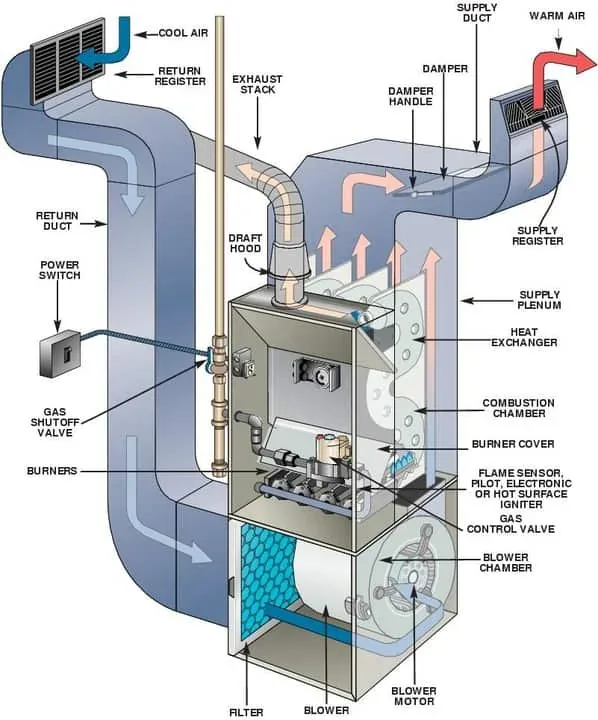
A gas furnace burns fuel a few feet from the air your family breathes. Most of the time it does that safely, but the parts that keep it safe wear quietly. Burners collect dirt, and the heat exchanger heats and cools on every cycle. The controls that shut the furnace down when something is wrong are only proven when they are tested. A yearly visit is the one time each of those parts gets looked at on purpose.
That is why the safety agencies agree on the interval. The CPSC says to "have a professional inspect all fuel-burning heating products, including furnaces" each year (CPSC). The NFPA says heating systems "should be inspected and cleaned each year before they are fired up for the season" (NFPA). ENERGY STAR recommends an annual pre-season check-up by a contractor, with the heating system checked in the fall (ENERGY STAR).
The reasons fall into three groups: safety, efficiency and reliability.
Safety: The Fault You Cannot Smell
Carbon monoxide is "an odorless, colorless gas that can cause sudden illness and death if inhaled," in the CDC's words. The CDC's prevention advice includes having your heating system "serviced by a qualified technician every year" (CDC). You cannot check for it by sniffing the register.
ENERGY STAR's contractor checklist explains where the risk comes from. The heating part of the visit covers the gas connections, gas pressure, burner combustion and the heat exchanger. The checklist adds that "a dirty burner or cracked heat exchanger causes improper burner operation," which makes the equipment run "less safely and efficiently" (ENERGY STAR).
The heat exchanger is the metal chamber that keeps the burner's exhaust separate from the air the blower sends through your house. A cracked heat exchanger is the classic example of a hidden fault: no homeowner check can rule it out, and the yearly inspection is where it gets found.
Fire is the other half. The NFPA lists heating equipment as one of the leading causes of home fire deaths and reports that 46% of heating equipment fires happen in December, January and February (NFPA). The inspection belongs before that stretch, not in the middle of it.
Efficiency: Airflow and the Filter
A furnace that cannot move air wastes the heat it makes. ENERGY STAR puts a number on it: "airflow problems can reduce your system's efficiency by up to 15 percent," and "a dirty filter can increase energy costs and damage your equipment, leading to early failure" (ENERGY STAR).
A yearly visit checks the airflow side of the system the homeowner cannot reach: the blower, the electrical connections, and the current the motors draw. ENERGY STAR's list includes tightening electrical connections and measuring voltage and current on motors for the same reason: a motor working harder than it should costs money every hour it runs.
Reliability: Problems Found in October, Not January
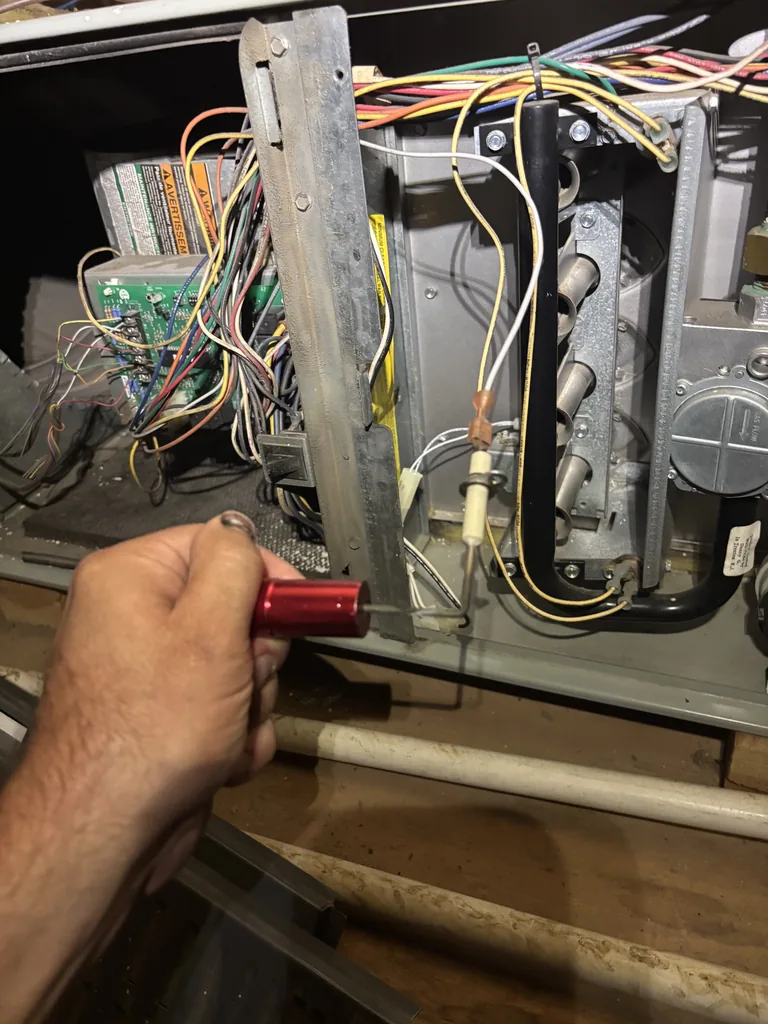
ENERGY STAR's checklist also asks the contractor to "check the starting cycle of the equipment to assure the system starts, operates, and shuts off properly" (ENERGY STAR). That one line is the reliability argument. For example, a weak igniter, a dirty flame sensor or a slow inducer motor can still let the furnace start in October. Found then, it is a scheduled fix. Found in January, it is a no-heat call, when the furnace runs far more hours and every heating contractor in town is busy.
ENERGY STAR makes the scheduling point directly: "Contractors get busy once summer and winter come, so it's best to check the cooling system in the spring and the heating system in the fall" (ENERGY STAR).
A flame sensor is the thin metal rod that proves the burners actually lit. If it cannot prove the flame, the control shuts the gas off, so a dirty sensor shows up as burners that light and then quit within seconds.
When to Book It in Sacramento
October. Sacramento's heating season is short and back-loaded, and the climate normals show it. At Sacramento Executive Airport, the NOAA 1991-2020 normals put the average October low at 50.3°F and the average December low at 38.5°F.
Heating degree days are the standard measure of how hard a heating system has to work: the number of degrees each day's average temperature falls below 65°F, added up over the month (National Weather Service). At Sacramento Executive Airport they run about 79 in a normal October, 335 in November and 550 in December, out of about 2,436 for the year (NOAA NCEI). November through February together carry about 74% of the annual total.
| Month | Low | HDD |
|---|---|---|
| October | 50.3°F | 79 |
| November | 42.7°F | 335 |
| December | 38.5°F | 550 |
| January | 39.2°F | 539 |
| February | 41.5°F | 381 |
| March | 44.5°F | 299 |
Low is the average daily low and HDD the heating degree days at Sacramento Executive Airport, from the same NOAA 1991-2020 monthly normals. The median date of the first fall low of 36°F or colder is November 18 (NOAA NCEI).
What You Can Do Between Visits
Homeowner maintenance does not replace the yearly visit, and it does not involve opening the burner compartment. These are the parts that are yours.
Change Filters
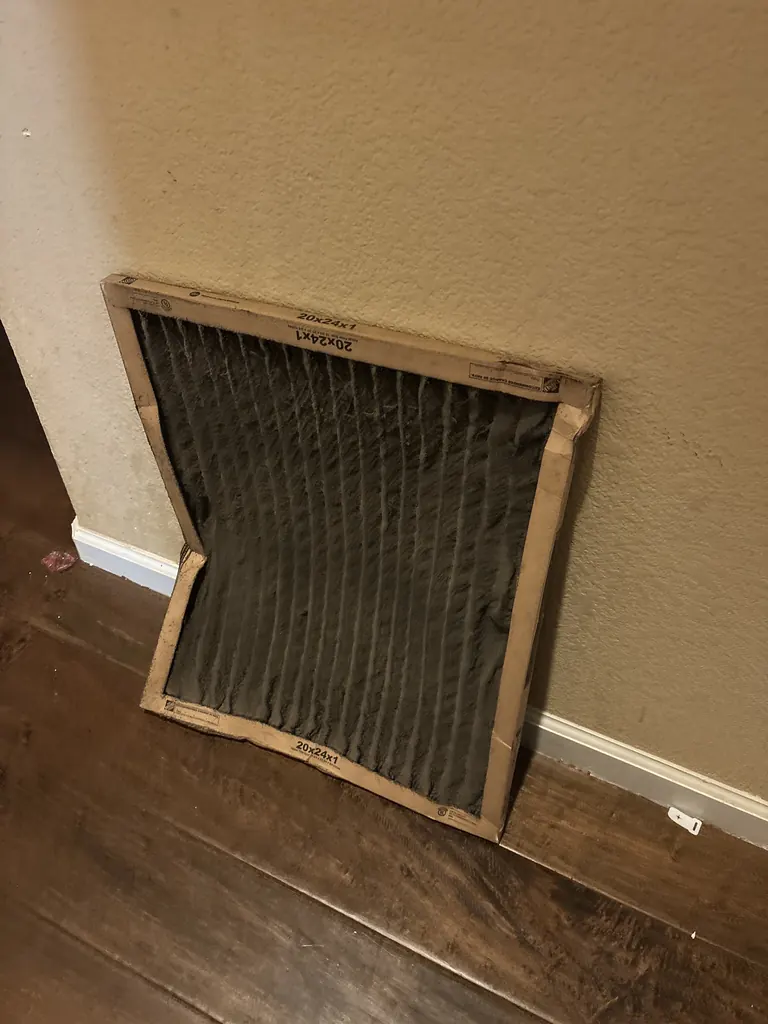
ENERGY STAR's homeowner list starts here: "Inspect, clean, or change air filters once a month" in your furnace or heat pump, and your contractor can show you how (ENERGY STAR). Look at it monthly through the heating season and replace it when it looks dirty.
Keep Registers and Returns Clear
Furniture, rugs and drapes over the supply registers or the return grille choke the airflow the efficiency section above is about. For instance, a sofa pushed flat against the return grille starves the blower of air the same way a clogged filter does. Open every supply register and keep the returns uncovered.
Keep Carbon Monoxide Alarms Working
The CPSC advises battery-operated CO alarms, or alarms with battery backup, "on every level of the home and outside sleeping areas," and notes that interconnected alarms are best (CPSC). The CDC suggests checking the batteries when you change the clocks each spring and fall (CDC).
Look at Your Thermostat
Confirm the thermostat is set to HEAT, holds the temperature you set, and has fresh batteries if it uses them. A wrong setting looks exactly like a broken furnace. The pre-season heating system check walks through the rest of the homeowner checks in about fifteen minutes.
Check for Unusual Noises or Smells
Learn what your furnace sounds like when it is healthy, so a change stands out. A new hum, whine or rattle at start-up can point to the inducer motor. The inducer motor guide describes each sound. Trane notes that a burnt-dust smell on the first run of the fall is dust burning off and should fade quickly. A burning-plastic smell, by contrast, can mean an electrical problem (Trane). The furnace burning smell guide explains the difference.
When Not to Wait for the Tune-Up
Some signs do not wait for a scheduled visit.
- Rotten-egg smell: PG&E adds that odor to natural gas so you can detect a leak. If you smell it, PG&E says to "leave the area now and call 9-1-1." Do not use anything that could be a source of ignition, including cell phones, flashlights and light switches, until you are a safe distance away. Then call PG&E at 1-800-743-5000 (PG&E).
- CO alarm sounding, or you suspect carbon monoxide: the CPSC says, "If you suspect CO poisoning, get outside to fresh air immediately, and then call 911" (CPSC). Have the furnace checked before it runs again.
- Short cycling: a furnace that keeps turning on and off before the house warms up needs a diagnosis, not a tune-up. See furnace short cycling.
- No heat, or cold rooms with the thermostat set correctly: that is a repair call. Alpha Mechanical provides heating repair in Sacramento, and if the furnace is near the end of its life, furnace replacement.
The Bottom Line
The case for regular furnace maintenance is mostly the case for one visit a year, in the fall, by someone qualified to look at the gas, combustion and safety controls. The federal safety agencies, the NFPA and ENERGY STAR all land on the same interval. Sacramento's climate decides the month: October, before the heating load arrives. Alpha Mechanical is a licensed HVAC contractor (CSL# 967727) serving Sacramento and Fair Oaks, and its furnace tune-up is a flat $99. To book one, or with any questions about us or the visit, contact us.
Frequently Asked Questions
How often should furnace maintenance be performed?
Once a year, in the fall before the first cold nights. The CDC, the CPSC and the NFPA all advise a yearly service or inspection of gas heating equipment, and ENERGY STAR recommends checking the heating system in the fall. If the same system also cools your home, its AC side gets its own spring visit.
Is furnace maintenance worth the cost?
Yes. Alpha Mechanical's heating tune-up is a flat $99 ($89 with the coupon through November 30, 2026), and it covers what a homeowner cannot check: gas pressure, combustion, the heat exchanger and a carbon monoxide test. ENERGY STAR notes that a dirty burner or cracked heat exchanger makes a furnace run less safely and efficiently, and that airflow problems alone can cut efficiency by up to 15 percent.
What are the consequences of neglecting furnace maintenance?
Neglect shows up in several ways. Restricted airflow raises energy costs, and a dirty filter can damage equipment and lead to early failure. Worn parts fail in the coldest weeks. Safety faults like a cracked heat exchanger go unfound. Carbon monoxide has no smell, so a yearly check and working CO alarms are the only reliable warnings.