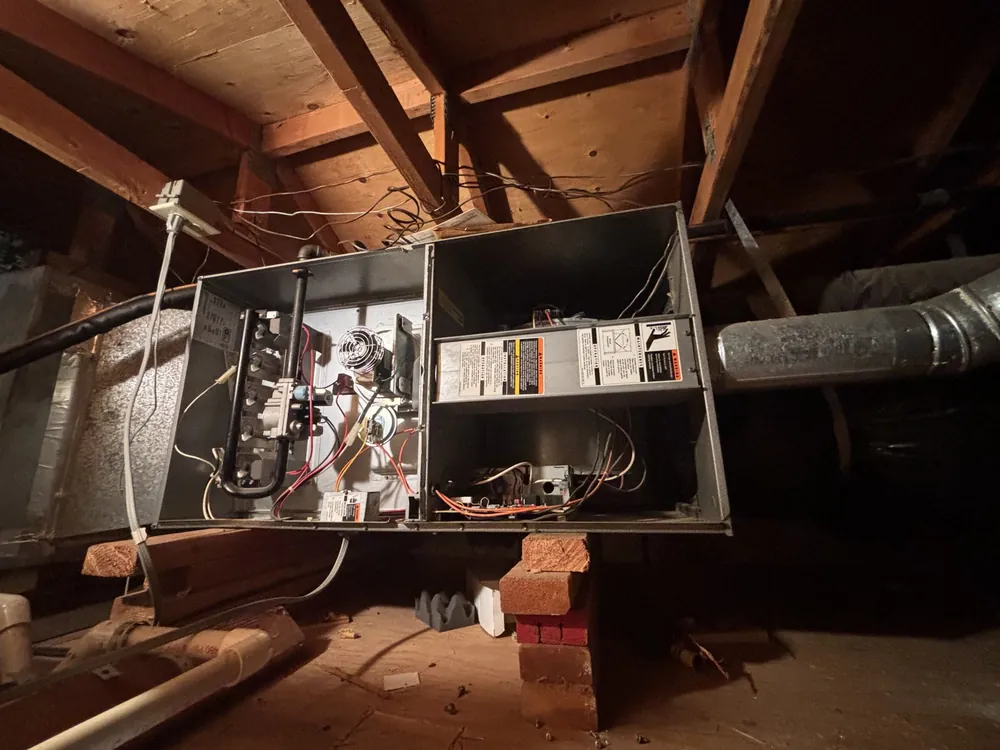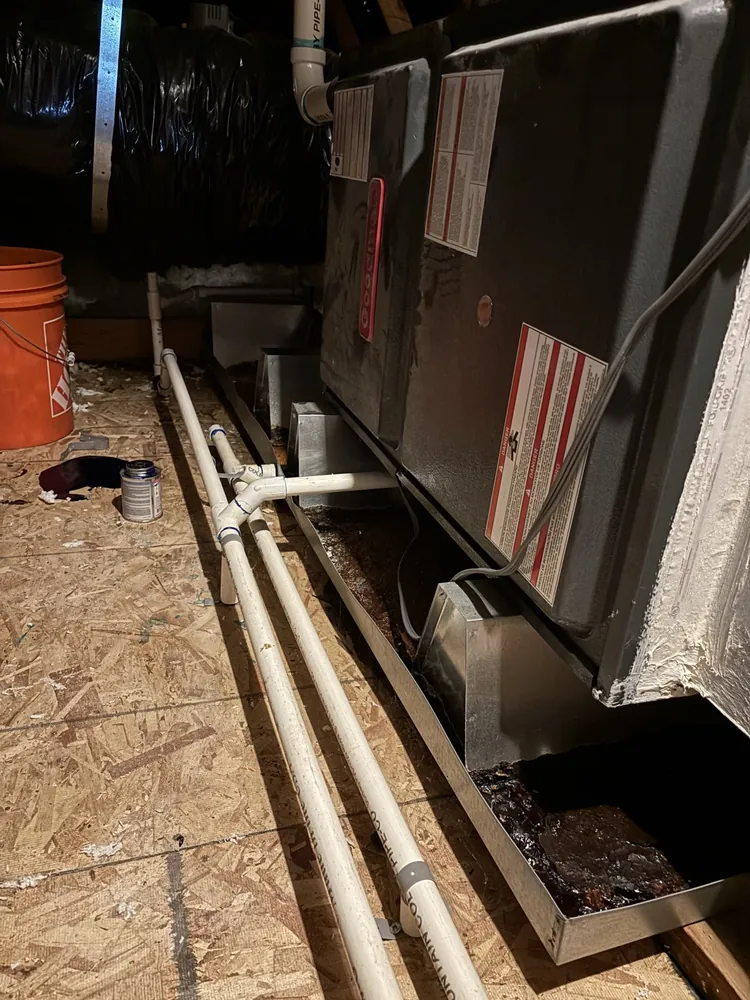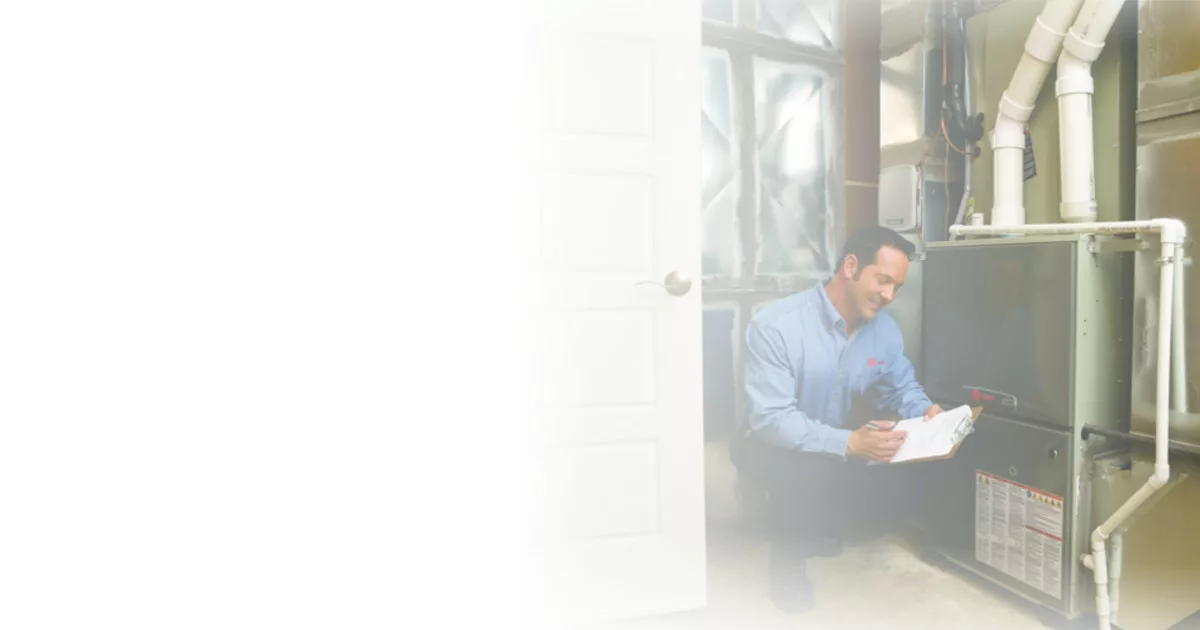
A furnace that lights briefly and quits has reached a different point in startup from one that hums but never lights. For a 1990s Folsom house on its original or second furnace, that distinction separates flame-sensor testing from hot surface igniter testing. A hot surface igniter is an electrically heated element that glows hot enough to light the gas at the burners. Neither symptom alone proves which part failed.
Alpha Mechanical's records hold nine Folsom furnace calls since January 2024:
| Folsom furnace repair | Invoice |
|---|---|
| Pressure switch (two calls) | $307 and $265 |
| Gas orifice cleaning | $190 |
| Gas valve on a package unit, part under the manufacturer's warranty | $374 |
| Control board, furnace under warranty | $695 |
| Variable-speed blower motor and control board | $1,547 |
| Diagnostic only (three calls) | $89 each |
The three $89 calls were a gas pressure adjustment on a zoned furnace, a loose access panel holding the door safety switch open, and the blower diagnosis that led to the $1,547 repair three days later. We put every repair number in writing before approval.
A brief flame: when cleaning is the repair
An electronic flame sensor proves that the burners have lit by carrying a small electrical signal through the flame. Deposits on its metal rod can weaken that signal, causing the control to close the gas valve even though fire was present. A brief flame followed by shutdown therefore makes cleaning a plausible repair, not an automatic reason to buy a sensor.
Cleaning removes deposits; replacement addresses physical damage such as a cracked ceramic insulator. A weak signal that remains after cleaning also calls for checks of grounding, connections and flame contact before condemning the sensor. The useful result is a stable flame signal and sustained operation, not simply a shiny rod.
A blower may continue moving cool air after the burners shut down, so a furnace blowing cold air does not by itself identify a blower failure. A unit that heats for several minutes before stopping needs a different investigation, including airflow and overheating, rather than an assumption that every shutdown is a dirty sensor.
Clicks without flame: igniter, inducer or pressure switch
The hot surface igniter heats electrically to light the gas; repeated heating and cooling can eventually crack its brittle element. An electrically open igniter cannot glow, and cleaning cannot restore that broken circuit. The replacement must match the furnace specifications, including voltage and mounting position.
Humming may come from the inducer motor, which starts the draft before ignition. If draft is not proven, a pressure-switch or venting fault can prevent the igniter from receiving power. A glowing igniter with no burner flame instead warrants checking gas delivery and gas-valve operation.
The thermostat needs to be set to heat above room temperature before a startup attempt is meaningful. A blank thermostat points first toward power or control troubleshooting; our furnace startup guide explains that earlier part of the sequence. Replacing it with a smart thermostat cannot mend a cracked igniter.
The written number before a Folsom ignition repair
A 1990s furnace diagnosis begins with the installed model and its startup sequence; that era matters here because homes built in that decade represent 27.0 percent of Folsom housing (Census ACS 2024 five-year estimates, table B25034). We service every brand, so the original furnace and a later replacement both fall within our repair scope. Our inspection and diagnosis establish what failed before we quote the repair.
Once the homeowner approves our written repair number, we credit the $89 diagnostic toward that repair. It is not a published sensor or igniter replacement price: the failed component and work required determine the quote. Our Guarantee & Rates page explains the charge; after a completed repair, we run a full heat cycle checking temperature rise, venting and safety controls.
A furnace already failing to light belongs on our diagnostic appointment, while a working furnace approaching heating season is eligible for our flat $99 heating tune-up. For ongoing maintenance after the fault is repaired, our Club includes two visits a year, priority scheduling and 20 percent off repairs. Maintenance pricing covers a different visit from diagnosing an active ignition failure.
We dispatch from Fair Oaks, with same-day weekday service when the schedule allows for a Folsom no-heat call. Our furnace service also covers Gold River; an Orangevale furnace appointment likewise depends on the schedule, so a nearby city name is not an arrival-time promise.
A failed igniter can leave the Folsom furnace worth keeping
An isolated sensor or igniter failure can justify repair when the rest of the furnace is sound; a confirmed cracked heat exchanger changes that decision because restoring ignition does not correct a breach in the combustion boundary. When replacement is the better buy, our Folsom furnace replacement page covers the furnace-only and heat pump options.
Equipment that heats without a gas flame needs a different diagnosis, covered by heat pump repair and ductless mini-split service. Other heating needs belong with our Folsom HVAC services and regional heating repair, while cooling faults have their own Folsom AC repair page. Ignition faults in light-commercial equipment belong under our commercial HVAC service.
For a Folsom furnace that will not stay lit, reach our family-owned Alpha Mechanical team at 916-848-5980; we hold California contractor licence CSL #967727.
Prefer to book online? That works too. Once the flame holds, tell other Folsom owners how it went: