An AC that barely held the temperature in peak heat has not repaired itself because cooler afternoons feel easier. In a Citrus Heights single-storey from the 1970s, the fault can be in the cooling equipment, the original attic ducts, or both. A cooler day reduces the load and can hide the same weakness until next June.
At our family-owned Alpha Mechanical, the first paid step for that house is diagnosis: the $89 diagnostic is credited toward the repair once the homeowner approves a written number. Our Citrus Heights experience includes about 65 completed jobs in and around the city since January 2024. The record does not separate cooling work from other jobs, so that total is not an AC repair count.
Following the cold air through a 1970s Citrus Heights attic
A replacement condenser does not renew the ducts above the ceiling. Citrus Heights' concentrated building era makes that distinction central to our repair assessment: the 1970s account for 40.0 percent of its housing, within the 61.9 percent built before 1980. The equipment label and the condition of the air distribution system matter more than assuming everything is as old as the house.
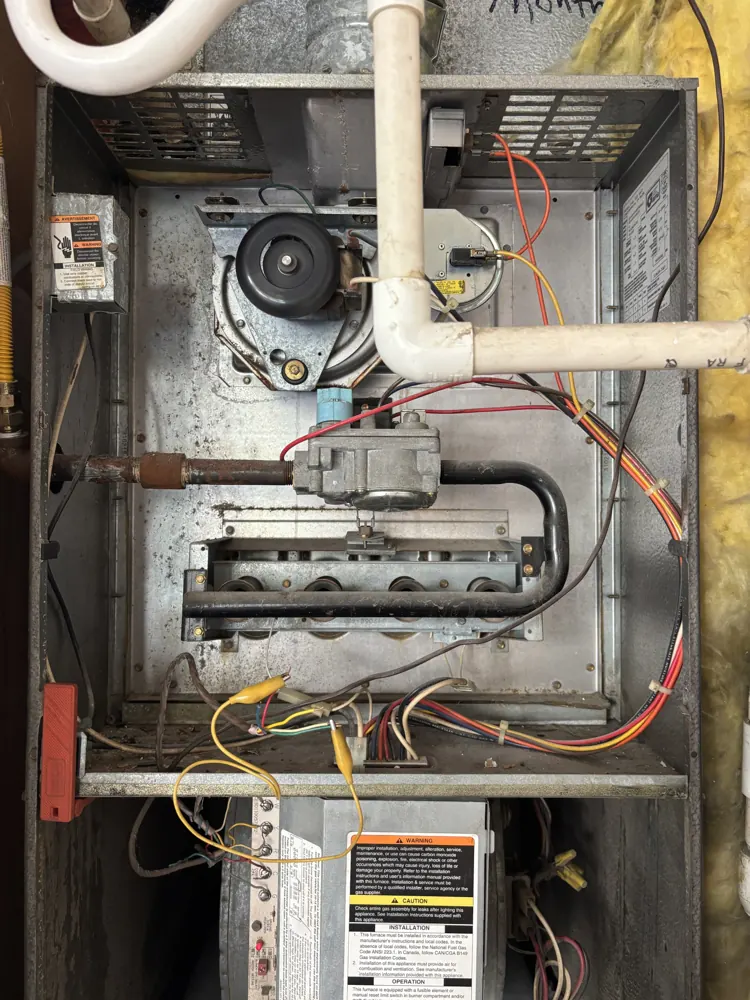
In a single-storey home with ducts in an unconditioned attic, a supply leak sends cooled air outside the living space, while damaged insulation lets attic heat warm the air still inside the duct. A return leak can draw hot attic air into the system. A return duct is the duct that carries room air back to the indoor unit so it can be cooled and sent out again. A larger outdoor unit leaves those losses in place; duct sealing and repair address the air's path to the rooms.
Weak airflow throughout the house points toward a different investigation from one room receiving less air than the others. A loaded filter, a restricted return, or a dirty indoor coil can reduce airflow across the cooling coil enough for ice to form. Continued cooling operation while the coil is iced is not a useful test of capacity. Our warm-air explanation covers why a running outdoor unit alone does not identify the fault.
A pre-2010 Citrus Heights AC needs more than an age verdict
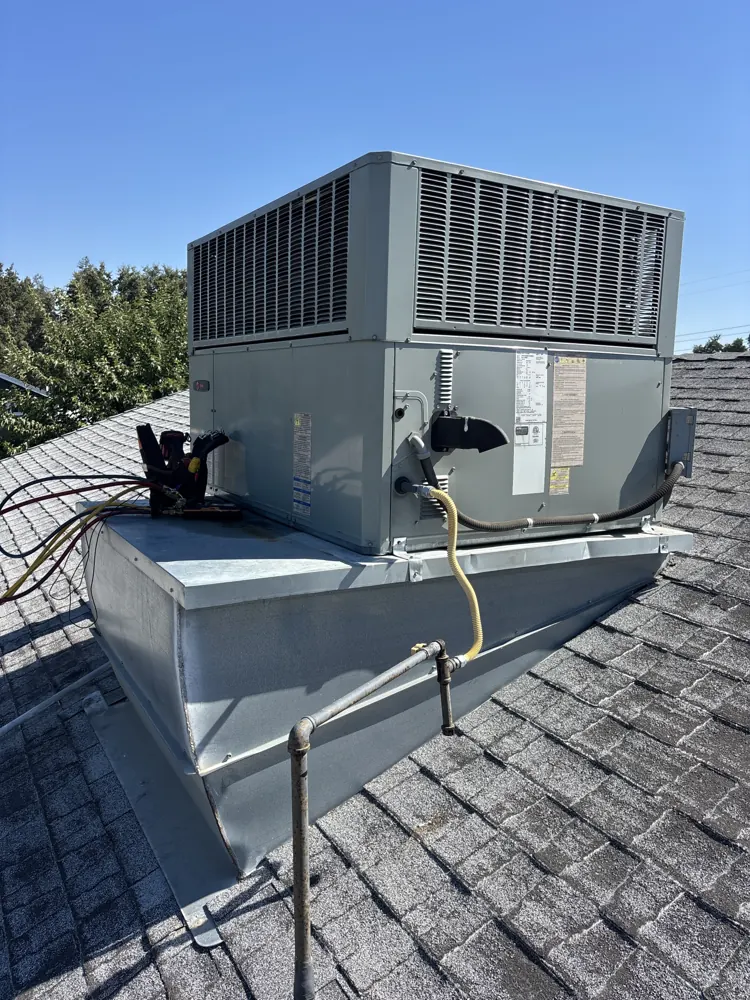
A humming condenser that fails to start may have a bad capacitor, but the sound alone cannot distinguish that from a motor or compressor problem. The capacitor failure guide explains the component's role. A confirmed electrical fault can justify repairing an older unit whose refrigerant circuit and other major components remain serviceable; age alone does not condemn it. We repair every brand, so an unfamiliar badge on a previous owner's replacement is not a reason to start with a new-system quote.
For equipment installed before 2010, the refrigerant label deserves particular attention: it may identify R-22. Refrigerant is not fuel that gets used up each summer; a low charge calls for a leak investigation. Adding refrigerant without correcting the loss leaves the cause in place, and repeated R-22 recharging can make poor use of a repair budget.
A repairable leak in an otherwise sound system is a different decision from a deteriorating coil combined with compressor trouble. Our written repair number gives the Citrus Heights owner something concrete to compare with replacement. The useful comparison includes what the repair corrects and which existing components remain, rather than a formula that multiplies age by price. Broader fault explanations sit on our Sacramento AC repair page.
Keeping the gas furnace changes the Citrus Heights replacement budget
Replacing only the cooling equipment while retaining the gas furnace does not earn SMUD's gas-to-electric rebate. For a Citrus Heights owner moving beyond repair, the qualifying alternative is a heat pump that also replaces the PG&E gas furnace, bringing heating onto SMUD electricity and potentially qualifying for the $3,000 rebate. The incentive belongs in that conversion comparison, not as a discount against every new air conditioner.
Our AC replacement work includes pulling the replacement permit through the City of Citrus Heights, so a proposal for this house belongs with the city's permit process rather than Sacramento County's. The permit inspection checks the installation against applicable requirements; it cannot establish that the old AC was beyond repair. We back installations with a 10-year workmanship guarantee, which belongs on the replacement side of the comparison rather than being presented as coverage for the existing unit.
Citrus Heights AC repair first, then tune-ups and smoke filters
A system that struggled all summer needs its fault resolved before routine maintenance can be treated as preparation for another cooling season. Our flat $125 AC tune-up is a maintenance visit, not a substitute for diagnosing lost cooling. Smoke-loaded filters can restrict airflow, and a denser filter is not automatically suitable for an older return system.
After the cooling fault is corrected, our Club membership provides two maintenance visits a year, priority scheduling, and 20 percent off repairs. Those benefits support ongoing care; they do not seal a leaking attic duct or correct a refrigerant leak by themselves. Heating-season concerns belong on our Citrus Heights HVAC service page.
Citrus Heights cooling calls in our Fair Oaks schedule
We handle these appointments from our Fair Oaks base, where we also provide Fair Oaks AC repair. If the Citrus Heights unit stops cooling altogether, same-day weekday repair is available when our schedule allows. For an owner coordinating this repair with a separate property in Orangevale or Antelope, we serve those addresses too.
Whether the answer for the 1970s house is a repaired condenser or a new installation, we do the work under California contractor licence CSL #967727. To arrange diagnosis of the problem August left behind, reach us at 916-848-5980 or book the repair visit online.