
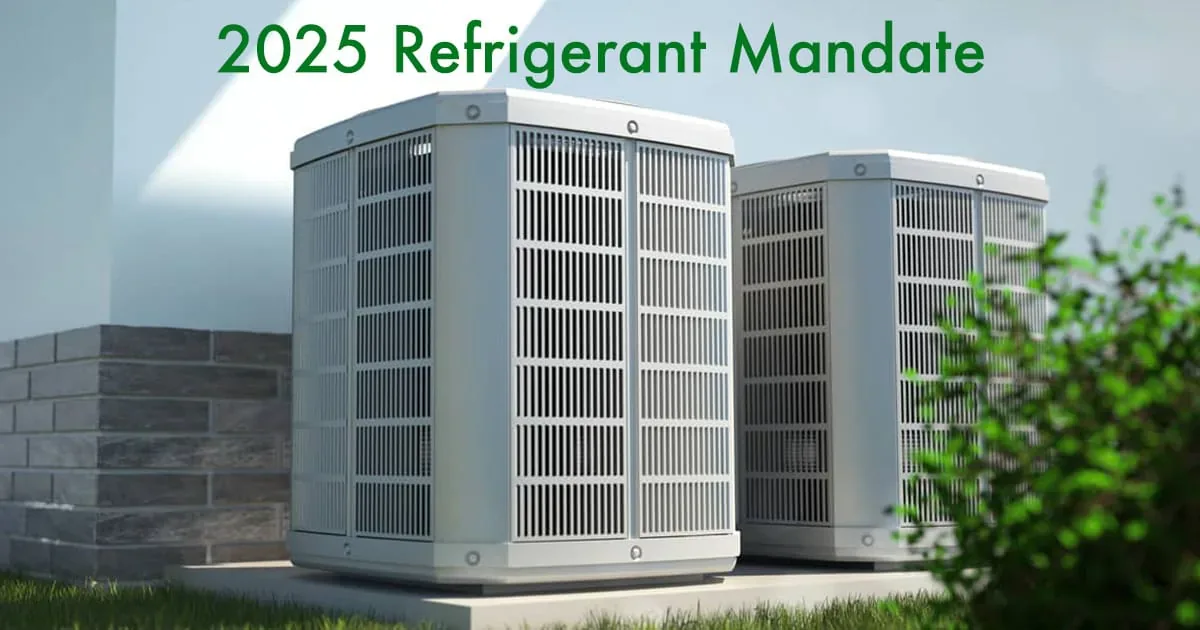
As the HVAC industry develops, new regulations are instituted that can bring significant change for homeowners. A mandate from the Environmental Protection Agency (EPA) took effect on January 1, 2025 (EPA AIM Act), and it may impact you if you are a homeowner or business owner in the Sacramento, CA area.
In this article, we will look at the new refrigerant mandate and its ramifications that will enhance HVAC systems with cleaner environmental standards. This involves the phase-out of the widely used R-410A refrigerant in new equipment for a more eco-friendly replacement like R-454B and R-32. We will also explain the ideal time to transition into a new system and the positive and negative consequences of the mandate.
Key Takeaways:
- Since January 1, 2025, new residential AC and heat pump systems are built for lower-GWP refrigerants like R-454B and R-32, and new R-410A equipment is no longer sold.
- Homeowners do not need to replace existing R-410A systems immediately, but repair and refrigerant costs will rise as supplies phase out.
- The new refrigerants have up to 78% lower Global Warming Potential, making them more energy-efficient and environmentally friendly.
- Expect higher upfront costs for new HVAC units and potential service delays, as technicians undergo training to safely handle the mildly flammable new refrigerants.
- Planning ahead, through regular maintenance, budgeting for replacement, and consulting an HVAC expert like Alpha Mechanical, can help homeowners transition smoothly and save on long-term costs.
What is the Government HVAC Refrigerant Mandate?
Overall, the 2025 HVAC mandate calls for the gradual elimination of a refrigerant, R-410A, that is commonly used in today’s air conditioners. The new mandate is positioned to help combat climate change and reduce greenhouse emissions. R-410A refrigerant was once released as a more environmentally friendly replacement for R-22 (see our R-22 repair-or-replace guide), and it is widely used in residential and commercial units today.
However, as the HVAC world improves there are more options available that have proven more eco-friendly such as R-454B and R-32. These two cleaner options have significantly lower Global Warming Potential (GWP) and will play a crucial role in confronting climate change.

The HVAC refrigerant mandate is a new standard that moves residential and commercial units to lower-GWP refrigerants such as R-454B and R-32 to reduce greenhouse emissions.
What will happen to current HVAC Systems?
As the 2025 refrigerant mandate standards and changes are accomplished, HVAC equipment manufacturers are advancing new systems that meet the latest requirements while incorporating elevated safety features. These HVAC manufacturers are ensuring that all new systems meet the regulations, offer increased energy-efficiency, and carry an improved performance. HVAC equipment that already exists will not need to be immediately replaced, however, as the production of R-410A systems phases out, there will be a rising cost in repairs, refrigerant recharge or maintenance.
The mandate applies only to new equipment, not to systems already installed in homes. Still, there are things to know before buying and replacing a HVAC system, including what to do if your current system is aged or in need of AC repair. Planning ahead by ensuring that the maintenance of your system is up to date or taking into consideration transitioning to a newer system could save you money in the long run.
The Positive Impact of the Refrigerant Mandate
As this process will be fine tuning the use of refrigerants in residential HVAC equipment to be more friendly to the environment, there are some beneficial results and negative ones as well.
- Environmental factor: R-454B and R-32 refrigerants have a 78% lower GWP than the current refrigerant used. It affords manufacturers the ability to produce new air conditioners, mini splits, window units, and heat pumps with a reduced carbon footprint contributing to cost savings and a healthier planet over time.
- Energy Efficiency: Although the initial investment of a new system can be challenging, the new refrigerants are designed to lower your monthly utility bills and perform proficiently.
- Future Orientated: Purchasing a unit with the latest regulations ensures compliance for the long term and avoids costly retrofits and replacements down the road.
The Negative Impact of the Refrigerant Mandate
The new refrigerant mandate 2025 also has some negative consequences as well that could impact residential and commercial owners.
- Increased Cost for HVAC replacements: As the availability of R-410A and other high GWP refrigerants decreases, repairs for systems that still have these refrigerants will become more expensive. Manufacturers will also be facing higher assembly costs as the new refrigerants require new designs, parts and safety factors. Homeowners will likely see a 30% increased rate for these newer units.
- Safety Demands: The HVAC industry is establishing proper training and safety measures are in place for the certified technicians to handle these new mildly flammable refrigerants. While this retraining takes place, there could be delays in service and replacements in order that safety measures are met. This could result in increased labor costs as well. It is important that you schedule regular maintenance for your current HVAC equipment and stay on top of necessary repairs now.
- Retrofit Issues: As the industry transitions to new refrigerants, certain parts may have delays and there could be shortages. The existing systems may need retrofitting to be compatible with new refrigerants.
Is R-410A Flammable?
R-410A is not classified as flammable. Under ASHRAE Standard 34 it carries an A1 rating: lower toxicity and no flame propagation in the standard flammability test. The two refrigerants replacing it in new residential equipment belong to a different class. R-454B and R-32 are both rated A2L, which means lower toxicity and lower flammability, with a maximum burning velocity under 10 centimeters per second (EPA, Refrigerant Safety).
That difference shows up on EPA's SNAP list for home air conditioners and heat pumps: R-410A is marked acceptable, while R-454B and R-32 are acceptable only with use conditions (EPA SNAP list). Acceptable on that list does not mean allowed in new equipment: EPA notes that an acceptable substitute may still be restricted under its Technology Transitions Program, the rule that ends R-410A in new home systems. Equipment built for an A2L refrigerant has to meet those use conditions, which R-410A equipment never needed.
Whatever refrigerant your Sacramento system uses, handling it is not a homeowner job. Under EPA's Section 608 rules, only certified technicians can use refrigerant to service air conditioning equipment.
Thinking about Replacing your HVAC System?
Check HVAC replacement guidelines!
How to Prepare for the Refrigerant Mandate?
There are a few things that homeowners can do to prepare as the 2025 HVAC refrigerant mandate approaches and as we go well into the next couple of years. As we’ve covered, you will not need to get rid of your unit if it runs on R-410A and you can keep it until the end of its capacity.
Since January 1, 2025, new air conditioners that run on R-410A are no longer sold. If you need to replace your air conditioner after this date, the new unit will use one of the new refrigerants. Repairs can still be made, and R-410A refrigerant is still available, though supplies will shrink over time. Scheduling regular maintenance helps to check that your unit is running smoothly and can extend its lifetime.
If your system needs to be replaced, consider a newer system that complies with the refrigerant mandate. It saves you from rising R-410A costs, which climb the longer you wait. Staying enlightened on the latest EPA regulations will help you make the most informed and financially sound decision.
Need commercial HVAC services in Sacramento? Alpha Mechanical can help you plan a compliant, cost-effective upgrade. If the equipment in question is on your roof, our guide to rooftop unit replacement covers what the refrigerant rule means for an RTU swap.
Final Thoughts
Homeowners do not need to replace an existing R-410A system immediately because of the 2025 refrigerant mandate, but repair and refrigerant costs will rise as supplies phase out. Working with an experienced HVAC contractor in Sacramento to weigh repairing your R-410A system against replacing it with a new-refrigerant model will help you make the most cost-effective decision.
You can rely on the expertise of Alpha Mechanical to keep your residential and commercial HVAC systems up to standard. See our guarantee and rates page, or contact us to talk through an R-410A repair or a replacement. We have the knowledge and expertise to provide solutions and help you reduce your carbon footprint while keeping your home comfortable.
Hopefully this article has relieved your questions and concerns about the 2025 refrigerant mandate and brought clarity to what you need to do as a homeowner.
Frequently Asked Questions
Can I still have my air conditioner repaired after the 2025 refrigerant mandate?
Yes. You can still repair and recharge an existing R-410A system, but new R-410A equipment is no longer sold, and as R-410A supplies shrink, those repair costs keep rising.
Which refrigerants are allowed in new HVAC units?
R-454B and R-32 are the lower-GWP refrigerants approved for new HVAC equipment going forward. Higher-GWP refrigerants like R-410A are phased out of new production, though existing systems can still be serviced while supplies last.
What is the most environmentally friendly refrigerant on the market?
R-32 and R-454B, because they carry a much lower global warming potential than the R-410A they replace.