
Choosing an HVAC system in Sacramento comes down to six factors that, in order, decide the bill. Our HVAC replacement guidelines cover when replacement is the right call at all. The six are system type (split, ductless, or packaged), capacity (correctly sized in tons, not guessed), efficiency grade (Standard, High, or Super Efficient), local climate (DOE Climate Zone 3, where mild winters favor heat pumps), smart features such as zoning, variable speed and a smart thermostat, and total cost of ownership after rebates. Get the first two wrong and the rest doesn't matter; get them right and an average homeowner saves $1,500-$3,000 over a 15-year system life.
- Quick Answer: How to Pick the Right HVAC System
- What Are the Main Types of HVAC Systems?
- What 6 Factors Decide Which HVAC System Is Right for You?
- How Much Does a New HVAC System Cost in Sacramento (2026)?
- Which Efficiency Grade Should You Pick: Standard, High, or Super?
- How Do You Know When to Replace vs. Repair?
- What Should You Ask Every HVAC Contractor Before Signing?
- How Does 2026 Change the HVAC Buying Decision?
- How Alpha Mechanical Can Help
- Frequently Asked Questions
Key Takeaways
- Type before brand. The decision between a split, ductless mini-split, or packaged system is bigger than which manufacturer you pick. It's driven by whether you have existing ductwork, how zoned you want heating/cooling, and roof vs. ground space.
- Right-sizing matters more than upsizing. An oversized system cycles on and off, wears faster, costs more to run, and dehumidifies poorly. A Manual J load calculation (not a square-footage rule of thumb) is the right way to specify capacity in tons.
- 2026 budget range for a residential Sacramento install: $9,500 to $25,000 for a complete system replacement, before rebates. SMUD pays up to $3,000 for qualifying gas-to-heat-pump conversions as of February 2026 (SMUD).
- Title 24 (effective 1/1/2026) makes a heat pump the prescriptive baseline for most new California homes and requires R-6 duct insulation with a 5% leakage cap (California Energy Commission). New equipment must also meet 14.3 SEER2 / 11.7 EER2 federal floors (DOE Regional Standards).
- The Section 25C federal tax credit expired December 31, 2025. California incentives in 2026 are utility-driven (SMUD), not federal. See our California heat pump rebates guide for current numbers.
- The contractor matters as much as the equipment. A poorly installed Super Efficient system underperforms a correctly installed Standard one. Manual J, Manual D, and a written commissioning report are the table-stakes deliverables.
Quick Answer: How to Pick the Right HVAC System
| Situation | Best fit (most cases) | Why |
|---|---|---|
| Existing ductwork, replacing furnace + AC together | Split-system heat pump | One outdoor box does both seasons, qualifies for SMUD's largest rebate |
| Existing ductwork, working furnace, dying AC | Dual-fuel hybrid (heat pump + keep furnace) | Captures ~90% of heat-pump savings without scrapping working equipment |
| No ductwork, additions, garage conversions, ADUs | Ductless mini-split | Skip duct installation entirely; one outdoor unit serves up to 8 zones |
| Roof-mounted on a single-story or commercial-style build | Packaged system | All components in one outdoor cabinet; simpler service access |
| Microclimate routinely below 25°F or no panel capacity | Standalone gas furnace + AC | Heat pumps lose efficiency in deep cold; gas wins where electrical capacity is constrained |
If you don't fit a row cleanly, default to a split-system heat pump and have your contractor justify any deviation in writing. That's the path with the largest 2026 rebate in SMUD territory and the cleanest 2026 Title 24 compliance.
What Are the Main Types of HVAC Systems?
There are three system architectures most Sacramento homes will see. The choice between them is more consequential than the choice of brand within a given type.
Split System
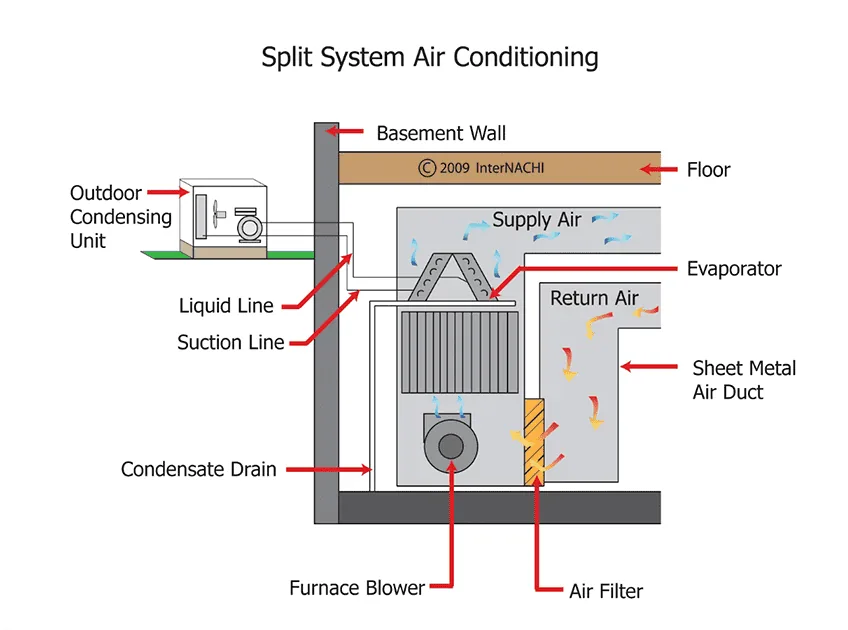
A split system is one with two cabinets: an outdoor condenser/compressor and an indoor air handler (often a furnace cabinet or fan coil), connected by refrigerant lines and ductwork. This is what most Sacramento homes already have. When the split is "all heat pump," the same outdoor unit handles cooling in summer and heating in winter. When it's "AC + furnace," the AC handles cooling and a gas (or sometimes electric) furnace handles heating. A "dual-fuel hybrid" wires a heat pump alongside a gas furnace and uses whichever is cheaper to run at any given outdoor temperature, usually heat pump above ~35°F, furnace below.
Split systems are the most versatile upgrade path for homes with existing ducts. New duct installation, however, is expensive and disruptive, typically $5,000-$15,000 on top of the equipment cost.
Ductless Mini-Split
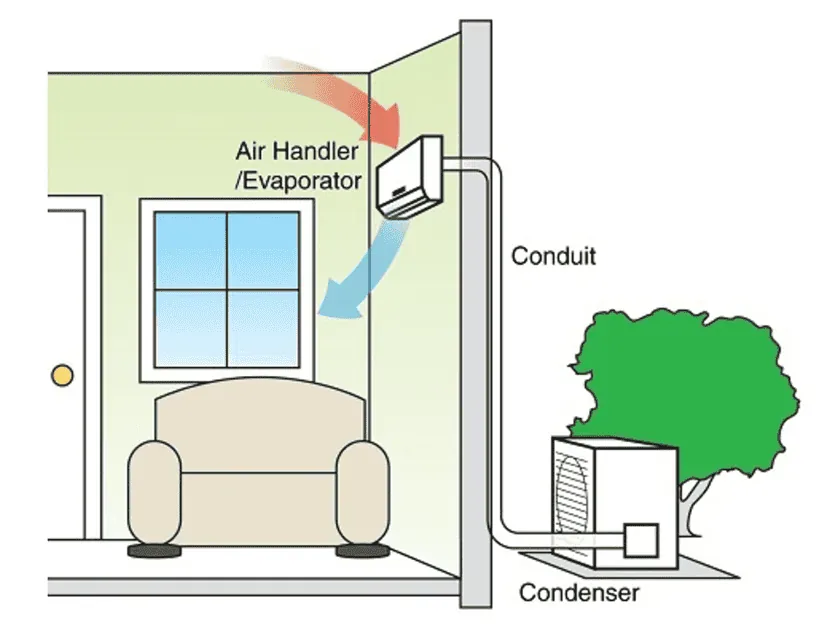
A ductless system has one outdoor unit and one or more indoor "heads" mounted on the wall or ceiling of each room being conditioned, again connected by refrigerant lines. No ductwork at all. Each indoor head has its own thermostat, so a 4-zone system can run four different room temperatures simultaneously.
Ductless is the right call for homes without existing ducts, additions or garage conversions where running ducts is impractical, and accessory dwelling units (ADUs). Single-zone mini-splits also work as supplemental cooling for problem rooms, the upstairs bedroom that the central system can never quite cool down. The visible indoor heads are the main aesthetic tradeoff.
Packaged System
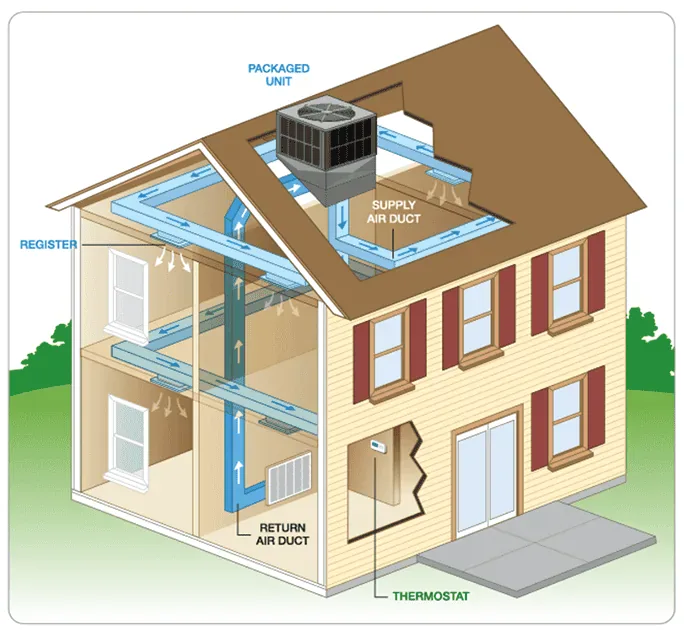
A packaged system combines the condenser, compressor, evaporator coil, and (sometimes) gas burner inside a single outdoor cabinet, usually mounted on the roof or a side-yard slab. Conditioned air enters and leaves the cabinet via short duct runs that pass through the wall or roof.
Packaged units are common on flat-roof commercial buildings and single-story residential homes in warmer climates. They free up indoor utility-closet space. In our Sacramento work, packaged rooftop units usually reach replacement at 15 years or older, and because the whole system sits outdoors, every service call needs roof or yard access.
What 6 Factors Decide Which HVAC System Is Right for You?
1. System Type and Existing Infrastructure
Start here. The presence or absence of ductwork eliminates options before you compare anything else. If your home has working ducts in reasonable condition, a split system is almost always the right call. If it doesn't, the math swings hard toward ductless. Installing new ducts to enable a split system runs $5,000-$15,000 on top of equipment, which is roughly the cost of a 4-zone ductless install, so the comparison is whether you'd rather have invisible ducts or visible indoor heads.
2. Capacity (Sized in Tons, Not Square Feet)
Cooling capacity is measured in tons. One ton equals 12,000 BTU/hour. A typical Sacramento home needs roughly 1 ton per 500-700 square feet of conditioned space, but that rule-of-thumb is wrong often enough that a contractor who quotes from square footage alone is a red flag.
The right way is a load calculation. A Manual J load calculation is an industry-standard heat-loss/heat-gain analysis that accounts for insulation, window orientation, air infiltration, and local design temperatures. Oversizing is the more common mistake than undersizing: an oversized system short-cycles (turns on and off too quickly), which wears the compressor, runs up the electric bill, and leaves indoor humidity high. An undersized system runs constantly and never quite catches up on hot afternoons.
Sizing the Furnace: BTU/h Output, Not Square Feet
The heating side follows the same rule in different units. A furnace is sized in BTU per hour (BTU/h), and the number to compare is output, not input. Furnaces are rated by the gas they burn, then derated by efficiency. For example, a DOE Building America sizing guide works through a 60,000 BTU/h furnace at 92.5% efficiency that delivers about 55,500 BTU/h of heat.
So what size furnace do you need? One whose output covers your home's Manual J heat loss on a design-cold night. The same DOE guide says furnace capacity should meet the Manual J heating load without exceeding it by more than 40%. For Sacramento County, the ENERGY STAR Design Temperature Limit Reference Guide lists the 99% heating design temperature as 29°F, against 103°F on the cooling side.
How many BTU per square foot? No single figure holds from one house to the next. Square-foot charts are rules of thumb, and the U.S. Department of Energy notes that rules of thumb too often produce oversized systems. There is a second trap: the AC or heat pump usually drives equipment selection, and the DOE guide warns that a furnace picked to match the cooling equipment can end up oversized for the heating load.
An oversized furnace heats in short bursts, shuts off and restarts, which is short cycling. DOE ties oversizing to wasted energy and to on-and-off cycling that compromises comfort. Manual J is standard process on our replacement quotes, so the heating number is calculated for your house, not read off a chart.
3. Efficiency Grade (Standard, High, or Super)
SEER2 and HSPF2 are the ratings modern AC and heat pump efficiency is measured in: SEER2 for cooling, HSPF2 for heating. Higher numbers mean lower bills, but also higher upfront cost. We cover the three grades in their own section below.
4. Local Climate
Sacramento sits in DOE Climate Zone 3: mild winters, hot dry summers. That's a heat pump's home turf. Heat pumps lose efficiency below ~30°F, which Sacramento sees only a handful of nights per year. Our heat pump vs gas furnace guide covers the climate-vs-fuel decision in depth.
California's minimum federal efficiency floor for new equipment is 14.3 SEER2 and 11.7 EER2 (DOE regional standards, cited above). Anything below that can't be legally installed as a residential replacement.
5. Smart Features and Technology
Three features actually move the bill:
- Variable-speed (inverter) compressor. Modulates output between roughly 30% and 100% of capacity instead of cycling on and off. Result: steadier temperatures, lower bills, quieter operation. See our variable speed split systems explainer for how it works.
- Smart thermostat. Programmable schedules and remote control via phone. The 10-20% savings cited by ENERGY STAR depend on consistently using setbacks, but the cost (~$200-$300) pays back in under a year for most households.
- Zoning. Motorized dampers in the duct system that direct conditioned air to specific rooms based on individual zone thermostats. Worth it for multi-story homes or homes with strong east/west sun exposure that makes one side significantly hotter.
6. Total Cost of Ownership (After Rebates)
Upfront sticker is one number. Total cost over 15 years, equipment + install + electricity + gas + maintenance + repairs minus rebates, is the number that decides whether a system was a good buy. SMUD's 2026 incentive stack tilts this heavily toward heat pumps for most Sacramento homes.
How Much Does a New HVAC System Cost in Sacramento (2026)?
Our installed-cost ranges, before rebates, as of 2026. Equipment tier, capacity, installation scope and duct condition move a quote inside each range:
| System | Our installed range | Notes |
|---|---|---|
| Split AC + gas furnace (standard 80% AFUE or high-efficiency 95-97% AFUE) | $9,500 to $25,000 | Our general system replacement range; no major rebates on the standard tier, some utility rebates on high-efficiency |
| Ducted heat pump (single-stage, two-stage or variable-speed) | $9,500 to $20,000 | Eligible for SMUD's heat pump rebate; the variable-speed Super Efficient tier earns the largest rebate |
| Ductless mini-split | $4,300 to $14,300 | No duct install required; zone count moves the price |
| New ductwork (if needed, on top of equipment) | $5,000-$15,000 | Not covered by SMUD's equipment rebate |
After SMUD's up-to-$3,000 gas-to-heat-pump rebate, a Super Efficient heat pump can net surprisingly close to a Standard gas furnace + AC. The 25C federal tax credit expired December 31, 2025, so unlike 2024-2025 quotes you may have seen, there's no longer a federal $2,000 layer.
If your project also needs a panel upgrade, Alpha Mechanical does not do that work; a licensed electrician quotes it separately.
Which Efficiency Grade Should You Pick: Standard, High, or Super?
The three efficiency tiers, in plain English:
Standard Efficient ("Builder Grade")
Single-stage equipment at or near the federal floor (14.3-15.0 SEER2, 80% AFUE on gas). One compressor speed: on or off. Cheapest upfront, fewest rebates, highest annual operating cost. The choice landlords and high-volume builders make. Pick this if you're under 5 years from selling and resale value isn't tied to comfort.
High Efficient ("Mid Grade")
Two-stage equipment, 16-17 SEER2 / 90-95% AFUE. Two compressor speeds let it run quieter and more efficiently on mild days. Modest rebate eligibility. The most common new-install grade in Sacramento. Pick this if you'll be in the home 5-10 years and want a sensible cost/performance balance.
Super Efficient ("Comfort Grade")
Variable-speed (inverter) equipment, 18-22+ SEER2 / 97-98% AFUE for gas furnaces. Modulating compressor and indoor blower hold temperature to within ~0.5°F of setpoint, run quieter, and use significantly less energy on mild-load days. Largest SMUD rebate. Pick this if you'll be in the home 10+ years, have solar, or value comfort and quiet operation.
Pairing a variable-speed compressor with solar is especially efficient, long, low-load run cycles align with solar generation hours, so the panels effectively pre-cool the home for free.
How Do You Know When to Replace vs. Repair?
Five signals, in rough order of weight:
- System age over 12-15 years. Average AC lifespan in our market is 12-15 years; gas furnaces 20-25. Past 15, every repair is a coin flip on whether the next failure makes the repair stranded cost.
- A single repair quote over 50% of replacement cost. A failing compressor or cracked heat exchanger on a 12-year-old system is usually a replace, not repair.
- R-22 refrigerant. R-22 is phased out and now extremely expensive to recharge. Any major refrigerant repair on an R-22 system is a replace trigger. See our R-22 refrigerant guide. A2L refrigerants (R-454B, R-32) are the 2026 standard (covered below).
- Rising bills despite no usage change. Most equipment loses 1-2% efficiency per year of service after year 8. If your kWh/CDD ratio is up 30% over five years, the system is probably ready.
- Comfort never feels right. Hot upstairs, cold downstairs, never-stops cycling, high indoor humidity in summer. These usually indicate either bad duct design or undersizing, both of which justify a system-level rethink at next replacement.
If two or more of these apply, gather replacement quotes alongside the repair quote and decide on total cost over the next 5-10 years, not just the immediate fix. Our repair-or-replace decision guide walks through the math.
What Should You Ask Every HVAC Contractor Before Signing?
The right contractor will welcome these; a wrong one will dodge them.
- "Will you run a Manual J load calc for my home?" The honest answer is yes. Sizing from square footage alone is a yellow flag.
- "Will the duct system be tested for leakage and verified to the 2026 Title 24 5% leakage cap?" Required for new installs in California. Should be on the proposal in writing.
- "What's the rebate math?" A contractor in SMUD territory should quote you net price after SMUD's gas-to-heat-pump rebate, not just sticker.
- "What refrigerant will the system use?" 2026 equipment ships with A2L refrigerants (R-454B or R-32). If the answer is R-410A, the equipment is older inventory and may have parts and service implications down the line.
- "What does your installation commissioning report cover?" Refrigerant charge by superheat/subcool, static pressure across the coil, indoor temperature split, blower amp draw. If they can't articulate this, the install will be approximate at best.
- "What's covered by the labor warranty, and for how long?" Equipment warranties are typically 10 years parts; labor is the variable. 10-year bumper-to-bumper from a reputable installer materially changes lifetime cost.
- "Who installs the system, and what are their certifications?" NATE certification, EPA 608 (refrigerant), Title 24 commissioning credentials. Ask which technicians specifically will be at your house.
Avoid contractors who quote off a system size from a phone call, who can't explain SEER2 vs SEER, or who push the most expensive system without walking you through the math on the next grade down.
How Does 2026 Change the HVAC Buying Decision?
Three regulatory shifts affect 2026 quotes:
- California's 2025 Title 24 code (in effect 1/1/2026) makes a heat pump the prescriptive baseline for most new homes and requires R-6 duct insulation with a 5% leakage cap (California Energy Commission, cited in Key Takeaways above). Existing-home replacements aren't strictly required to comply, but contractors increasingly default to the Title 24 spec.
- The Section 25C federal tax credit expired December 31, 2025. The $2,000 federal credit that used to apply to qualifying heat pump installs is gone. Sacramento incentives in 2026 are utility-led (SMUD).
- A2L refrigerant transition. Most 2026 equipment ships with R-454B or R-32 refrigerant instead of R-410A. Different service procedures, new EPA technician requirements, slightly different parts pricing. See the 2025 refrigerant mandate explainer.
Net effect for a Sacramento homeowner buying in 2026: a heat pump remains the favored direction for most homes, but the financial case relies more heavily on SMUD's rebate and less on federal credits than even a year ago.
How Alpha Mechanical Can Help
We model both the gas and the heat-pump options for every replacement quote, including the full SMUD rebate math, so you can see equipment cost, lifecycle operating cost, and after-rebate net cost side by side before committing. Manual J / Manual D as standard process, and a written commissioning report at install.
- Heat Pump Replacement, when a switch from gas makes sense
- Furnace Replacement, when staying on gas makes sense
- AC Installation, same-system swaps and new installs
- HVAC Residential Design, for new construction, additions, ADUs
- Financing Options, Wells Fargo, GreenSky, Enerbank, Foundation Finance
- SMUD specials and current rebates
Or contact us for a no-pressure walkthrough of your specific home. More about us is on the Why Us page.
Frequently Asked Questions
How much does a new HVAC system cost in Sacramento in 2026?
Our installed range for a complete system replacement in Sacramento is $9,500 to $25,000 before rebates. A ducted heat pump runs $9,500 to $20,000 and a ductless mini-split $4,300 to $14,300. Equipment tier, capacity, installation scope and duct condition move a quote inside those ranges; our Sacramento replacement cost guide walks through what goes into it. SMUD's up-to-$3,000 gas-to-heat-pump rebate narrows the net-cost gap between a heat pump and a gas-furnace + AC quote. The Section 25C federal tax credit expired December 31, 2025, so 2026 incentives are utility- and state-led only.
What size HVAC system do I need for my home?
A typical Sacramento home needs roughly 1 ton of cooling per 500-700 square feet, but that's a rule of thumb, not a specification. The correct answer comes from a Manual J load calculation that accounts for insulation, window orientation, air infiltration, and local design temperatures. A contractor who quotes capacity from square footage alone is a yellow flag, oversizing causes short-cycling, poor humidity control, and higher bills.
Should I get a heat pump or a gas furnace in Sacramento?
For most Sacramento homes, a heat pump, because Sacramento sits in DOE Climate Zone 3 (mild winters rarely below 30°F), heat pumps qualify for SMUD's largest 2026 rebate, and a single piece of outdoor equipment handles both heating and cooling. Gas furnaces still win where natural gas is cheap, winters routinely drop below 25°F, or the home has no electrical panel capacity for a heat pump. The heat-pump-vs-gas-furnace guide linked above has the full comparison.
How long does a new HVAC system last?
Air conditioners and heat pumps typically last 12-15 years in our market. Gas furnaces last longer, 20-25 years, because they only run six months a year. Annual professional maintenance and a labor warranty are the two biggest levers on actual realized lifespan. Past year 12, the next major repair is often a replace trigger rather than a repair.
What's the best time of year to buy a new HVAC system?
Spring and fall. The shoulder seasons. Demand is lower than during heat waves or cold snaps, so contractors have more scheduling flexibility, lead times are shorter, and quotes are typically 10-15% lower than peak-season pricing for the same equipment.
What's the difference between SEER and SEER2?
SEER2 is the updated efficiency rating that replaced SEER on January 1, 2023. It uses a more realistic test that includes static pressure across the ductwork, which makes SEER2 numbers slightly lower than the old SEER rating for the same unit. The federal minimum in California is 14.3 SEER2 / 11.7 EER2 for residential AC and air-source heat pumps. Don't compare a SEER number from a 2022 quote to a SEER2 number on a 2026 quote directly. They're different scales.
Will my existing ductwork work with a new high-efficiency HVAC system?
Probably yes, but new ducts perform meaningfully better. Heat pumps push lower-temperature supply air (~95-105°F) than gas furnaces (~120-140°F), so duct sizing, sealing, and insulation matter more. California's 2025 Title 24 code requires R-6 duct insulation with a 5% leakage cap on new installs. Most quality replacement quotes include duct testing (Manual D) and seal/insulate work where the existing ducts fall short.