
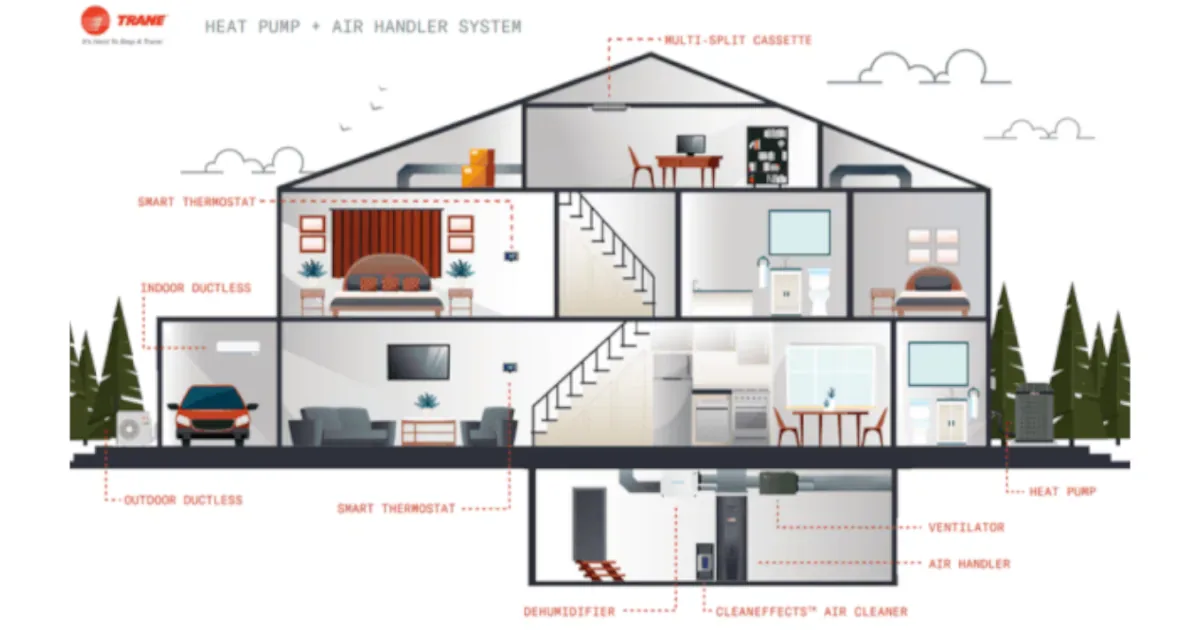
A variable speed air conditioner is one whose compressor ramps continuously between roughly 30 percent and 100 percent of capacity instead of switching between full power and off. In Sacramento that matters more than it does almost anywhere else, for a reason most national guides miss entirely: it is not about humidity here, it is about the length of the cooling season and the price of electricity between 5 and 8 p.m.
Short answer on whether it is worth it: yes if you are staying five or more years, replacing something 15 years or older, and running the system hard from May to October. Where the indoor half is a gas furnace at the end of its life, that decision sits with our furnace replacement work rather than a cooling-only change-out. Probably not for a rental you are about to sell, or a house that barely uses cooling, where a two-stage system gets you most of the comfort for less money.
This guide covers how the technology works, what it costs against single-stage and two-stage, the Sacramento-specific case for it, how California's 2025 Title 24 code changes the math, and what rebates survive now that the federal tax credit has expired. If you are weighing a full system swap, our guide on factors to weigh when replacing an HVAC system pairs with this one.
Key Takeaways
- A variable speed compressor modulates between about 30% and 100% capacity, so it matches your home's real-time load instead of cycling on and off like a single-stage unit.
- The U.S. DOE says high-efficiency cooling upgrades plus smart operation can cut AC energy use by up to 50%, and replacing 10-plus-year-old equipment with ENERGY STAR gear saves up to 20% (DOE, 2025; ENERGY STAR).
- In California, every new split-system AC must meet a federal floor of 14.3 SEER2 and 11.7 EER2; variable speed systems routinely clear SEER2 ratings near 20 and above (DOE Regional Standards, 2023).
- California's 2025 Title 24 code makes a heat pump the prescriptive baseline for most new homes and requires R-6 duct insulation, with a 5% leakage cap on new duct systems and a 10% total or 7% to-outside limit on equipment change-outs over existing ducts (California Energy Commission, 2025).
- The federal Section 25C tax credit expired December 31, 2025, but SMUD raised its top heat pump rebate to $3,000 in February 2026 (SMUD, 2026).
What Makes a System 'Variable Speed'?
Like any split system, a variable speed unit has two main parts: an outdoor condenser and an indoor air handler, joined by refrigerant lines. What makes it "variable speed" is an inverter-driven compressor that can run at almost any output between roughly 30% and full capacity. Compare that to a standard single-stage unit, which has exactly two states: 100% and off. Most older Sacramento homes have the single-stage kind.
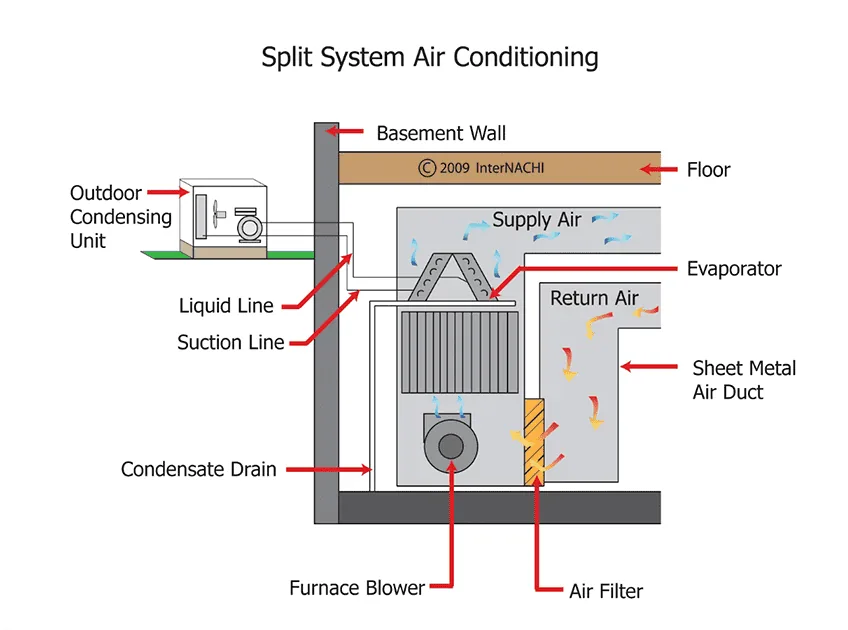
Picture cruise control on Highway 50. A single-stage system is like flooring the gas, lifting your foot to coast, then flooring it again. A variable speed system just holds a steady speed. The result is fewer temperature swings, lower energy use, and less mechanical stress on the equipment over its life.
On Sacramento replacements, the homeowners who notice the biggest day-one difference are the ones coming off a twelve to fifteen year old single-stage unit. The house stops getting that mid-afternoon temperature creep, and the outdoor unit stops announcing itself every time it starts.
How Does Variable Speed Technology Work?
Inside the system, an inverter board converts incoming AC power to DC and back to AC at a frequency it can fine-tune on the fly. By changing that frequency, it controls exactly how fast the compressor motor spins, and therefore how much heating or cooling the system delivers at any given moment. ENERGY STAR's Most Efficient 2025 tier for air-source heat pumps starts at SEER2 16.0, and the best variable speed systems climb into the low-to-mid 20s (ENERGY STAR Most Efficient 2025 criteria, 2025).
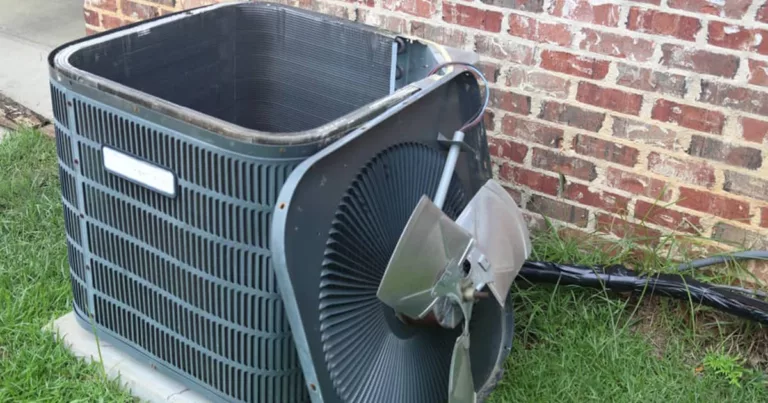
So where does the efficiency actually come from? Instead of short-cycling at full power, a variable speed system runs longer at lower speeds. On a mild 85°F afternoon it might cruise around 40% output. When the valley hits 105°F, it ramps toward full. Those long, low cycles are the whole point. They sip electricity, and they keep air moving across the coil long enough to wring out humidity.
A variable speed compressor modulates its output to match a home's real-time load rather than cycling fully on and off, which is why these systems carry the highest efficiency ratings on the market. Matching load to equipment is a residential design and installation question before it is an equipment one. ENERGY STAR's Most Efficient 2025 air-source heat pump criteria set the entry bar at SEER2 16.0, well above the 14.3 SEER2 federal minimum that applies to new equipment in California (ENERGY STAR, 2025).
What Are the Benefits for Sacramento Homeowners?
The payoff shows up in five places: your bill, your comfort, your sound level, your indoor humidity, and how long the equipment lasts. The U.S. Department of Energy estimates that high-efficiency cooling upgrades combined with smart operation can cut air-conditioning energy use by up to 50%, and ENERGY STAR puts the savings from replacing 10-plus-year-old equipment with qualified units at up to 20% on heating and cooling costs (DOE, 2025; ENERGY STAR).
Lower Energy Bills
Because the system only draws the power it needs at any minute, it avoids the spike that hits every time a single-stage compressor slams on. Across Sacramento's long four-to-five-month cooling season, industry estimates commonly put the gap between a high-efficiency variable speed system and an aging single-stage unit at 20% to 40%. Your actual number depends on your rate plan, your runtime, and how oversized the old unit was. For more ways to trim cooling costs, see our guide on 9 ways to improve air conditioner efficiency.
More Consistent Comfort
Single-stage systems let the temperature drift before they kick back on, so you feel the swing. A variable speed system holds closer to your setpoint because it rarely shuts all the way off. Rooms that used to run hot in the afternoon tend to even out. It's a subtle thing on day one and an obvious thing by August.
Quieter Operation
A variable speed outdoor unit spends most of its life at low speed. At 40% output it's far quieter than a single-stage unit running flat-out, which only knows one volume: loud. You stop noticing the cycle. So do your neighbors.
Better Humidity Control
This one matters more than people expect during Sacramento's spring and fall shoulder seasons. Longer, slower run cycles keep household air in contact with the cold coil longer, so the system pulls out more moisture. ENERGY STAR flags poor humidity control as a classic symptom of an oversized or short-cycling AC, which is exactly the failure mode a right-sized variable speed system avoids (ENERGY STAR).
Be skeptical of how hard national pages lean on this one. Humidity control is the headline benefit in a Gulf Coast or Midwest guide, and Sacramento is a dry-summer climate where it matters far less. Where it does show up here is the shoulder seasons: an oversized single-stage unit on a muggy October evening leaves the house cold and clammy, and a right-sized variable speed system fixes that without overcooling. Real, but it is not the reason to buy one here. The next section is.
Longer Equipment Life
Every cold start puts a jolt of electrical and mechanical stress on a compressor. Variable speed compressors start gently and ramp gradually, so they take less of that abuse. The DOE plans around a roughly 15-year service life for central air conditioners and heat pumps in its standards analysis (DOE), and well-maintained systems often reach 15 to 20 years. We can't promise a variable speed unit will outlive a single-stage one, but the gentler operation is a sound reason to expect a longer run with regular maintenance.
The Sacramento case: SMUD's peak window
Here is the argument that actually applies in this market, and it is missing from every national guide on this topic.
Sacramento households are on SMUD's Time-of-Day rate. In summer, electricity between 5 and 8 p.m. on a weekday costs $0.3765 per kilowatt hour against $0.1550 before noon. Peak power is roughly 2.4 times off-peak, and those three hours land squarely on the hottest part of a Sacramento afternoon, when your air conditioner is working hardest.
Now think about what each system type does during those three hours.
A single-stage unit has one answer: full power, on and off, all evening. Every start pulls inrush current, and every cycle runs at 100 percent draw during the most expensive hours of the day.
A variable speed unit can hold the house at a lower, steadier output through the same window. It is not free, but it spends the peak hours drawing a fraction of what a single-stage compressor draws when it kicks on.
That is a structural advantage that repeats every weekday for four to five months a year. Combine it with pre-cooling, which you can do on either system, and the peak window stops being the expensive part of the day. Our guide on making your AC more efficient covers the pre-cooling play in detail.
The second Sacramento factor is simply runtime. Variable speed pays back through hours of operation, and this valley runs a four to five month cooling season with sustained triple digits. A system that would take a decade to justify in a mild coastal climate has far more hours to work with here.
Variable Speed vs. Single-Stage vs. Two-Stage
The three system types differ in how many output levels the compressor has, and that drives both comfort and price. Single-stage runs at one level, two-stage adds a roughly 65% low setting, and variable speed runs anywhere in between. Here's how they compare:
| System type | Compressor output | Comfort consistency | Best for |
|---|---|---|---|
| Single-stage | 100% or off | Noticeable temperature swings | Tight budgets, rentals, short stays |
| Two-stage | High (100%) and low (~65%) | Good, fewer swings | Balancing upfront cost and savings |
| Variable speed | ~30% to 100%, continuous | Most consistent, quietest | 5-plus-year stays, lowest bills, even comfort |
For a full system replacement, our installed range is $9,500 to $25,000. What about payback? Honestly, it depends too much on your situation to quote a single number. The variable speed premium over a single-stage unit usually runs a few thousand dollars, and you recover it through lower bills plus rebates like SMUD's. A long stay, a high summer runtime, and a qualifying rebate all shorten that timeline. A vacation home with light use stretches it out. Our HVAC system replacement cost guide breaks down what drives the final number.
Where a single-stage, two-stage or variable speed replacement lands inside our $9,500 to $25,000 range depends on the equipment tier, labor, and the duct testing now mandatory under the 2025 Title 24 code.
How Do California's 2026 Title 24 Rules Affect Your Choice?
California's 2025 Building Energy Efficiency Standards took effect January 1, 2026, and they tilt the field toward heat pumps. Under the prescriptive compliance path, a heat pump is now the assumed baseline for space heating in most new single-family homes, which makes a gas furnace the harder and costlier option to justify (California Energy Commission, 2025). The code also requires duct insulation of at least R-6, and caps duct leakage at 5% where the duct system is new or entirely replaced. On an equipment change-out over existing ducts the limit is the alteration path instead: 10% total leakage, or 7% to outside, or sealing every accessible leak and verifying it.
Title 24 itself doesn't set a SEER2 number for your equipment. It defers to the federal minimum. For California, which sits in the DOE Southwest region alongside Arizona, Nevada, and New Mexico, that floor is 14.3 SEER2 and 11.7 EER2 for a split-system air conditioner under 45,000 Btu/h, and 14.3 SEER2 with 7.5 HSPF2 for a heat pump (DOE Regional Standards, 2023). The EER2 figure is the one that bites in our hot, dry climate, because it measures performance on the hottest days. A variable speed system clears all of these floors comfortably, usually by a wide margin.
Choosing variable speed in 2026 puts you well ahead of code and positions the home for future updates. If you're deciding between a heat pump and a gas furnace in the first place, our heat pump vs gas furnace guide for Sacramento compares operating costs. And if you're wondering how the refrigerant rules factor in, our 2025 refrigerant mandate explainer covers the A2L transition.
California's 2025 Title 24 energy code, effective January 1, 2026, establishes the heat pump as the prescriptive baseline for space heating in most new single-family homes and requires R-6 duct insulation with a 5% leakage limit (California Energy Commission, 2025). Equipment efficiency still follows the federal minimum of 14.3 SEER2 for the Southwest region that includes California.
What Rebates and Tax Credits Can You Still Claim?
Here's the part that changed in 2026: the federal Section 25C tax credit, which gave homeowners up to $2,000 toward a qualifying heat pump, expired December 31, 2025 under the One Big Beautiful Bill Act. There's no federal credit for systems installed in 2026. But Sacramento homeowners aren't out of options. SMUD raised its top heat pump rebate to $3,000 in February 2026, specifically because the federal credit went away (SMUD Heating and Cooling Rebates, 2026).
SMUD's top rebate, $3,000, goes to a qualifying variable-stage gas-to-electric conversion. Variable speed heat pumps are among the most likely systems to qualify, because SMUD's top tier targets high-efficiency, variable-stage equipment. The statewide HEEHRA / TECH Clean California program is suspended and not accepting new applications, so SMUD is where to focus first. We keep the full picture current in our California heat pump rebates guide.
The federal Section 25C heat pump tax credit expired December 31, 2025, leaving no federal incentive for 2026 installations. SMUD responded by raising its top heat pump rebate to $3,000 in February 2026 for a qualifying Sacramento gas-to-electric conversion (SMUD, 2026).
Is a Variable Speed System Right for Your Home?
A variable speed split system is the right call if you plan to stay five or more years, you're replacing equipment that's 15-plus years old, you want lower monthly bills, or you've got rooms that never seem to hold the same temperature as the rest of the house. It's also the surest way to clear California's latest efficiency standards with room to spare.
It's harder to justify for a vacation home, a rental you'll sell soon, or a property with light HVAC use, where a two-stage system often makes more financial sense. Budget matters too. If the upfront premium is a stretch, two-stage gets you most of the comfort gain for less money.
The only way to know for certain is a Manual J load calculation, which sizes the system to your home's actual square footage, insulation, windows, and orientation rather than a rule of thumb. Oversizing is the single most common installation mistake, and it erases the comfort and humidity advantages that make variable speed worth buying in the first place. A proper AC installation in Sacramento or Fair Oaks HVAC installation starts with that calculation, not a sales pitch.
Frequently Asked Questions
Is a variable speed AC worth the extra cost?
For homeowners staying five or more years in a climate like Sacramento's, usually yes. The higher efficiency trims summer bills, the longer run cycles improve comfort and humidity control, and rebates like SMUD's up-to-$3,000 offer offset much of the premium (SMUD, 2026). For short stays or light-use properties, a two-stage system is often the smarter buy.
What's the difference between variable speed and inverter?
They describe the same technology. "Inverter" refers to the electronic board that varies the compressor motor's frequency, and "variable speed" describes the result: a compressor that runs at many output levels instead of just on or off. Manufacturers use the two terms interchangeably in their marketing.
What SEER2 rating does a variable speed system have?
Most variable speed systems carry SEER2 ratings from the high teens into the low-to-mid 20s. ENERGY STAR's Most Efficient 2025 tier for air-source heat pumps starts at SEER2 16.0 (ENERGY STAR, 2025), well above California's 14.3 SEER2 federal floor for new equipment.
Can I still get a tax credit for a variable speed heat pump in 2026?
Not a federal one. The Section 25C credit expired December 31, 2025. However, SMUD's heat pump rebate, up to $3,000 as of February 2026, applies to qualifying variable-stage systems (SMUD, 2026).
How long does a variable speed system last?
The DOE plans around a roughly 15-year service life for central air conditioners and heat pumps (DOE), and well-maintained systems often reach 15 to 20 years. The gentle soft-starts of a variable speed compressor reduce mechanical stress, which is a reasonable basis to expect a long life with regular service.