

A single-stage furnace burns at one rate, a two-stage furnace adds a lower setting, and a modulating furnace adjusts its flame in small steps. For most Sacramento houses, a two-stage furnace is the best value: our winters are mild, so a furnace spends most of the season asking for only part of its heat, and a low stage covers those hours with longer, quieter cycles. A single-stage furnace still makes sense for a small, tight house on a budget, and a modulating furnace makes sense when steady temperatures and quiet running matter most.
If you are already pricing a new furnace, our furnace replacement service for Sacramento-area homes covers how we size and quote the job. This guide covers the choice inside that quote: what each type of furnace does, why Sacramento's climate changes the math, when an 80% or a 96% AFUE furnace fits, and what three recent Alpha Mechanical installs in West Sacramento, Roseville and Lincoln show about how homeowners actually choose.
- What Is the Difference Between a Single-Stage, Two-Stage and Modulating Furnace?
- Why Does Sacramento's Mild Winter Favor a Two-Stage Furnace?
- 80% vs 96% AFUE in a Sacramento Winter
- What Three Recent Alpha Installs Show
- Which Furnace Should You Choose?
- How Staging Fits the Bigger Replacement Decision
Key Takeaways
- A single-stage furnace is either off or at full fire. A two-stage furnace adds a low setting it uses most of the time. A modulating furnace varies its gas input in small steps to match the heat the house is losing.
- Sacramento's winter is mild: 2,436 heating degree days a year at Sacramento Executive Airport against 6,067 at Detroit Metro, per NOAA climate normals, and ENERGY STAR's 2019 guide sets Sacramento County's heating design temperature at 29°F. A furnace sized for the coldest night runs well below full capacity most of the season, which is where a low stage pays off in comfort.
- ENERGY STAR counts California in its "U.S. South" region, where a certified gas furnace must reach 95% AFUE and can save an average of $60 a year over a standard model. A certified furnace in the North, where the label requires 97% AFUE, can save $160 a year, so a high-efficiency furnace pays back more slowly here.
- A 90%+ condensing furnace needs plastic vent pipes and a condensate drain, and DOE's furnace rule lists rerouted venting, an "orphaned" water heater and condensate removal among the extra work a replacement can need.
- In our recent installs, both zoned homes got a two-stage furnace. Every system replacement we quote falls in a range of $9,500 to $25,000.
What Is the Difference Between a Single-Stage, Two-Stage and Modulating Furnace?
The difference is how many fire rates the gas valve has. Every gas furnace has a burner, a heat exchanger and a blower. Staging describes how the burner runs once the thermostat calls for heat.
| Single-stage | Two-stage | Modulating | |
|---|---|---|---|
| Gas valve | On or off, full fire every cycle | Low fire for most calls, high fire when the house needs it | Adjusts in small steps between a low and a high limit |
| Typical blower | Fixed or multi-speed | Multi-speed or variable-speed | Variable-speed |
| How it feels | Warm blast, then off; wider temperature swings | Longer, gentler cycles on low | Long, steady runs with the smallest swings |
| Noise | Loudest at start and full fire | Quieter on low | Quietest |
| Best fit in Sacramento | Small or well-insulated houses, tight budgets | Most houses; a good match for zoning | Comfort-first owners, larger or zoned houses |
| Efficiency tier | 80% or 90%+ AFUE | 80% or 90%+ AFUE | Usually 90%+ condensing |
Staging and efficiency are separate choices. AFUE is the annual fuel utilization efficiency rating: the share of the fuel that becomes heat in your house. Staging is how smoothly that heat is delivered. Trane sells an 80 Two-Stage Gas Furnace, an 80% AFUE model whose spec list includes "Two-stage gas heat" and a nine-tap blower motor. It also sells a 96 Modulating Variable Speed Gas Furnace with "fully modulating gas heat" and a variable-speed blower, which Trane's furnace overview calls its most efficient furnace, at up to 97.3% AFUE. You can buy a two-stage furnace that is not high-efficiency, and a high-efficiency furnace that is single-stage.
Single-stage: simple and the least expensive
A single-stage furnace is a furnace whose gas valve has one setting, so it runs at 100% of its rated output every time it lights. When the house reaches the thermostat setting, it shuts off, the house cools a degree or two, and it lights again at full fire. That design is simple and the least expensive of the three. The tradeoff is comfort: rooms near the supply registers warm quickly, rooms at the end of long duct runs lag, and the blower starts and stops more often.
Two-stage: a low setting for mild nights
A two-stage furnace is a furnace whose gas valve has two settings, low and high. On a typical Sacramento night it lights on low and runs a longer, quieter cycle. When the house is losing heat faster than low fire can replace it, on the coldest mornings or after a long setback, the furnace steps up to high fire. Longer cycles mix the air in the house more evenly and give the blower time to move warm air to the far rooms.
Modulating: continuous adjustment
A modulating furnace is a furnace that adjusts its gas input in small increments. It pairs that with a variable-speed blower, so it can run long, low cycles that track the heat the house is losing hour by hour. It gives the steadiest temperatures and the quietest operation of the three. It also has the most complex controls and usually works best with a communicating thermostat from the same manufacturer.
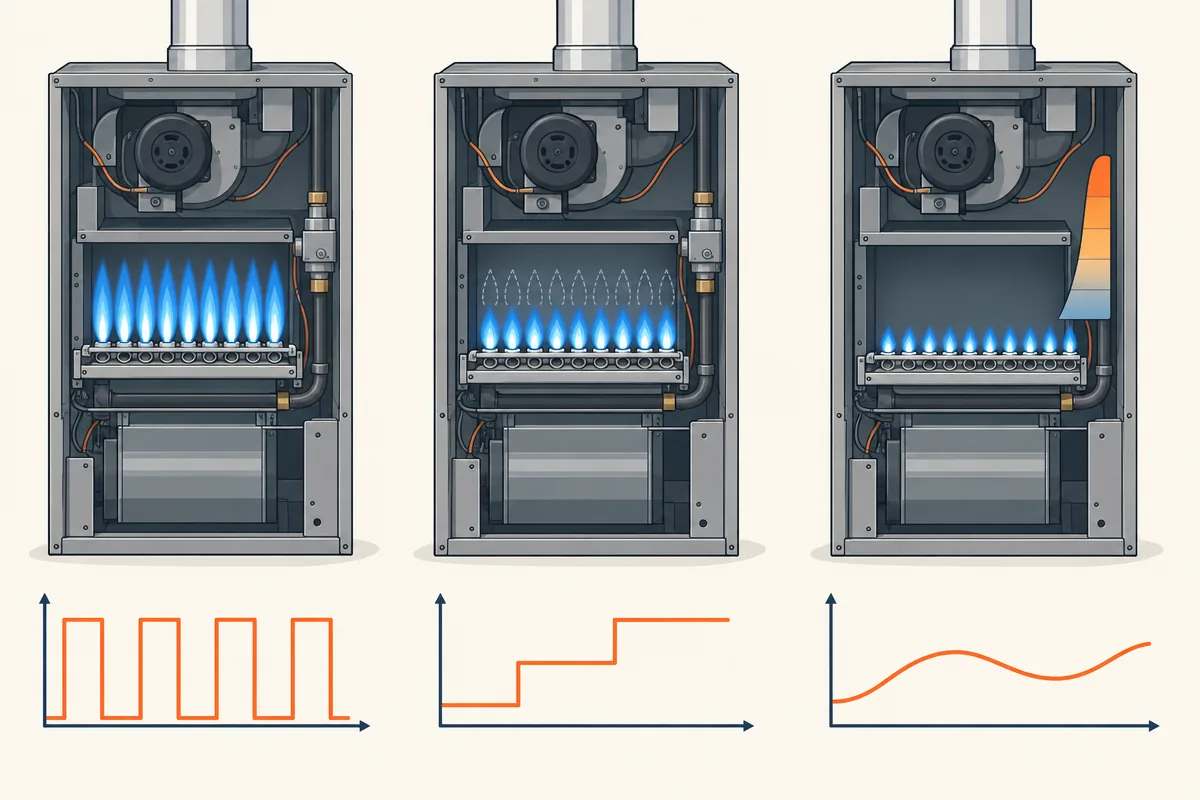
Illustration: single-stage furnaces cycle between off and full fire, two-stage furnaces step between a low and a high setting, and modulating furnaces adjust smoothly.
Why Does Sacramento's Mild Winter Favor a Two-Stage Furnace?
A furnace is sized for the coldest night, and Sacramento has very few of them. ENERGY STAR's 2019 Design Temperature Limit Reference Guide lists 29°F as the 99% heating design temperature for Sacramento County. That is the outdoor temperature a load calculation sizes the furnace to handle. Most winter hours here sit well above it.
NOAA's 1991 to 2020 climate normals put the yearly heating demand at 2,436 heating degree days at Sacramento Executive Airport, against 6,067 at Detroit Metro Airport. A Sacramento house needs about 40 percent of the heat a Detroit house needs over a year.
Put those two facts together and the case for staging changes shape. A single-stage furnace sized for a 29°F morning is oversized for a 45°F evening, so on most nights it lights at full fire, satisfies the thermostat quickly and shuts off. That is the pattern behind a lot of the furnace short cycling we see in Sacramento. A two-stage furnace spends those same evenings on low fire, which is closer to what the house actually needs. In a cold climate the low stage is a comfort feature for the shoulder season; here, it is the setting the furnace uses for most of the winter.
The same mild climate cuts the other way on efficiency. Fewer heating hours mean fewer therms burned, so the gas savings from any upgrade are smaller in dollars here than in Minneapolis or Detroit. That is why we frame staging around comfort and noise, and efficiency around your gas bill, rather than promising a payback.
80% vs 96% AFUE in a Sacramento Winter
For the same heat delivered, an 80% AFUE furnace burns about one-fifth more gas than a 96% furnace. ENERGY STAR defines AFUE as "the percentage of the heat in the incoming fuel which is converted to space heat instead of being lost." An 80% furnace turns 80 cents of every gas dollar into heat; a 96% furnace turns 96 cents. Divide 96 by 80 and the 80% furnace needs 1.2 units of gas for every unit the 96% furnace uses, which means the 96% furnace burns about 17 percent less gas for the same heat.
What that saves depends on how much gas you burn, and that is where Sacramento's climate matters. ENERGY STAR's furnace key product criteria place California in its "U.S. South" region, where a gas furnace needs a rating of 95% AFUE or greater to earn the label. ENERGY STAR's furnace page says certified furnaces in the southern half of the country are up to 16 percent more efficient than standard models and "can save an average of $60 in energy costs each year." Certified furnaces in the North can save $160 a year. A high-efficiency furnace still saves gas in Sacramento; it just pays back over more years than it would in a cold state.
What a 90%+ condensing furnace needs
A furnace at 90% AFUE and above is a condensing furnace: it pulls so much heat out of the exhaust that water vapor condenses inside it. DOE's 2023 consumer furnace rule treats 80% AFUE as the non-condensing level and 90% as the first condensing level, with "the addition of a secondary heat exchanger" as the step between them, and notes that furnaces reaching 95% AFUE "do employ condensing technology." The same rule lists the extra work that can come with replacing a non-condensing furnace with a condensing one:
- new PVC flue venting and PVC combustion-air venting
- concealing the new vent pipes
- an "orphaned" water heater: when the old furnace shared a metal flue with a gas water heater, the water heater's flue connectors, vent size or chimney liner may need updating once the furnace leaves that flue
- condensate removal, a drain path for the water the furnace makes
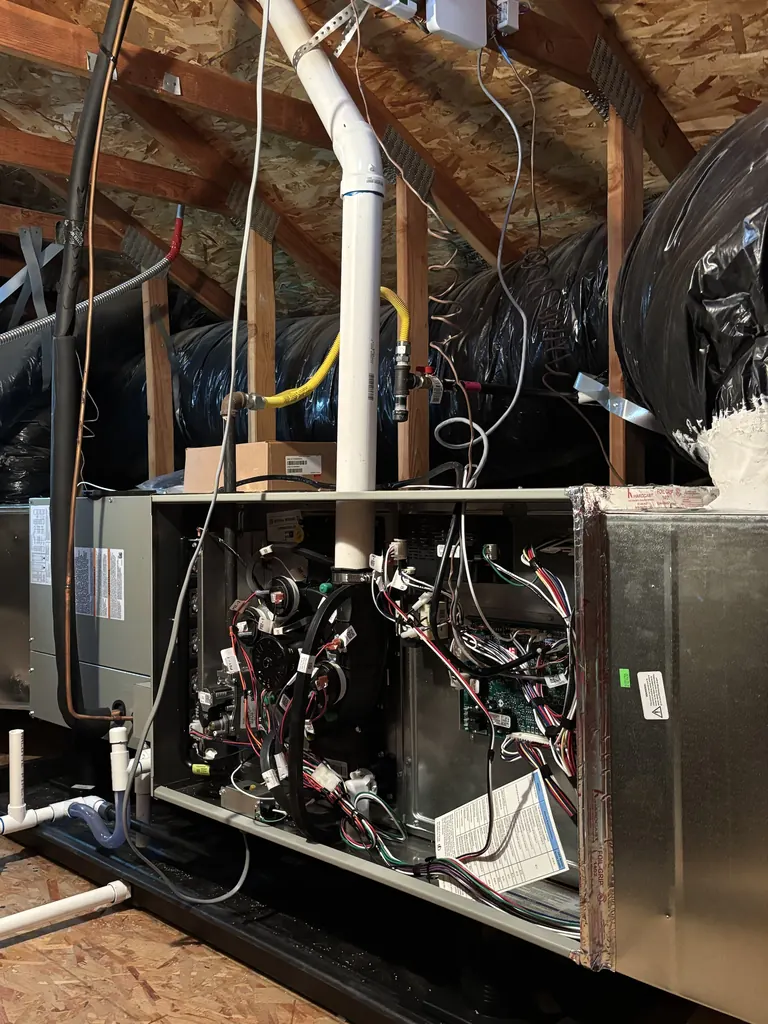
In Sacramento attics and garages, the vent route and the condensate drain are usually what decides whether a 96% furnace is a simple swap or a bigger job. We look at both before we quote, and the quote spells out the venting and drain work.
Is an 80% furnace still legal to install?
Yes. DOE's 2023 rule describes 80% AFUE as "the current Federal minimum" for indoor (non-weatherized) gas furnaces. That rule, as published in the Federal Register in December 2023, raises the level to 95% AFUE for non-weatherized gas furnaces manufactured in, or imported into, the United States starting December 18, 2028. It sets a manufacturing date, not a ban on installing furnaces already built. Federal efficiency rules can be revised, so we confirm the current status when we quote.
What Three Recent Alpha Installs Show
Three 2026 Alpha furnace installs cover the range, from a plain 80% replacement to a 97% two-stage, variable-speed furnace. We found them by searching the 5,979 job records in our Housecall Pro history as of mid-October 2026 for staging terms such as two-stage, single-stage and modulating. Customer names, addresses and prices are left out.
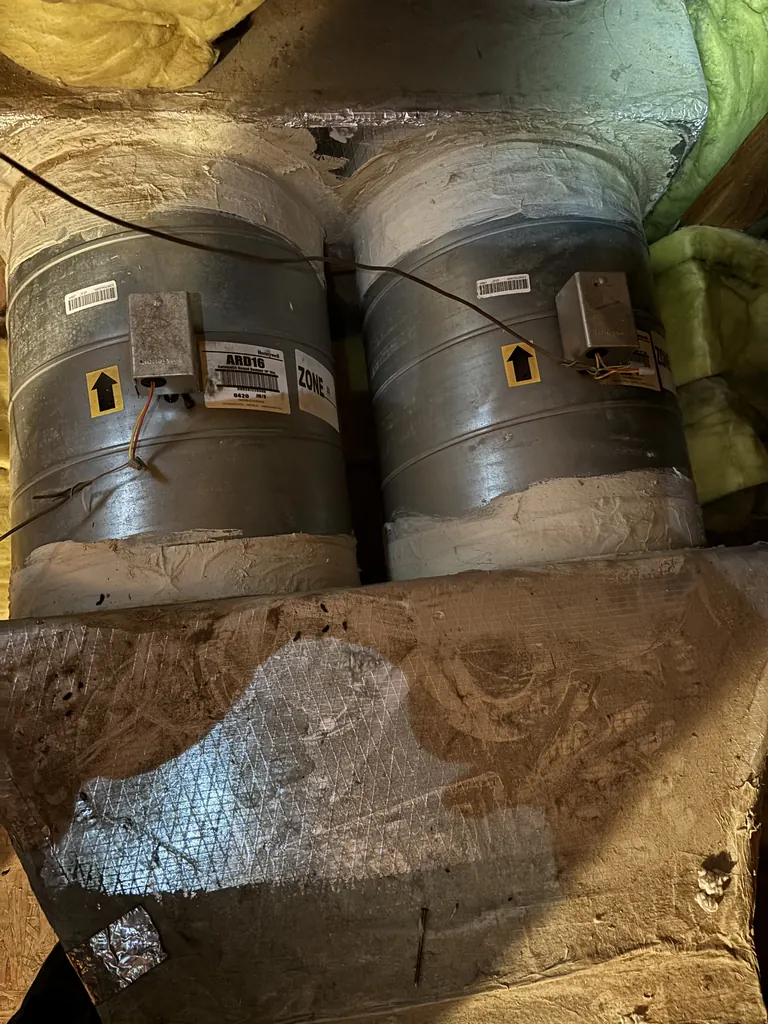
West Sacramento, spring 2026: single-stage to two-stage variable speed. The home had a single-stage gas furnace in the attic, vented through a metal flue. The homeowner wanted three things from the new system: steadier temperatures through the house, efficiency and lower bills, and quiet running. The proposal accepted on March 15, 2026 specified Trane's 96 Modulating furnace with a Trane variable-speed 5-ton air conditioner. The furnace that went in is a two-stage model: its rating plate, photographed at the install, reads S9V2C100U5VSBBA, Trane's 97 Two-Stage Variable Speed Gas Furnace, and a label on it shows it was converted to Trane's Link communicating controls. The record does not say why the model changed, so we will not guess. The main install visit closed in early April. The job record also lists a zone panel with two 16-inch dampers, a UX360 thermostat with a wall sensor, and 2-inch PVC pipe for the condensing furnace's venting.
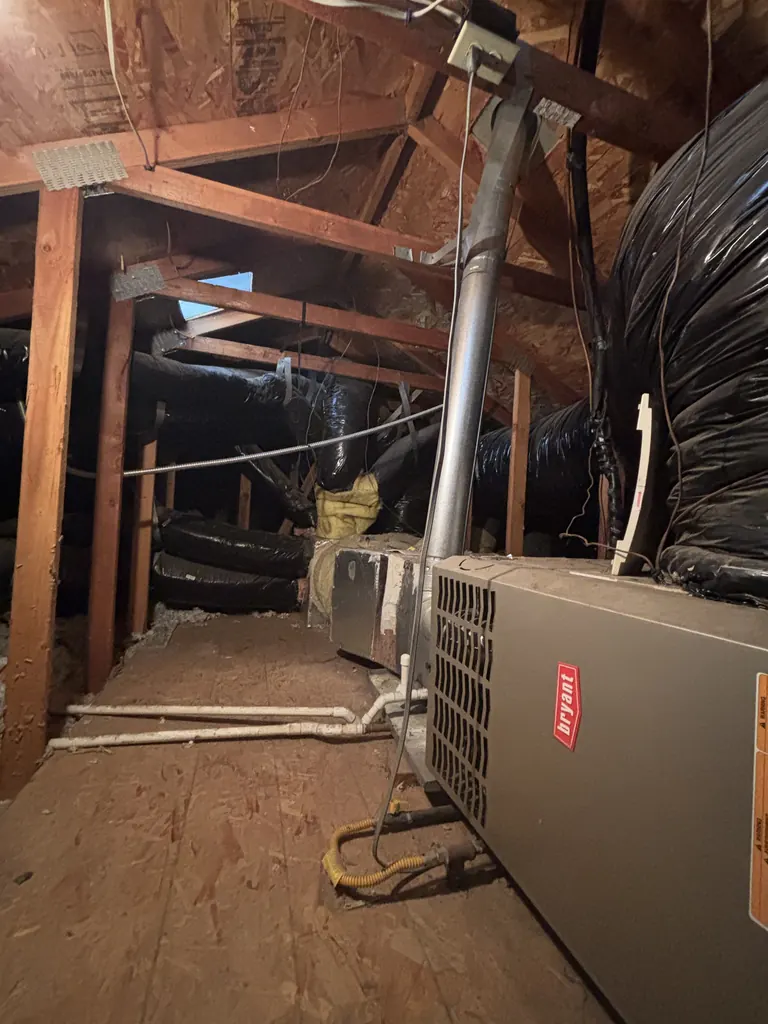
Roseville, May 2026: two-stage at 80% AFUE. The customer accepted a proposal on May 11, 2026 for a Trane 80 Two-Stage Gas Furnace (80,000 BTU, up to 80% AFUE) with a Trane 17 multi-speed 4-ton air conditioner, and the install was complete on May 15. The record keeps the existing thermostats and adds a zone control board with two 16-inch dampers. No reason for the choice is on record, so we will not invent one. It is a common combination in our area: a two-stage furnace on a zoned house, without the venting work a condensing furnace would add. For Roseville homeowners weighing a replacement, our Roseville HVAC service page covers the local side, including Roseville Electric rather than SMUD on the electric bill.
Lincoln, July 2026: an 80% furnace with a single-stage Trane. The job record describes replacing a first-floor 3-ton air conditioner "with single stage Trane and 80% gas furnace." The record does not state the furnace's own staging. It is the plainest of the three records: an 80% furnace, with no condensing vent or drain work listed.
The pattern in the first two jobs is zoning. A two-zone house, for example a two-story with the bedrooms upstairs, often calls for heat in one zone while the other is satisfied, so the furnace needs a fraction of its capacity. A single fire rate pushes all of it into one zone's ducts. A low stage, or a modulating flame, delivers a smaller amount of heat that one zone can actually use. If you have zones or are adding them, we treat a staged furnace as part of that design.
Which Furnace Should You Choose?
Pick the staging for comfort and noise, and the AFUE for your gas bill and your venting. These are the questions we walk through at a replacement visit:
- How big and how tight is the house? A small, well-insulated single-story house with short duct runs gets little from a low stage. A two-story or a house with long runs to the far bedrooms gets the most.
- Do you have zones, or want them? Zoning and staging work together. Both of our zoned installs above got a two-stage furnace.
- Who notices the noise? A furnace in a hall closet next to a bedroom, for example, is a different decision from one in the garage or attic. Low fire is quieter, and a variable-speed blower is quieter still.
- Where does the vent go? A 96% furnace needs PVC venting and a drain. If that route is easy, the efficiency step costs less to install; if it means a new roof or wall penetration and a water heater flue fix, the comparison shifts toward 80%.
- How long will you stay? At ENERGY STAR's $60-a-year average savings for the South, the efficiency upgrade is a long-term decision. Staging pays you back in comfort from the first night.
- Is the air conditioner being replaced too? In a split system the furnace blower also moves your cooling air. A variable-speed furnace blower pairs well with a multi-stage or variable-speed air conditioner, which is the AC side we cover in our variable-speed split system guide.
Sizing comes first either way. When the house has changed since the old furnace went in, or on request, we run a load calculation (Manual J) against Sacramento's design temperature before we recommend a size. An oversized two-stage furnace still short cycles, just less often.
How Staging Fits the Bigger Replacement Decision
A staging choice only matters once you have decided to replace. If you are still weighing a repair against a new system, start with our guide to whether to repair or replace your HVAC system, which runs the numbers on age and repair cost. If the question is how much life your current furnace has left, our guide to how long a furnace lasts in Sacramento covers the lifespans DOE estimates and the signs of a dying furnace. For a heat pump in place of a gas furnace, see our comparison of a heat pump against a gas furnace for a Sacramento house.
Every whole-system replacement we quote falls between $9,500 and $25,000. Staging, efficiency tier, venting, zoning and the air conditioner move a quote inside that range, and the HVAC replacement guidelines explain how we lay out the options. Brand matters less than the installation, and financing is available when you decide to replace.
We install furnaces across the Sacramento area from our Fair Oaks office, including Folsom, where our furnace replacement page for Folsom homeowners covers the furnace-only and heat pump options. Call (916) 848-5980 to book a replacement visit, and we will bring the single-stage, two-stage and modulating options for your house side by side in one written quote.
We fact-checked every figure in this guide against the source linked beside it, and the three case studies against our own proposal and job records. Questions about the guide or your furnace? Contact our Fair Oaks office at the number above, or read more about us and how we work.