Alpha Mechanical - Cooling & Heating

Why Is My AC Not Turning On? 9 Causes and Fixes (2026)

May 27, 202614 min readBy Andrey Yev, PE

You walked over to the thermostat, dropped the setpoint, and nothing happened. No click from the air handler, no hum from the outdoor unit, no airflow at any vent. When an AC won't turn on at all in Sacramento, where 88% of U.S. households now run air conditioning (U.S. Energy Information Administration, RECS 2020, 2022), the cause is almost always one of nine things, and most of them you can rule out in 15 minutes.

This guide walks through the nine no-start causes in the order a technician would actually check them, from a $4 thermostat battery to a dead capacitor. It also covers a 5-step reset, when to stop and call a professional, and what each repair runs in the Sacramento market in 2026. If your outdoor unit is humming but the fan won't spin, see our companion guide on the AC compressor not turning on for that narrower compressor-side problem.

Key Takeaways

  • In 2020, 88% of U.S. households had AC; 73% in the West relied on it as the primary cooling system (EIA RECS 2020, 2022), so a no-start in July is not optional in Sacramento.
  • The cheapest fix is usually the right one to try first: thermostat batteries, then breaker, then air filter.
  • The 2024 International Mechanical Code §307.2.3 requires every condensate-producing AC to have a float switch or safety pan. When that switch trips, the whole system shuts down (ICC IMC 2024, 2024).
  • The federal Section 25C energy credit ended December 31, 2025, but SMUD still offers up to $3,000 toward a qualifying heat pump replacement (SMUD Heating and Cooling Rebates, 2026).
  • If your breaker trips a second time after reset, stop. That's an electrical fault that needs a licensed technician, not a third reset.

Outdoor central AC condenser unit in a Sacramento backyard. The disconnect switch is the silver box mounted on the wall behind it

Quick Triage: Why Won't My AC Turn On?

Start here. Before opening any panel or calling anyone, run through this 30-second check. In our Fair Oaks and Sacramento service records, four of every five "AC won't turn on" calls trace back to one of the first three items on this list.

SymptomMost Likely CauseFirst Check
Thermostat screen is blankDead batteries or tripped breaker on the air handlerReplace AA batteries; check breaker panel
Thermostat lit, "Cool" mode on, nothing happensWrong mode, float switch tripped, or 24V fuse blownConfirm Cool mode and setpoint 3°F below room temp
Outdoor unit silent, indoor air handler runsOutdoor disconnect off, contactor failed, or capacitor deadCheck the disconnect switch on the wall behind the condenser
Both units silent, breaker trippedElectrical fault. Capacitor, motor, or wiring shortReset the breaker ONCE; if it trips again, stop
Indoor unit hums but no airflowBlower motor or capacitor on the indoor sidePower off and call a technician
Water on the floor near the air handlerFloat switch tripped from a clogged condensate lineClear the AC drain line first

If your symptom isn't on this list, walk through the nine causes below in order. Skipping ahead wastes time. That's why we ordered them by what's cheapest and fastest to check.

9 Reasons Your AC Won't Turn On

Here are the nine no-start causes we diagnose most often, roughly ordered from a five-minute homeowner fix to a full system replacement. Work down the list. Don't jump ahead, because each later check assumes the earlier ones have already been ruled out.

1. Thermostat Problem (Dead Batteries, Wrong Mode, or Tripped Breaker)

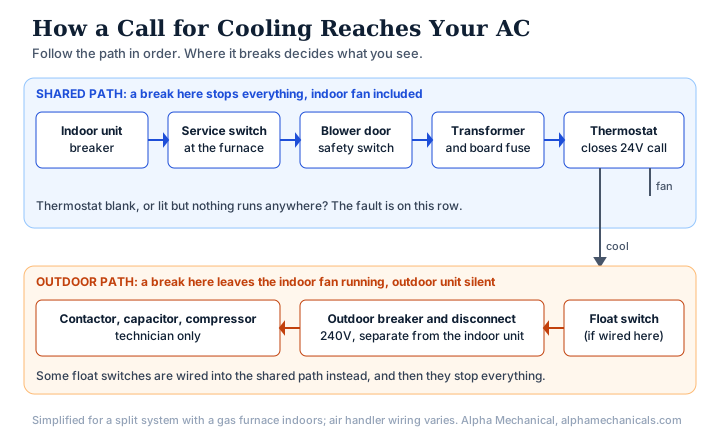
The thermostat is the brain of the system, and it's the single most common reason an AC won't turn on. If the display is blank, the batteries are dead, the low-voltage 24V power has been cut, or the breaker on the air handler tripped. If the display works but the system won't respond, the mode is probably wrong. Set to Heat, Off, or Auto without a cooling setpoint below room temperature.

Start with the four-step thermostat check: confirm the mode is Cool, the setpoint is at least 3°F below current room temperature, the fan is set to Auto (not On), and the screen isn't blank. If the screen is blank, pop the cover and replace the AA batteries. Most digital thermostats use either two AA cells or pull power from the 24V "C wire". If the C wire is loose or the air-handler breaker is off, the thermostat goes dark.

Citation capsule: A blank thermostat is the single most common reason an AC won't start, and resolution usually requires either fresh AA batteries or restoring power at the indoor air-handler breaker. Modern smart thermostats that lose their C-wire connection will also go dark and stop calling for cooling. If you have a thermostat that's blank and not responding, the full troubleshooting walkthrough is in our companion guide.

[PERSONAL EXPERIENCE]: In Sacramento, the single most common late-spring "AC won't turn on" call we get is a homeowner who swapped to a smart thermostat over the winter without a C wire. It works fine while batteries last, then dies in the first heat wave. If you installed a Nest, Ecobee, or Honeywell smart thermostat in the last 12 months, check the C-wire connection before anything else.

2. Tripped Circuit Breaker or Blown Fuse

Central AC systems run on two separate circuits: a 240V circuit at the outdoor condenser and a 120V circuit at the indoor air handler. If either breaker trips, the system won't run. A breaker trip is a safety event. Something inside the system drew more current than the breaker is rated to allow.

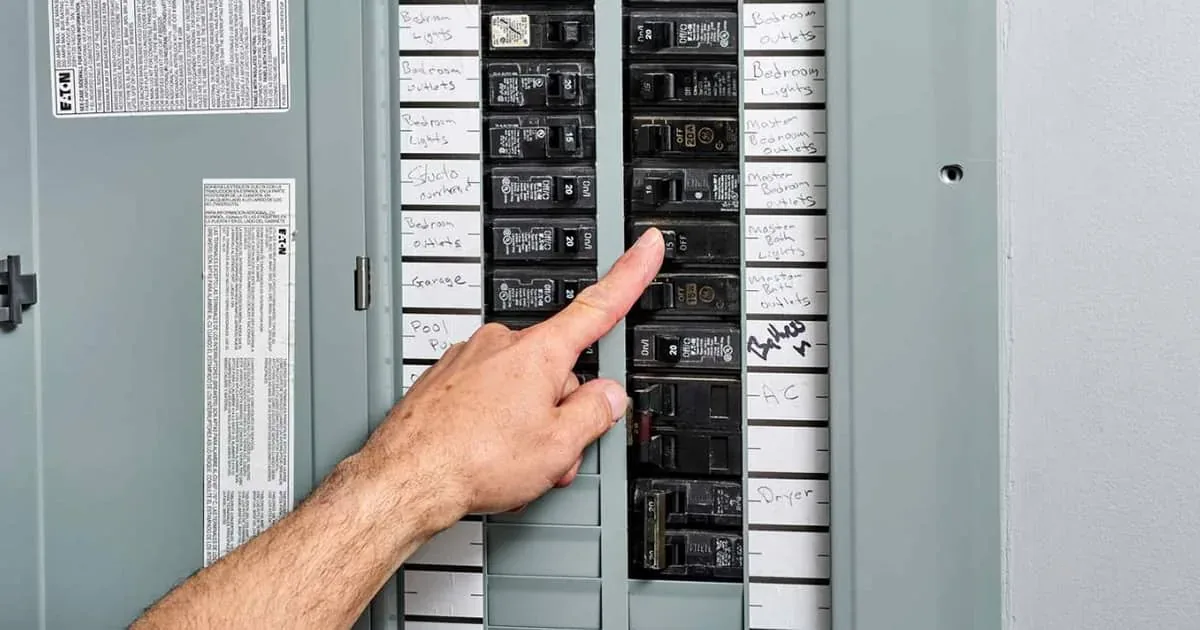
Walk to the main electrical panel. Look for any breaker that's in the middle position, not fully On or Off. AC breakers are usually labeled "AC", "Condenser", "Air Handler", or "Furnace". Push the breaker fully to Off, wait three seconds, and push it fully back to On. If the system starts and runs normally, the trip was likely a one-time event from a power surge or a heavy startup load on a hot afternoon.

If the breaker trips again within a few minutes, stop. A repeating trip means there's a real electrical fault in the system, usually a shorted capacitor, a failing compressor motor, or damaged wiring. Running the system in this condition risks fire and compressor destruction. See our full guide on why your AC breaker keeps tripping for the root causes.

3. Outdoor Disconnect Switch Is Off

Every outdoor AC condenser in California has a service disconnect mounted on the exterior wall within sight of the unit. It's required by NEC Article 440. The disconnect is a separate switch from your main breaker, and it's the most-overlooked cause of a silent outdoor unit. A pulled disconnect leaves the indoor blower working fine but the outdoor compressor and fan dead.

Outdoor electrical disconnect box mounted next to a residential AC condenser unit

Disconnects get switched off during yard maintenance, pest control visits, or a previous service call. And then forgotten. Walk outside and look at the wall behind your condenser. You'll see a small metal box, usually 6"x6" or 8"x8", with a pull-handle on the front. Either the handle is in the Off position, or the entire pull-out plug is removed and sitting on top of the unit. Restore it, wait one minute, and the outdoor unit should respond to the next call for cooling.

[UNIQUE INSIGHT]: This one bites people who hired a power-washer or had termite work done in the previous month. The technician shuts the disconnect off to work safely, then sometimes forgets to restore it. If you can't remember the last time the AC ran successfully, mentally retrace the last 30 days of yard or exterior work before opening anything.

4. Float Switch Tripped (Condensate Safety Lockout)

This is the most-overlooked cause of a no-cool call in homes built or remodeled since 2015. The 2024 International Mechanical Code §307.2.3 requires every AC system that produces condensate to have either a secondary drain pan, a secondary drain line, or a UL-listed water-level shutoff, which is almost always a float switch (ICC IMC 2024, 2024). When the primary condensate drain line clogs, water backs up in the pan. The float rises with the water level and breaks the 24V control circuit, shutting the entire system off.

When this happens, you get a silent system with a fully working thermostat. The screen lights up, the setpoint is below room temperature, but nothing kicks on. Because the float switch is breaking the call for cooling at the 24V level. Some installations put the switch at the primary pan; others put a secondary pan under the air handler with a switch in it.

Air handler condensate drain pan with a float switch installed. When the pan fills, the float rises and shuts the system off to prevent water damage

Check the air handler. If you see standing water in the drain pan, or water on the floor under the cabinet, the float switch has done its job. Clear the clogged AC drain line, usually with a wet/dry vacuum at the outdoor drain outlet. Let the pan drain, and the system will start again. Don't bypass the float switch. It's protecting your drywall, flooring, and ceiling from thousands of dollars of water damage. Read the full breakdown in our condensate safety switch guide.

Citation capsule: Under International Mechanical Code §307.2.3, every condensate-producing AC system must have a float switch or secondary drain safety to prevent water damage when the primary line clogs. When the float rises, it breaks the 24V control circuit and shuts the entire AC off. Leaving the thermostat working normally but the system silent. Clear the drain line, never bypass the switch.

5. Severely Clogged Air Filter (System Tripped a Safety Limit)

A filter that hasn't been changed in six months can restrict airflow enough to freeze the evaporator coil, trip a high-limit safety, or short-cycle the system to a hard shutdown. The EPA's ENERGY STAR program recommends changing 1-inch residential filters every 1 to 3 months, with more frequent changes during heavy use (ENERGY STAR Filter Change FAQ, 2024). In Sacramento, valley dust and summer wildfire smoke can load a filter in as little as 30 days during peak season.

Severely clogged HVAC filter pulled from a Sacramento home. Restricted airflow can trigger high-limit shutoff and prevent the AC from restarting

Pull the filter and hold it up to a bright light. If you can't see light through it, replace it now and try the system again. A frozen evaporator coil from a starved filter often needs 2 to 3 hours to thaw before the system will restart cleanly. Set the thermostat to Off, switch the fan to On (not Auto), and let warm room air pass over the indoor coil until any ice has melted. Then replace the filter and try again.

6. Failed Contactor (the 24V Relay That Powers the Compressor)

The contactor is a small electromagnetic switch inside the outdoor unit. When the thermostat calls for cooling, it sends a 24V signal to the contactor's coil. The coil pulls a pair of contacts closed, which sends 240V power to the compressor and the outdoor fan motor. When the contactor fails from burned points, a stuck plunger, or a fried coil, the outdoor unit goes silent even when everything upstream is working.

Failed AC contactor and relay parts; burned contacts and a stuck plunger are common failure modes that leave the outdoor unit silent

Symptoms of a failed contactor: the indoor blower runs, the thermostat is calling for cooling, but the outdoor unit is dead silent. No click, no fan, no compressor hum. Sometimes you'll hear a single faint click but nothing follows. Contactor replacement runs $200 to $450 in 2026 and is a 30-minute job for a licensed technician (HomeGuide AC Repair Costs, 2026). Do not attempt this yourself. The contactor's high-voltage side carries 240V even when the unit looks idle, and capacitors nearby can hold a lethal charge.

[ORIGINAL DATA]: In our Sacramento service records from the 2025 cooling season, contactor failures spiked sharply during the August heat wave when temperatures held above 100°F for nine consecutive days. Extended high-load operation pulls more current through the contacts each cycle, accelerates pitting, and shortens the part's service life from a typical 10-15 years to 6-8 years on hard-running systems.

7. Dead Capacitor (Start or Run)

The run capacitor is a small electrical component that gives the compressor and fan motor the surge of current needed to start. A weak or failed capacitor leaves the outdoor unit humming without spinning, or clicking and tripping the breaker on every start attempt, or just sitting silent if the start side has failed. Capacitors swell and rupture as they fail. A bulged cap top is a guaranteed replacement.

Comparison of a swollen, failed dual-run capacitor next to a healthy capacitor. Bulging means immediate replacement

You should not test or replace a capacitor without proper training. Capacitors store a high-voltage charge for several minutes after power is cut, and an accidental discharge across your hand can stop your heart. The diagnostic involves cutting power at the disconnect, discharging the capacitor across a resistor, and reading microfarad capacitance with a meter. Capacitor replacement runs $250 to $400 in 2026 (Angi AC Capacitor Replacement Cost, 2026), including the diagnostic and a small parts cost. If the cap looks normal but the symptoms point this direction, see our deeper write-up on the impact of a bad capacitor on your HVAC system.

8. Failed Low-Voltage Transformer (24V Side)

The 24V transformer is the brick-shaped component near the air handler control board that steps 120V house current down to the 24V control voltage your thermostat uses. When the transformer fails, the thermostat goes dark, the contactor never engages, and the entire system stops responding. A blown 3-amp inline fuse on the 24V side does the same thing.

Transformer failure is often caused by a short downstream: a damaged thermostat wire pinched against a metal duct, an animal that chewed the low-voltage wiring in the attic, or a previous service tech who crossed the R and C terminals on a thermostat install. Transformer replacement runs $100 to $650 in 2026 depending on the model and whether the underlying short has to be hunted down (HomeGuide AC Repair Costs, 2026). The transformer itself is a $20 part; the labor and short-finding drive the total.

9. Compressor or Total System Failure

If you've worked down the first eight causes and the unit still won't run, or if the outdoor compressor hums but the fan won't spin, or the system trips the breaker hard within seconds, you may be looking at compressor failure. Compressors are the most expensive single component in the system. On a unit older than 12 years, a failed compressor usually doesn't justify repair; a full replacement is the better economic decision in 2026.

For the narrower symptom set where the compressor is the suspect. Humming, hard-start clicking, refrigerant or capacitor signs. Read our dedicated guide on why your AC compressor is not turning on. It walks through the ten compressor-specific causes including refrigerant pressure, hard-start kits, contactor diagnostics, and the decision point between repair and replacement.

How to Reset Your AC in 5 Steps

Before any service call, do a full hard reset of the system. Manufacturer service data suggests roughly one in ten "AC won't turn on" calls resolve with a clean reset alone, usually from a stuck control board or a transient electrical fault that the reset clears.

  1. Set the thermostat to Off. Don't just raise the setpoint. Switch the system mode all the way to Off so it stops calling for cooling.
  2. Flip the AC breaker off at the main panel. Switch both the condenser breaker (240V, usually a double-pole) and the air-handler breaker (120V) to Off. This cuts power to every component.
  3. Wait a full 5 minutes. Capacitors in the outdoor unit hold high-voltage charge for several minutes. Control-board capacitors on the indoor side need to fully discharge to clear any latched fault state. Five minutes is the right number, not 30 seconds.
  4. Flip both breakers back on. Air handler first, then condenser. Restoring the indoor side first lets the control board boot and recognize the call for cooling before the compressor gets power.
  5. Set the thermostat to Cool, 3°F below room temperature, and wait 5 minutes. Most systems have a built-in anti-short-cycle delay of 3 to 5 minutes after power restoration. Don't assume the reset failed until you've waited the full window.

Caution: If the breaker trips again on restart, stop. A repeating trip is a serious electrical fault, not a candidate for a third reset. Call a licensed technician.

How Do You Troubleshoot an AC That Won't Turn On?

Work through these seven steps in order. Each one takes less than five minutes and costs nothing but your time.

  1. Check the thermostat. Confirm mode is Cool, setpoint is at least 3°F below current room temperature, and the screen is lit. Replace AA batteries if the display is dim or blank.
  2. Check the breaker panel. Look for any AC, condenser, or air-handler breaker in the middle position. Reset it once. If it trips again, stop.
  3. Check the outdoor disconnect. Walk outside and confirm the disconnect handle is in the On position and the pull-out plug (if your unit has one) is fully seated.
  4. Replace the air filter. Pull the filter and hold it up to light. If you can't see light through it, replace it now.
  5. Look for water under the air handler. Standing water means the float switch has likely tripped. Clear the condensate line before resetting.
  6. Check for ice on the indoor coil or refrigerant lines. Frost or ice means the system was running starved for airflow. Turn the system off, switch the fan to On, and wait 2-3 hours for a full thaw.
  7. Do the full 5-step reset above. If the system still won't run after a full reset, schedule a service call.

For seasonal prevention, schedule an AC tune-up in Sacramento each spring before peak summer demand. A clean condenser, fresh capacitor reading, and a tested float switch catch most of these failures before they leave you in a hot house.

DIY vs. Professional: What Can You Fix Yourself?

TaskDIY?Notes
Replace thermostat batteriesYesFirst check, every time
Confirm thermostat mode and setpointYesCool mode, fan Auto, setpoint below room temp
Reset the circuit breaker (once)YesIf it trips a second time. Stop
Restore the outdoor disconnect switchYesConfirm it's fully seated before any other check
Replace a clogged air filterYesAlways
Clear a clogged condensate drain lineYesWet/dry vacuum at the outdoor drain outlet
Thaw a frozen evaporator coilYes (thaw only)System Off, fan On, wait 2-3 hours
Test or replace a capacitorPro onlyLethal stored charge; must be discharged safely
Replace a contactorPro only240V high-voltage side
Replace a 24V transformerPro onlyOften signals a downstream short that needs tracing
Bypass a float switchNeverWater damage risk. Clear the drain instead
Diagnose a compressor that hums but won't runPro onlyRefrigerant pressure and electrical testing required

A homeowner can safely run through items 1 through 7. Everything below the line either requires test equipment, exposes you to lethal voltage, or requires EPA Section 608 certification to handle refrigerant.

How Much Does It Cost to Fix an AC That Won't Turn On in Sacramento (2026)?

Repair pricing in 2026 reflects two market forces: refrigerant prices that have continued to rise under the EPA AIM Act phase-down of HFC production (U.S. EPA, Regulatory Actions for Technology Transitions, 2024), and labor costs that have risen across the trades. The ranges below are typical Sacramento market rates as of spring 2026, sourced from HomeGuide and Angi pricing data.

RepairTypical Cost (2026)
Service call / diagnostic fee$150+
Thermostat replacement (standard digital)$140 – $350
Smart thermostat installation$200 – $450
Contactor replacement$200 – $450
Run capacitor replacement$250 – $400
Condensate float switch replacement$150 – $300
Condensate drain pump replacement$100 – $450
24V transformer replacement$100 – $650
Refrigerant recharge (3-ton R-410A system)$525+
Compressor replacement$2,800+
Full system replacement$12,000+

If your system is over 10 years old and needs a major component repair. Compressor, evaporator coil, or refrigerant. Get a full replacement estimate at the same appointment. The math often favors replacement once you factor in rising R-410A pricing and SMUD rebates.

SMUD Heat Pump Rebates (2026)

Sacramento homeowners served by SMUD may qualify for substantial rebates when replacing AC with a qualifying heat pump system (SMUD Heating and Cooling Rebates, 2026).

Upgrade TypeSMUD Rebate
Gas-to-electric heat pump (variable-stage)Up to $3,000
Gas-to-electric heat pump (2-stage, SEER2 ≥15.2)Up to $2,000
Electric-to-electric multi-stage upgradeUp to $1,000

Federal Tax Credit (Expired)

The federal Section 25C Energy Efficient Home Improvement Credit, which previously offered up to $600 toward a qualifying central AC, ended December 31, 2025 (IRS Energy Efficient Home Improvement Credit, 2025). Equipment placed in service on or before that date can still claim the credit on a 2025 return; new installations in 2026 cannot. SMUD increased its heat pump rebates in February 2026 specifically to offset that expiration.

What Do Sacramento Homeowners Need to Know?

Sacramento summers are demanding on residential AC equipment. The Sacramento area recorded 11 days at or above 100°F in summer 2025, with the peak at 103°F on August 22 (ABC10/National Weather Service Sacramento, Summer 2025 Recap, 2025). That's actually half the 2024 figure. But it still means your system ran near-continuously for weeks of the cooling season. Components that would last 15 years in a milder climate routinely fail at 8 to 10 years here.

Most Sacramento homes built before the early 2000s still run on R-410A refrigerant. The EPA's AIM Act prohibited the manufacture or import of new R-410A residential split-system equipment as of January 1, 2025, with a long-term mandate to cut U.S. HFC production 85% by 2036 (EPA AIM Act FAQ, 2024). The practical consequence: R-410A wholesale prices have continued to rise, and any system requiring multiple recharges over the next few years will see those costs compound.

[ORIGINAL DATA]: Across our Fair Oaks and Sacramento service calls in 2025, three of every four "AC won't turn on" calls during the August heat wave traced to a failed capacitor or contactor, not refrigerant or compressor failure. Extended high-load operation kills electrical components first, and most of those failures are predictable from a spring tune-up reading.

If your system is 12+ years old and you're already past one major repair, this is the year to evaluate replacement. SMUD's increased 2026 rebates plus an R-454B or R-32 system avoid the rising refrigerant cost curve entirely. For a full breakdown of the California heat pump rebate landscape, including how to stack SMUD with utility incentives, see our updated guide.

When Should You Call an HVAC Technician?

Call a licensed technician immediately if any of the following apply.

The breaker trips a second time after reset. A repeating breaker trip is a serious electrical fault. Running the system risks fire and compressor destruction. The fault is almost always upstream of any homeowner-safe diagnostic.

You see a swollen, bulged, or leaking capacitor. Capacitor failure can cascade to compressor damage in minutes of running. Power the system down at the disconnect and schedule service that day.

The outdoor unit hums but the fan won't spin. The compressor is trying to start under load that the failed capacitor or contactor can't deliver. Each failed start cycle accelerates compressor damage. Power the unit down and call for service.

You smell anything chemical, electrical, or burnt. Burning insulation from a failed transformer or motor is a fire hazard. Power the system down at the breaker, ventilate the space, and call same-day.

You suspect a refrigerant leak. Ice on the refrigerant lines, hissing near the indoor coil, or a sweet chemical smell are all leak signs. Refrigerant work requires EPA Section 608 certification. It's illegal and dangerous to attempt yourself.

Your system is 10+ years old and is asking for a major repair. Request a replacement estimate alongside the repair quote. The combined math on rising R-410A costs and SMUD rebates often favors replacement, especially on equipment with one or more prior repairs.

Alpha Mechanical handles AC repair in Sacramento. Same-day service available during summer. Licensed PE on staff, CSLB Contractor License #967727.

Frequently Asked Questions

Why is my AC not turning on but the thermostat is on?

If the thermostat lights up but the AC won't start, the most common causes are a tripped float switch (drain pan full of water), a blown 24V fuse on the control board, the wrong thermostat mode (Heat instead of Cool), or the outdoor disconnect switch in the Off position. Check the drain pan first, then walk outside and confirm the disconnect is on.

What is the first thing to check when an AC won't turn on?

Check the thermostat first. Confirm the mode is Cool, the setpoint is at least 3°F below current room temperature, and the screen is lit. If the screen is blank, replace the AA batteries. If the screen works but the system won't respond, walk to the breaker panel next and look for any AC breaker in the tripped middle position. These two checks resolve the majority of no-start calls.

How do I reset my AC when it won't turn on?

Set the thermostat to Off, switch both the condenser and air-handler breakers to Off at the main panel, wait a full 5 minutes for capacitors to discharge, then turn the air handler breaker back on, followed by the condenser breaker. Set the thermostat to Cool, 3°F below room temperature, and wait 5 minutes for the anti-short-cycle delay to clear before concluding the reset didn't work.

Can a clogged air filter prevent the AC from turning on?

Yes. A severely clogged filter can freeze the indoor evaporator coil, trip a high-limit safety switch, or short-cycle the system into a hard shutdown. ENERGY STAR recommends changing 1-inch filters every 1 to 3 months (ENERGY STAR, 2024). In Sacramento, valley dust and wildfire smoke load filters faster than the national average. Check monthly during summer.

Why is my outdoor AC unit not turning on but the inside is working?

When the indoor blower runs but the outdoor unit is silent, the cause is on the condenser side: the outdoor disconnect switch is off, the 240V condenser breaker tripped, the contactor failed, or the run capacitor is dead. Check the disconnect first. It's the cheapest fix and the most-overlooked. If the disconnect is on, contactor or capacitor failure is next most likely. For compressor-specific symptoms, see the dedicated compressor guide linked above in section 9.

What does it mean when the AC float switch is tripped?

The float switch is a safety required by the 2024 International Mechanical Code §307.2.3. When the condensate drain line clogs, water backs up in the drain pan. The float rises, breaks the 24V control circuit, and shuts the entire AC system off to prevent water damage. Clear the clogged drain line (covered above in reason 4) and the system will restart.

How much does it cost to fix an AC that won't turn on in Sacramento?

It depends on the cause. A thermostat battery replacement is under $5. A new thermostat runs $140 to $350. A contactor or capacitor replacement runs $200 to $450 in 2026 (HomeGuide AC Repair Costs, 2026). A 24V transformer replacement runs $100 to $650 depending on whether a downstream short has to be hunted down. A failed compressor on a system over 12 years old usually points toward full replacement.

Why does my AC breaker keep tripping when I try to turn it on?

A repeating breaker trip means there's a real electrical fault, usually a shorted run capacitor, shorted compressor windings, damaged 240V wiring, or a seized fan motor drawing locked-rotor current. Don't keep resetting it. Each reset attempt under fault conditions risks fire and compressor destruction. Call a licensed technician. The breaker-tripping guide referenced above in reason 2 walks through the root causes.

Should I replace my AC if it won't turn on?

Not necessarily. About four of every five no-start calls trace to a sub-$500 repair. Thermostat, breaker, disconnect, filter, contactor, or capacitor. Replace the system only if it's 12+ years old and the repair quote exceeds 30% of replacement cost, or if you're already past one prior major repair. Get both a repair quote and a replacement estimate at the same appointment so you can make the math-driven call.

Ready to Upgrade?

Free in-home consultation with a NATE-certified technician.

916-848-5980or schedule online
916-848-5980