
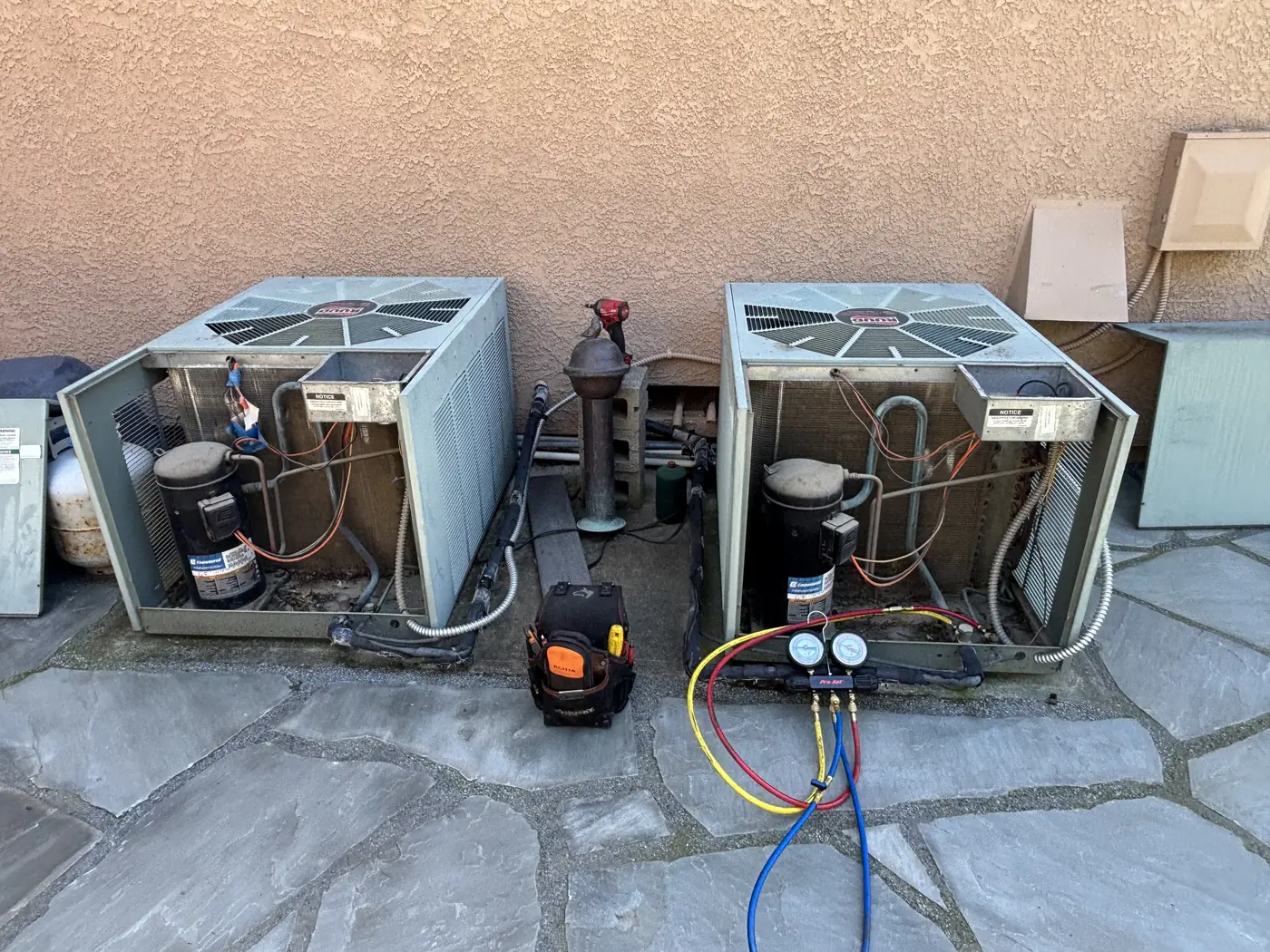
When the indoor blower runs but the outdoor compressor won't start, the most common cause in Sacramento is a failed run capacitor, a $250 to $400 repair, followed by a bad contactor, low refrigerant tripping the low-pressure cutoff, an overheated compressor and, least often, burned windings or a compressor at the end of its life. A 10-second hum and a click with no fan spin points to the capacitor; total silence with the breaker on points to the contactor.
You hear the air handler running inside, but the outdoor unit is silent. Or worse, it hums for 10 seconds and then clicks off without the fan ever spinning. When an AC compressor won't turn on in Sacramento, the cause is almost always one of eight compressor-side problems, and a tech can sort them in 20 minutes with a multimeter and a service gauge. According to ASHRAE service-life data, the compressor is the limiting component on a central AC system and drives the typical 15-year median lifespan (ASHRAE equipment life-expectancy data, 2023), so when it stops, you've usually hit either a recoverable electrical failure or the end of the system's useful life.
- Quick Triage: Symptoms That Point to the Compressor
- 8 Reasons Your AC Compressor Won't Turn On
- How to Tell If It's the Compressor (Not Something Else)
- The 5-Step Compressor Reset
- DIY vs. Pro: What's Actually Safe to Check
- 2026 Sacramento Repair Costs
- Repair or Replace the Compressor?
- When to Call an HVAC Technician
- Frequently Asked Questions
This guide is the narrower companion to our broader why your AC won't turn on at all walkthrough. If your thermostat is dark, your breaker is tripped, or the indoor air handler is silent, start there. If the indoor side is fine and only the outdoor compressor is the problem, you're in the right place.
Key Takeaways
- The single biggest cause of "compressor won't spin" calls in Sacramento is a failed run capacitor, a $15 part that fails from heat fatigue and triple-digit summer attic-line temperatures.
- The EPA banned R-22 production and import on January 1, 2020 (EPA ODS Phaseout, 2020), which means a refrigerant leak on a pre-2010 system can cost more to recharge than to replace.
- Hard-start kits ($300-$500 installed) can buy 1-3 more seasons out of a marginal compressor, but they cannot save one with burned windings.
- Median residential compressor service life is about 15 years (ASHRAE, 2023); past year 12 the math usually favors replacing the system rather than rebuilding the compressor.
- If your breaker trips a second time after reset, stop. That's an electrical fault that needs a licensed technician, not a third reset.
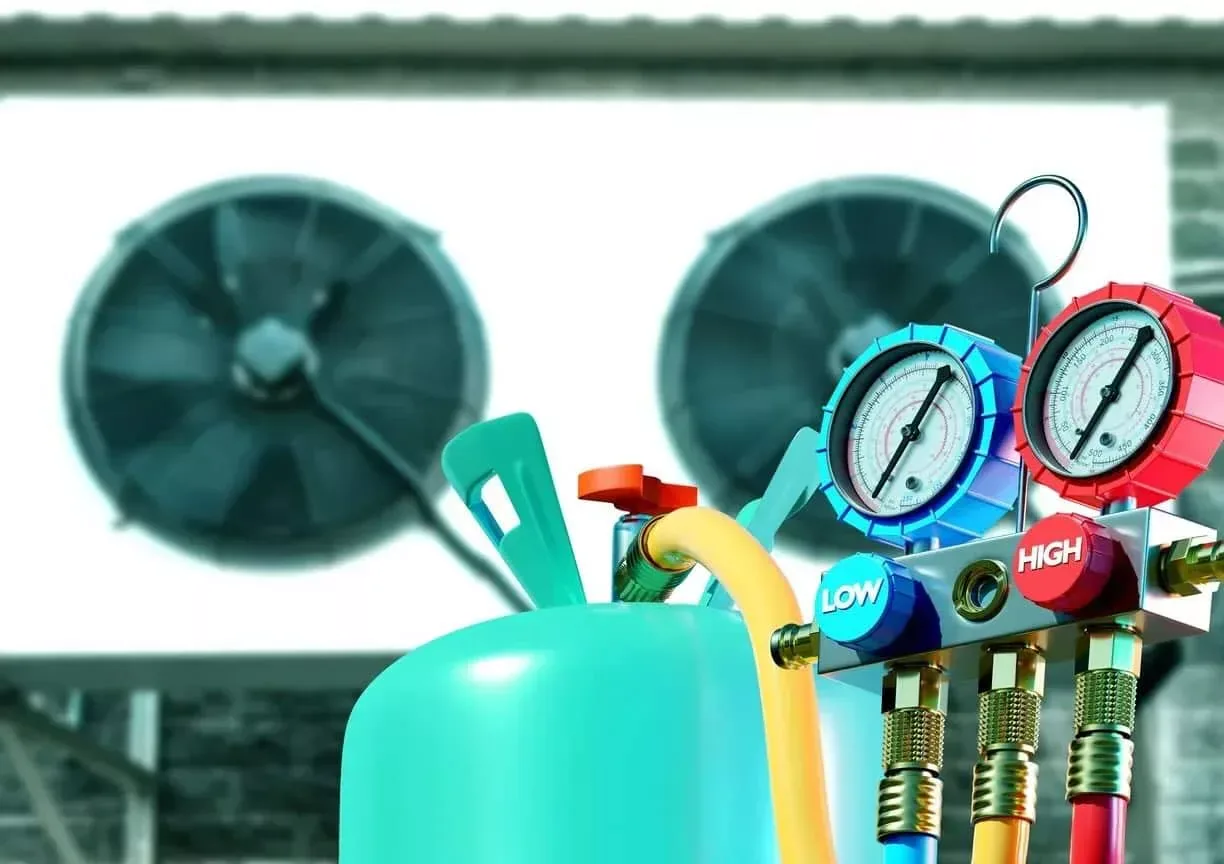
Quick Triage: Symptoms That Point to the Compressor
Before opening any panel, match what you're hearing and seeing to the table below. In Alpha Mechanical's Fair Oaks and Sacramento service records, the symptom-to-cause map is tight enough that you can usually narrow the problem to two candidates before a tech ever arrives.
| What You Notice | Most Likely Compressor-Side Cause | First Check |
|---|---|---|
| Outdoor unit hums for ~10 seconds, then clicks off, fan never spins | Failed run capacitor or locked rotor | Capacitor inspection (visible bulge on top) |
| Outdoor unit fully silent, breaker is on, disconnect is in | Bad contactor (the 24V relay won't pull in) | Listen for the contactor click when the thermostat calls for cool |
| Compressor starts, runs 3-5 minutes, then shuts off and won't restart | Internal thermal overload tripped (compressor overheated) | Wait 2-4 hours for it to cool, then retry |
| Compressor runs but the house never cools; suction line is warm | Low refrigerant; low-pressure cutoff trips | Look for ice on the suction line or oil staining at line-set joints |
| Breaker trips the moment the compressor tries to start | Hard short in compressor windings | Stop. This needs a licensed tech with a megohmmeter |
| Outdoor unit silent, but you can smell something burnt-electrical | Burned windings or melted contactor | Power off at the disconnect immediately, call a technician |
| Compressor starts and runs fine, but house only cools to 78°F | Dirty condenser coil; high-head-pressure lockout possible | Clean coil first; recheck before assuming compressor failure |
If your symptom isn't on this list, it may not be a compressor-side problem at all. Check the broader AC not turning on guide before opening the outdoor cabinet.
8 Reasons Your AC Compressor Won't Turn On
These eight causes cover roughly 95% of the compressor-won't-start calls Alpha Mechanical runs in the Sacramento and Fair Oaks area between May and September. They're ordered from cheapest and most common to most expensive and least common.
1. Failed Run Capacitor (The Most Common Cause)
The run capacitor is a small electrical component, usually a silver or black cylinder mounted inside the outdoor unit, and it's the part that gives the compressor and condenser fan the burst of energy they need to start. When the capacitor fails, the compressor will try to start but won't have the torque to overcome internal pressure. The result is a 10-second hum, a click, and silence. Run capacitors typically last 10 to 20 years under normal conditions (Schmitt Heating: HVAC Capacitor Failure, 2024), but Sacramento's 100°F-plus summers shorten that to 7-10 years on average.
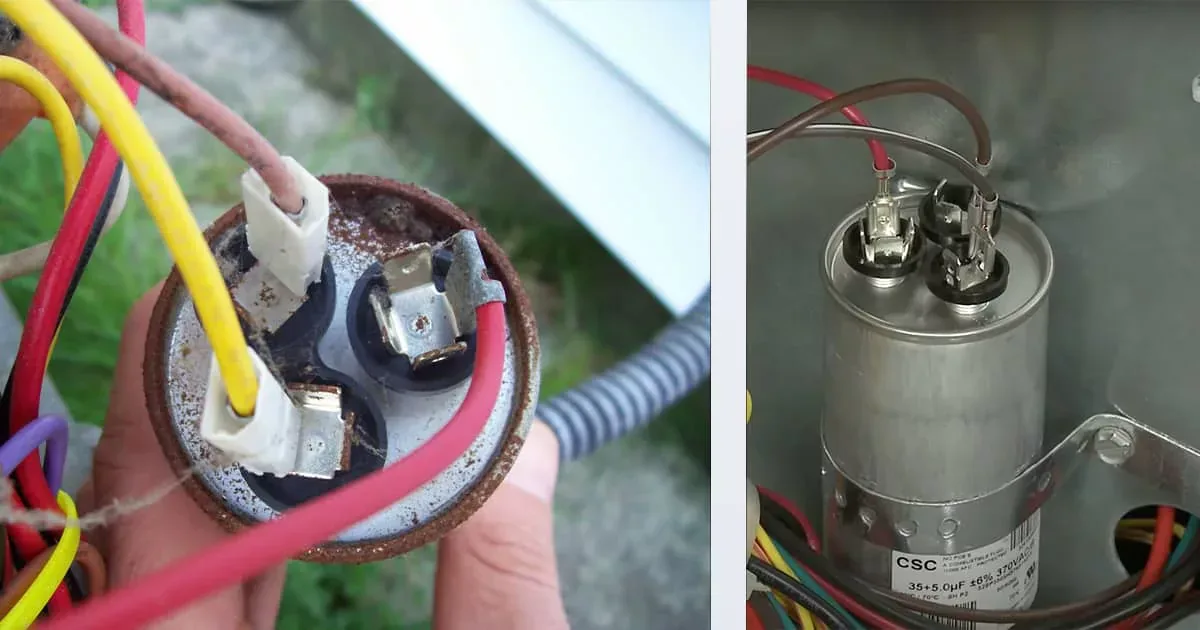
A failed run capacitor is the single most common reason a working AC compressor won't spin up. The visible symptom is a bulged or domed top on the capacitor housing, and the audible symptom is a brief hum followed by silence with no fan rotation. Replacement runs about $250-$400 installed in Sacramento, with the $89 diagnostic fee applied toward the repair when you proceed, and the part itself costs $15-$40.
Almost every "compressor humming but not starting" call we run between June and August in Sacramento ends with a capacitor swap. If your system is 5+ years old and you've had a heat-wave week, the capacitor is the first place we look. The visual tell is unmistakable. A healthy capacitor has a flat top; a failed one looks like a tiny dented soda can. If you can see the top of the capacitor through the service-panel vents and it's bulged, you've found your problem before we've even opened the panel.
For a full diagnostic walkthrough, see our deeper guide on bad AC capacitor symptoms and impact.
2. Bad Contactor (the 24V Relay Won't Close)
The contactor is the heavy-duty relay that sits between your thermostat's 24-volt signal and the compressor's 240-volt power supply. When you set the thermostat to "cool," a low-voltage signal energizes the contactor coil, which pulls the contacts together and sends 240V to the compressor. If the contactor's coil is burned out, or the silver contact points are pitted and welded, the compressor never sees power. The outdoor unit stays completely silent, even though the thermostat is calling for cooling and the disconnect is on.
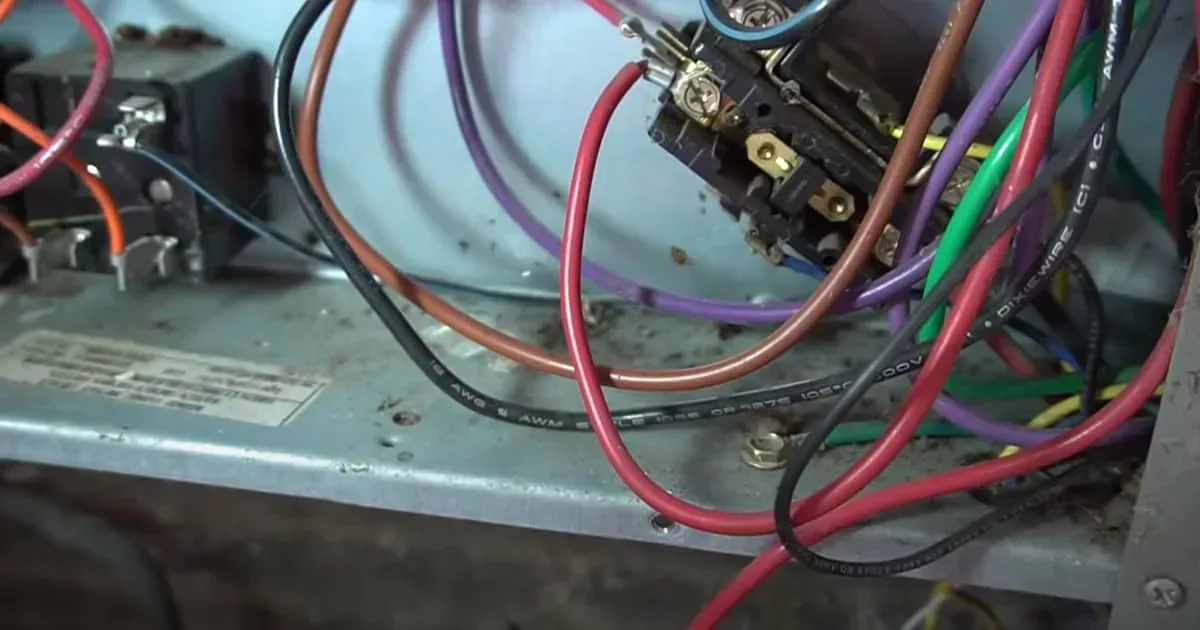
A failed contactor leaves the outdoor unit fully silent with no hum at all, distinguishing it from a capacitor failure (which produces a hum). The fix is a $20-$40 contactor swap and runs about $200-$450 installed in Sacramento, with the $89 diagnostic fee applied toward the repair when you proceed. Diagnostic test: with the thermostat calling for cool, listen at the outdoor unit; a healthy contactor produces an audible "clack" as the contacts close. Silence means the contactor isn't pulling in.
Sacramento's ant population is the other contactor-killer worth knowing about. Argentine ants nest inside outdoor disconnect boxes and condenser cabinets, and when they get under the contactor's plunger, the contacts won't close cleanly. We see this every spring after the first warm week.
3. Low Refrigerant or a Refrigerant Leak (Compressor Tripped Low-Pressure Cutoff)
Most modern compressors have a low-pressure switch that cuts power if the suction-side refrigerant pressure drops below the operating threshold, which protects the compressor from running dry and burning out. If your system has lost refrigerant through a slow line-set leak, evaporator pinhole, or a Schrader valve, the low-pressure switch trips and the compressor never starts. The thermostat is calling for cool, the contactor pulls in, but the compressor sits idle.
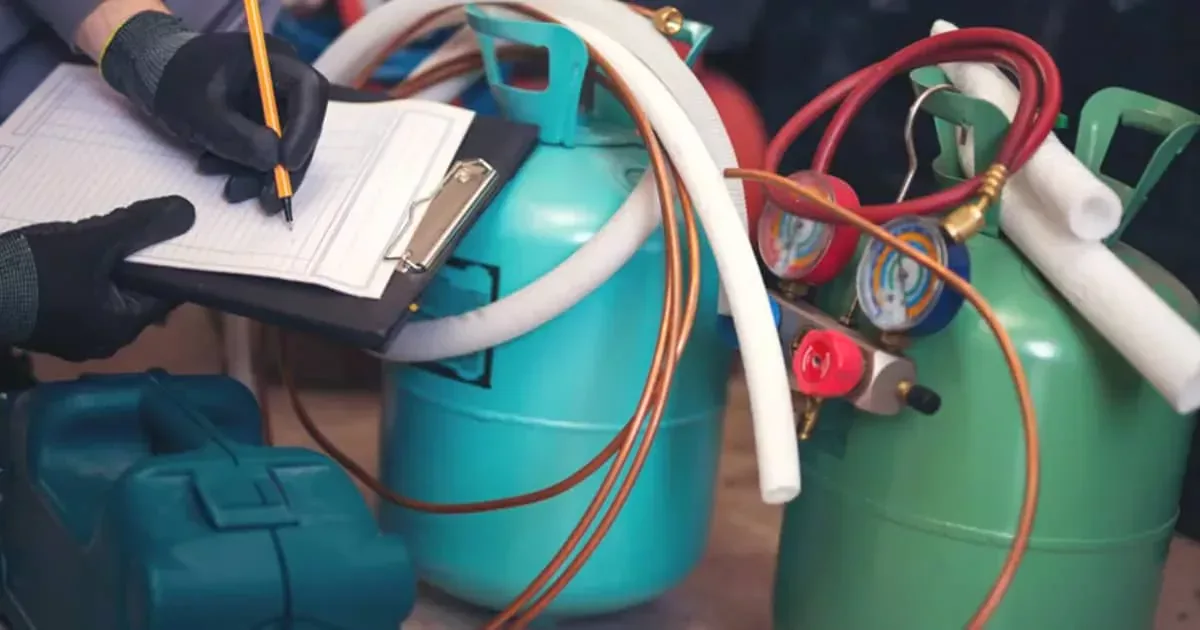
Low refrigerant doesn't damage a compressor directly; the low-pressure switch protects it by preventing startup. The visible tells are ice on the larger insulated copper line ("suction line") at the outdoor unit, or oil staining at fittings (refrigerant carries compressor oil, so a leak leaves an oily residue). A leak repair plus recharge runs $400-$900 on an R-410A system. On an older R-22 system, the recharge alone can cost $700-$1,500 because R-22 is now reclaim-only.
The EPA banned R-22 production and import on January 1, 2020 (EPA ODS Phaseout, 2020), so existing R-22 systems now run on reclaimed and previously-produced refrigerant only. The catch: that stockpile is shrinking, so reclaimed R-22 keeps getting more expensive and harder to source. If your system was installed before 2010 and it's losing refrigerant, the recharge math is what tips most homeowners toward replacement.
Only an EPA Section 608-certified technician can legally handle refrigerant, so this is not a DIY repair under any condition.
4. Locked Rotor (Hard-Start Scenario)
A locked-rotor condition happens when the compressor's internal pressure is too high at startup for the motor to overcome the mechanical resistance. The motor draws "locked-rotor amps" (often 5-7 times the running current), which trips the breaker or the internal overload almost immediately. Locked rotor isn't always a dead compressor. Sometimes the system needs a hard-start kit (a start capacitor plus a potential relay) that gives the compressor an extra torque boost for the first half-second of startup.
A hard-start kit costs $300-$500 installed and can extend the usable life of a marginal compressor by 1-3 cooling seasons (Fire & Ice: Hard Start Kits, 2024). It's worth installing when the compressor draws high amps at startup, dims the lights in your house when it kicks on, or short-cycles after a few minutes of runtime. It is not worth installing on a compressor with measured winding shorts or open thermal overload; the kit can't fix electrical failure inside the compressor.
The hard-start kit is one of the few HVAC repairs where the price-to-result ratio is favorable. A $400 hard-start install that buys you two more summers on a 12-year-old system is almost always a better choice than a $2,400 compressor swap on a system that may not last another five years anyway.
5. Internal Thermal Overload Tripped (Compressor Overheated)
Every modern compressor has an internal thermal overload, a temperature-sensitive switch embedded in the windings that opens the motor circuit if the compressor body overheats. The most common triggers are a dirty condenser coil (which can't shed heat), a failed condenser fan motor (so airflow stops), or low refrigerant (so the compressor doesn't get the cooling effect of suction-gas return). The compressor will run for a few minutes, get hot, trip the overload, and then refuse to restart until it cools down. Cooldown typically takes 2-4 hours.
If your compressor started fine yesterday but won't restart today after running for 5-10 minutes and quitting, the internal overload has tripped. The fix isn't on the overload itself (it's non-replaceable; it's inside the hermetic compressor shell). The fix is on whatever caused the overheat: clean the condenser coil, replace the failed fan motor, or address the refrigerant problem.
If you can't find an upstream cause and the overload keeps tripping, the compressor's internal motor is degrading and the next failure is usually permanent.
6. Dirty Condenser Coil (High-Head-Pressure Lockout)
The condenser coil at the outdoor unit is what dumps the heat your AC pulls from your house. When it's caked with cottonwood seed, lawn clippings, dryer lint, or just plain dust, the coil can't transfer heat efficiently. Refrigerant pressure on the discharge side climbs, the high-pressure switch eventually trips, and the compressor shuts down to protect itself. On a fresh start, the compressor will run for a few minutes before the pressure climbs back up and the switch trips again.
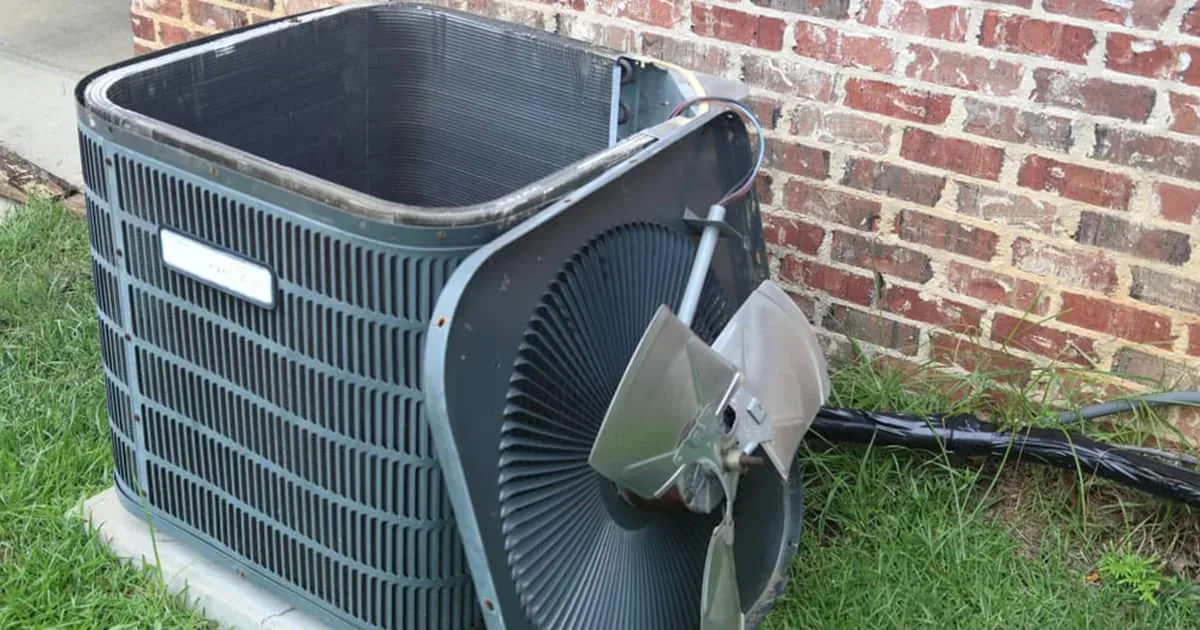
A dirty condenser coil drives high head pressure, which can trigger the high-pressure switch and shut the compressor down. The fix is a coil clean (homeowner-doable with a garden hose and gentle pressure, working from inside the coil outward). Don't use a pressure washer; the fins are aluminum and bend at the slightest excessive force, which only makes the airflow problem worse.
In Fair Oaks and Carmichael, the worst coil-fouling we see is from cottonwood and sycamore tree seeds in late spring. By the second heat wave in June, those condensers look like they've been wrapped in felt. If you live near mature deciduous trees, a 10-minute coil rinse in late May saves a service call in July.
7. Burned Windings or Compressor Internal Short
When a compressor's internal motor windings fail, you've reached the most expensive failure mode. Burned windings produce a hard short to the compressor body, which trips the breaker the instant the contactor pulls in. There may be a faint burned-electrical smell at the outdoor unit, and a megohmmeter test (a tech's tool, not a homeowner one) will show resistance to ground below 1 megohm, often near zero.
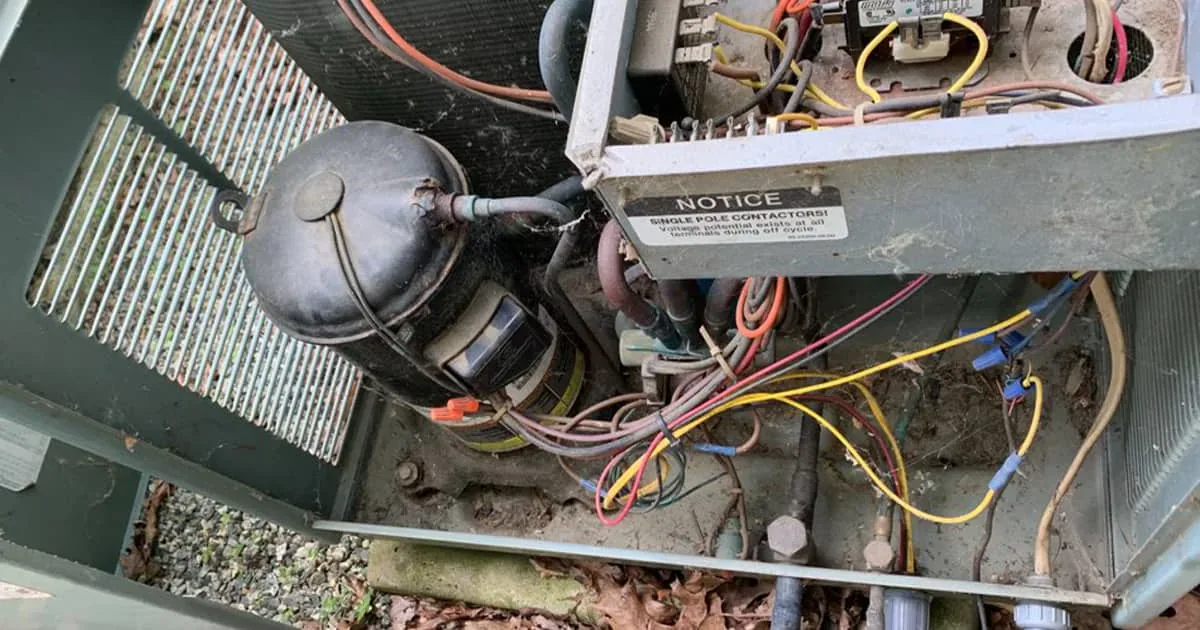
Burned windings cannot be repaired; the compressor must be replaced. On a sealed hermetic compressor, the windings, motor, and pump are all inside one welded shell, so the entire unit gets swapped. A compressor replacement runs $1,200-$2,400 on a standard 2-3 ton residential system in 2026 (Angi: AC Compressor Cost, 2026), with California labor on the higher end of that range. If the failure was an "acid burnout" (sustained overheating that scorched the refrigerant and oil), the entire line set may need to be flushed before installing the replacement.
This is the failure mode where most homeowners reach the repair-or-replace decision. On a system over 10 years old, the math rarely favors a new compressor in an aging shell.
8. End of Service Life
Compressors don't typically die overnight. They get progressively weaker, draw more amps at startup, and short-cycle more often as bearings wear and refrigerant-oil contamination builds up inside the hermetic shell. Median residential central AC compressor service life is around 15 years (ASHRAE Equipment Life Expectancy, 2023), and ENERGY STAR advises homeowners to consider replacing a central AC once it passes 10 years (ENERGY STAR: When to Replace, 2026). Sacramento's long cooling season pushes most systems toward the shorter end of those ranges.
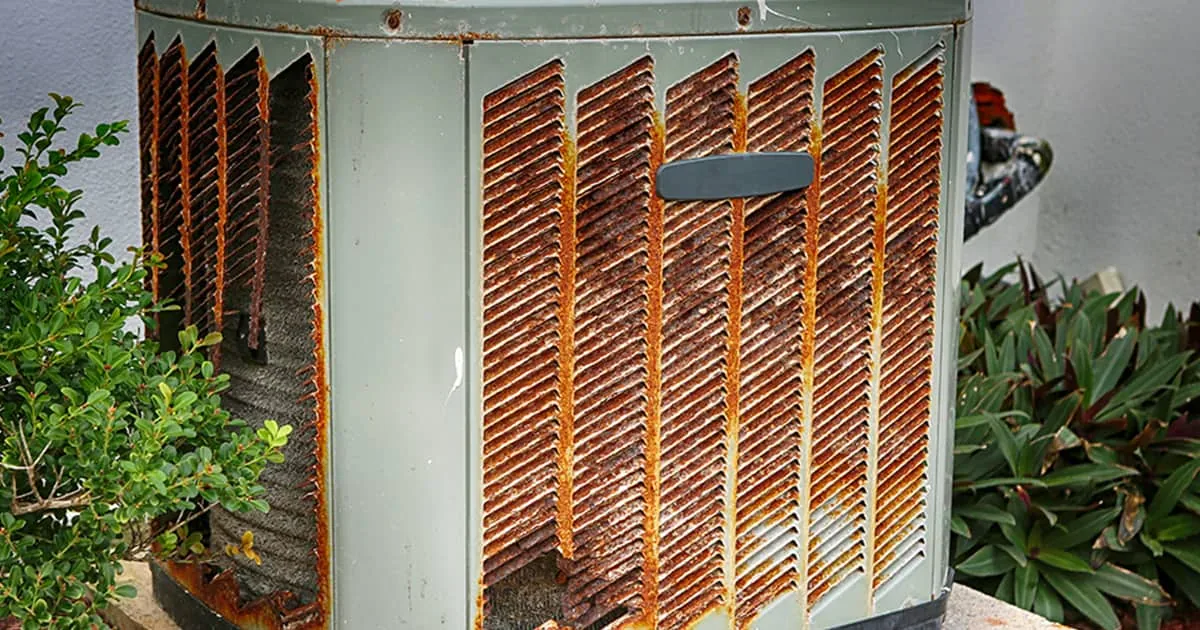
Past year 12, the financial case for a new compressor in an older AC shell starts to look weak. A new compressor doesn't fix worn fan motors, deteriorated insulation, refrigerant-oil contamination, or an aging coil. Replacing the full system with a modern variable-speed unit typically delivers 30-50% cooling-energy savings and qualifies for utility rebates that a compressor-only swap doesn't.
The Sacramento Municipal Utility District (SMUD) offers up to $3,000 toward a qualifying heat pump replacement in 2026 (SMUD Heating and Cooling Rebates, 2026), and that rebate alone often closes the gap between repair and replacement on a late-life system.
How to Tell If It's the Compressor (Not Something Else)
The fastest way to confirm a compressor-side problem before calling a tech is to walk through four checks in order. They isolate the compressor from the thermostat, breaker, disconnect, and indoor air handler.
- Listen at the outdoor unit when the thermostat calls for cool. A healthy startup sequence: a "clack" as the contactor closes, then the fan spinning, then the compressor humming smoothly and the line vibrating. Compressor problems show as: hum without spin, fan-only with no compressor sound, or total silence after the contactor click.
- Check the air handler indoors. Is the blower running? Cold-ish air coming out of the registers (even barely)? If the indoor side is silent or warm, the problem may not be the compressor at all. Step back and check the broader no-start causes.
- Look at the outdoor disconnect. It's a small gray or steel box mounted within sight of the condenser, required by NEC Article 440.14. Confirm the pull-out plug is fully seated or the lever is in the "on" position. If it's pulled or off, push it in and try again.
- Check the breaker panel. A tripped 240V double-pole AC breaker means the compressor (or its wiring) pulled more current than the circuit allows. Reset it once. If it trips again immediately, see the breaker keeps tripping guide and call a technician.
If all four check out and the compressor still won't run, you're looking at one of the eight causes above and the fix probably needs a tech.
The 5-Step Compressor Reset
Before paying for a service call, run through this reset. It clears about one in four "compressor won't start" complaints by power-cycling the system and letting any tripped safety switches re-arm.
- Set the thermostat to "Off." This stops the call for cooling and lets pressures equalize inside the system. Wait 60 seconds.
- Cut power at the outdoor disconnect. Open the small disconnect box mounted next to the condenser and either flip the lever to "off" or pull the plug straight out and set it aside.
- Trip the AC breaker at the main panel and leave it off for 5 minutes. This drains any residual capacitance in the system and lets the internal compressor thermal overload reset.
- Restore power in reverse order: breaker on, then disconnect on. Wait two minutes before doing anything else. Some smart systems run a self-check before they'll start.
- Set the thermostat to "Cool" with the setpoint 3°F below room temperature. Listen at the outdoor unit. You should hear the contactor click within 30 seconds, the fan spin within another 5 seconds, and the compressor settle into a steady hum within 10 seconds of that.
If the system runs through that sequence and cools normally, the trip was a one-time event. If it fails at any step, you've isolated where the problem lives. Compressor humming but not spinning means capacitor or hard-start. Total silence after the contactor click means the contactor itself or the compressor. Breaker re-tripping means a hard short. Stop and call a technician.
DIY vs. Pro: What's Actually Safe to Check
The line between homeowner-doable and licensed-pro-only on a compressor problem isn't arbitrary. It's drawn by code (refrigerant) and by what's physically dangerous (240V at 30-50 amps).
| Task | DIY-Safe? | Why |
|---|---|---|
| Run the 5-step reset above | Yes | All steps work from outside the electrical enclosure |
| Visually inspect the capacitor through the service vents | Yes | No tools, no contact with energized parts |
| Rinse the condenser coil with a garden hose | Yes | Power off at disconnect first; no chemicals needed |
| Replace the air filter at the indoor air handler | Yes | Indoor-side maintenance only |
| Replace the run capacitor | No | Capacitors store lethal charge even with power off; specialty tool required |
| Replace the contactor | No | 240V wiring inside the cabinet, hot side may stay energized |
| Diagnose refrigerant level | No | EPA Section 608 certification legally required |
| Recover, recharge, or top off refrigerant | No | EPA Section 608 certification legally required |
| Megohmmeter test of compressor windings | No | Tool cost and interpretation skill make this a tech-only task |
| Swap the compressor | No | Requires evacuation, brazing, and pressure-test cycle |
We've seen homeowners get hurt replacing capacitors without discharging them first. A run capacitor at 35µF holds enough stored energy to throw a person off a ladder. If the part costs $15 but a service call costs $150, you're not actually saving money once you factor in the risk and the warranty implications.
2026 Sacramento Repair Costs
Costs below reflect what Alpha Mechanical sees on residential service calls across Sacramento, Fair Oaks, Carmichael, Citrus Heights, and Roseville for a standard 2-3 ton split system. Final pricing varies with equipment access, refrigerant type, and brand.
| Repair | Typical 2026 Sacramento Cost | Time |
|---|---|---|
| Run capacitor replacement | $250-$400 | 30-45 minutes |
| Hard-start kit installation | $300-$500 | 45-60 minutes |
| Contactor replacement | $200-$450 | 30-45 minutes |
| Condenser fan motor replacement | $400-$700 | 1-1.5 hours |
| Condenser coil professional clean | $200-$400 | 1 hour |
| Refrigerant leak repair + R-410A recharge | $400-$900 | 2-4 hours |
| R-22 leak repair + recharge (legacy systems) | $700-$1,500 | 2-4 hours |
| Full compressor replacement (R-410A) | $1,500-$2,900 | 4-6 hours |
| Full compressor replacement (R-22 legacy) | $2,400-$4,000 | 4-6 hours |
| Full AC system replacement | $9,500-$25,000 | 1 day |
| Full ducted heat pump replacement | $9,500-$20,000 (before any SMUD rebate) | 1-2 days |
National data from Angi puts the average residential compressor replacement at $800-$2,300 (Angi: AC Compressor Cost, 2026), but California labor rates run higher than the U.S. average, so Sacramento sits in the upper portion of that range.
Repair or Replace the Compressor?
A compressor-only swap on an aging system sometimes makes sense, but the math gets ugly fast. Use the decision matrix below to figure out where you stand.
| System Age | Refrigerant | Recommendation |
|---|---|---|
| 0-7 years | R-410A | Repair (capacitor, contactor, hard-start, refrigerant leak fix) |
| 8-11 years | R-410A | Repair if labor + parts < 30% of replacement cost; replace otherwise |
| 12-15 years | R-410A | Replace the full system; new compressor in old shell rarely worth it |
| Any age | R-22 | Replace the full system; R-22 service costs alone usually exceed savings |
| 16+ years | Any | Replace; remaining components are at the end of their service life too |
The harder calls are the 8-11 year R-410A systems. A $2,000 compressor in a 10-year-old shell may run another 5-7 years, but it doesn't qualify for utility rebates, doesn't improve efficiency, and doesn't carry the same warranty as a new system. The SMUD rebate (SMUD Heating and Cooling Rebates, 2026) plus a typical 25-30% efficiency improvement on a modern variable-speed system often makes the replacement cheaper in five-year total cost of ownership.
When to Call an HVAC Technician
Some compressor problems are homeowner-safe to investigate. Most aren't. Call a technician immediately if:
- The breaker trips a second time after one reset attempt.
- You smell anything burnt-electrical at the outdoor unit.
- The compressor hums for more than 30 seconds without the fan spinning. (Extended locked-rotor draw damages the windings.)
- You see oil residue on the line set or fittings (refrigerant leak indicator).
- The compressor short-cycles (starts and stops in under 5 minutes) on a repeating basis.
- The system is over 12 years old and the symptoms point to anything beyond a capacitor.
For routine seasonal maintenance that prevents most of these failures, see our AC tune-up service. For warranty-and-rebate-eligible replacement on a late-life system, our AC installation in Sacramento page covers options. Same-day diagnostic service is available across our Fair Oaks service area.
Frequently Asked Questions
The questions below cover what we get asked most often on compressor-won't-start service calls.
How long does an AC compressor last?
Median residential AC compressor service life is around 15 years according to ASHRAE equipment life expectancy data (2023), with a typical range of 10-20 years depending on climate, maintenance, and refrigerant type. Sacramento's long cooling season (often May through October) pushes most systems toward the lower end of that range. Compressors fail earlier when run with low refrigerant, on dirty condenser coils, or with a chronic capacitor problem that wasn't caught.
Is my compressor or my capacitor the problem?
A failed capacitor produces a 10-second hum followed by silence; the compressor tries to start but doesn't have the torque to overcome internal pressure. A failed compressor (burned windings) usually trips the breaker the instant the contactor closes, or it runs but with abnormal noise and high amp draw. If you see a bulged top on the capacitor housing through the service-panel vents, that's a $15 part that's about 90% likely to be your problem.
Will a hard-start kit fix my compressor?
A hard-start kit can rescue a compressor that's marginal at startup (drawing high amps, tripping the breaker only at startup, or dimming the house lights when it kicks on) but it cannot fix burned windings, an open thermal overload, or a refrigerant problem. At $300-$500 installed (Fire & Ice: Hard Start Kits, 2024), it's worth trying on a 7-10 year old compressor showing startup weakness. On a 12+ year old system, the kit may buy 1-2 more seasons but usually delays an inevitable replacement.
Can I reset my AC compressor myself?
Yes. The 5-step reset (thermostat off, disconnect off, breaker off for 5 minutes, then restore in reverse order) is safe for any homeowner because every step happens outside the electrical enclosure. It resolves about one in four "compressor won't start" calls by letting the internal thermal overload re-arm and clearing any tripped low-voltage safety. If the reset doesn't bring the compressor back, the cause needs a technician.
How much does it cost to replace an AC compressor in Sacramento?
A compressor swap on a standard 2-3 ton R-410A system runs $1,500-$2,900 installed in Sacramento in 2026, including refrigerant recovery, evacuation, brazing the new compressor in, and recharging. R-22 systems run higher ($2,400-$4,000) because reclaimed R-22 refrigerant is expensive and getting scarcer. Full system replacement runs $9,500-$25,000, and a ducted heat pump $9,500-$20,000 before any SMUD rebate.
Why does my breaker trip every time the AC compressor starts?
A breaker that trips at startup almost always means one of three things: a hard short in the compressor windings (the most expensive failure), a locked rotor that needs a hard-start kit, or a failing capacitor that's letting the compressor draw locked-rotor amps. If the breaker trips on the first start attempt of the day and never after a reset, lean toward locked rotor or capacitor. If it trips every time, lean toward winding short. Either way, don't keep resetting; you risk a fire or compressor destruction. See the full breaker tripping guide for the diagnostic walkthrough.
Is it safe to add refrigerant to my AC myself?
No. EPA Section 608 prohibits any non-certified person from handling refrigerant, and the certification covers recovery, recharge, and leak repair. Beyond the legal restriction, residential refrigerant is stored at high pressure and can cause frostbite or pressure injuries during a release. The over-the-counter "AC recharge" cans sold for cars are not designed for residential systems and will void most manufacturer warranties if used.
My outdoor unit is humming but the fan isn't spinning. What's wrong?
That hum-without-spin pattern is the classic signature of a failed run capacitor. The compressor motor is energized but doesn't have the kick from the capacitor to start rotating. About 80% of the time, replacing the dual run capacitor (which serves both compressor and fan) fixes the problem completely. The other 20% is a locked rotor (needs hard-start kit) or burned windings (needs compressor replacement). Diagnostic time is 5-10 minutes once a tech is on-site with a multimeter.