

A high summer SMUD bill is almost always your air conditioner running through SMUD's weekday 5 to 8 p.m. peak, when power costs $0.3765/kWh, about 2.4 times the off-peak rate, plus losses you can fix: a dirty filter, fouled condenser coils, leaky attic ducts, an aging system or a low refrigerant charge. Pre-cooling the house before 5 p.m. and a professional AC tune-up are the fastest ways to bring it down.
Your SMUD bill was $130 in April. It's $380 in July. Your thermostat settings haven't changed. What happened?
- Why Is My SMUD Bill So High From 5 to 8 p.m.?
- How Much of My Summer Bill Is From Air Conditioning?
- Can a Dirty Air Filter Raise My Electric Bill?
- Dirty Condenser Coils Are Silently Raising Your Bill
- Leaky Ductwork Is Cooling Your Attic, Not Your Home
- What Temperature Should I Set My Thermostat in Summer?
- Your Aging AC Is Losing Efficiency Every Year
- Low Refrigerant Makes Every Cooling Cycle Less Effective
- Quick-Reference: What Each Fix Is Worth
- Frequently Asked Questions
Sacramento's summer electricity bills are driven almost entirely by one thing: your air conditioner. In hot-climate homes like those in the Sacramento Valley, air conditioning can be the single biggest line on the power bill. Nationally it runs about 19% of home electricity use (EIA), and that share climbs sharply during the 95–110°F stretches that hit Fair Oaks and the greater Sacramento metro every July and August. Layer on SMUD's summer time-of-use rate structure and consecutive seasons of record heat, and the spike becomes easy to explain, and easier to fix than most homeowners expect.
Key Takeaways
- SMUD's summer peak rate hits $0.3765/kWh from 5–8 p.m. on weekdays: about 2.4× the off-peak rate (SMUD R-TOD Schedule, 2026).
- Air conditioning runs about 19% of home electricity nationally: and a bigger share in hot climates like the Sacramento Valley (EIA).
- Maintenance issues stack up fast: a dirty filter adds 5–15%, fouled coils cost more on top of that, and leaky attic ducts waste 20–30% of conditioned air (DOE; ENERGY STAR).
- Pre-cooling before 5 p.m. and a professional AC tune-up are the fastest ways to cut a Fair Oaks or Sacramento summer bill. See what a Sacramento tune-up costs.
Here are the eight reasons your SMUD bill is high in summer, with sourced statistics and what to do about each.
Why Is My SMUD Bill So High From 5 to 8 p.m.?
Most Sacramento-area homeowners are on SMUD's Time-of-Day rate plan. Starting June 1, SMUD charges three different rates depending on when you use electricity, and the spread is significant:
| SMUD Rate Period | Hours | Weekday Rate |
|---|---|---|
| Off-peak | Midnight–noon | $0.1550/kWh |
| Mid-peak | Noon–5 p.m. & 8 p.m.–midnight | $0.2139/kWh |
| Peak | 5 p.m.–8 p.m. (weekdays only) | $0.3765/kWh |
Weekend and holiday electricity holds at the off-peak rate all day (SMUD R-TOD Rate Schedule, 2026).
That three-hour weekday peak window costs about 2.4 times more per kWh than the same usage at midnight. A 3-ton central air conditioner draws about 3 kilowatts, so one peak hour costs $1.13 versus $0.47 off-peak. Run it through the full 5–8 p.m. window every weekday from June through September and you add roughly $140–$160 to your summer bill compared to identical off-peak usage.
Fix it: Pre-cool before 5 p.m. Lower the thermostat to 73–74°F by 4:30 p.m., then let your home coast up to 78°F during the peak window. Resume normal cooling after 8 p.m. Your home's thermal mass does the work at peak hour, for free.
How Much of My Summer Bill Is From Air Conditioning?
Nationally, air conditioning runs about 19% of home electricity use (EIA), and a larger share of energy spending in hot regions like the Sacramento Valley (EIA Today in Energy). Heating and cooling combined make up roughly 52% of the energy used in a typical U.S. home (EIA), making HVAC the single largest line item on any utility bill.
Air conditioners cost Americans $29 billion per year to run (DOE). In Sacramento, SMUD's cumulative ~15% rate increase over the past three years has amplified every kWh your system consumes (Yahoo News / Sacramento Bee).
Small inefficiencies compound here: a 10% drop in your AC's efficiency doesn't just add 10% to your bill. It adds 10% to the biggest item on your bill.
Can a Dirty Air Filter Raise My Electric Bill?
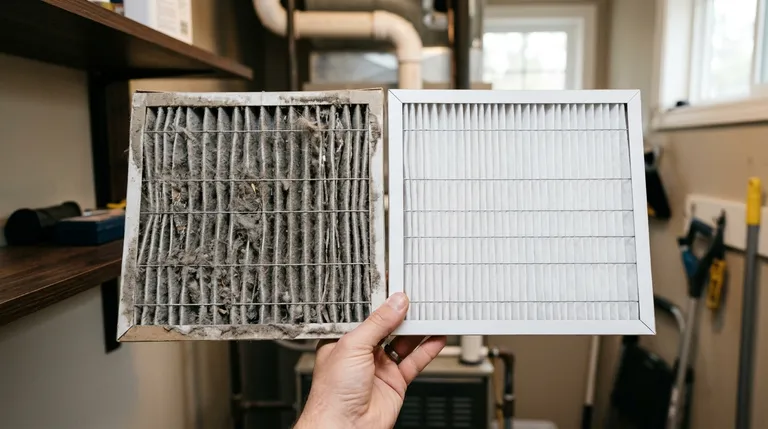
This is the most overlooked fix. According to the U.S. Department of Energy, replacing a dirty, clogged air filter can lower AC energy consumption by 5–15% (DOE). Peer-reviewed research in ASHRAE Transactions confirms the same effect, as a filter loads up, fan and cooling energy climb measurably (ASHRAE SA-12-C010).
Despite this, 29% of Americans never replace their air filter (The Zebra). A clogged filter restricts airflow, forcing the blower motor to work harder and extending every cooling cycle. In Sacramento summers, where wildfire smoke, pollen, and valley dust load up filters quickly. Standard 1-inch filters should be replaced every 30–60 days.
Not sure where to find yours? See our guide on where your HVAC filter is located.
Dirty Condenser Coils Are Silently Raising Your Bill
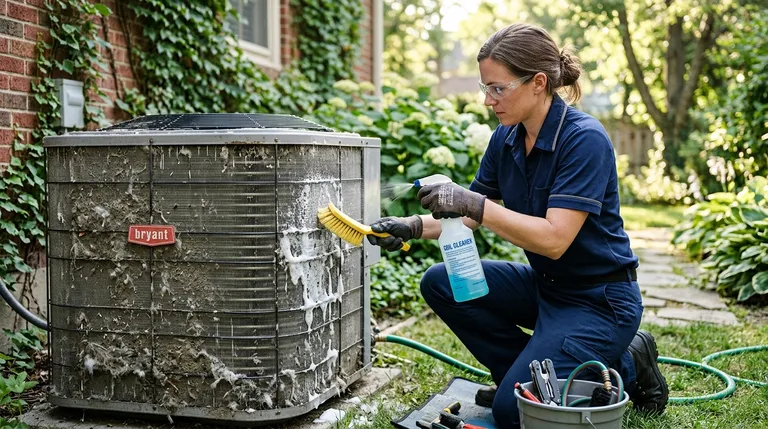
Your outdoor condenser unit rejects heat from your home into the outside air. When those coils get coated with Sacramento's summer dust, cottonwood fluff, or debris, heat transfer efficiency drops, and your system compensates by running longer cycles.
ENERGY STAR notes that dirty coils reduce the system's ability to cool, forcing it to run longer and burn more energy (ENERGY STAR). Field studies of fouled residential condensers have measured capacity losses near 11% and efficiency losses around 25% in heavily soiled units (ASHRAE RP-1705).
For a Sacramento home spending $200/month on summer cooling, dirty coils could be adding $30–$50 to every bill: every month. Professional coil cleaning is included in a standard AC tune-up and restores that efficiency immediately.
Leaky Ductwork Is Cooling Your Attic, Not Your Home
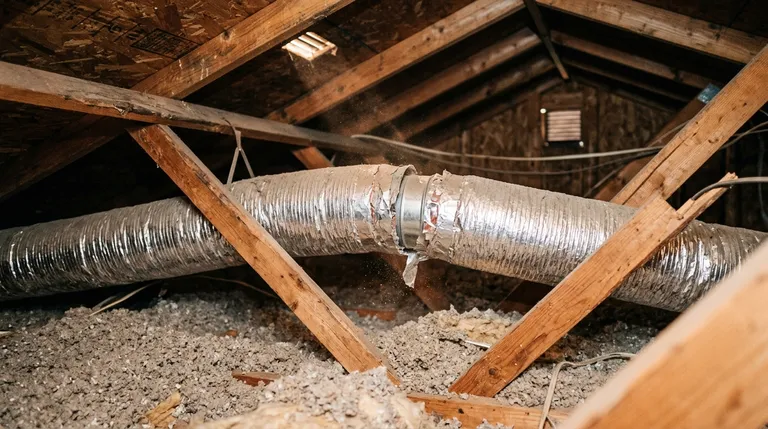
Sacramento homes built before 2000 commonly run ductwork through the attic. In July, that attic reaches 140°F or more. If your ducts leak, you're paying to condition air that dumps into a 140-degree space before it ever reaches your living room.
ENERGY STAR estimates the typical home loses 20–30% of the air moving through its duct system to leaks, holes, and poorly connected ducts (ENERGY STAR Duct Sealing). On a 3-ton system, losing 25% of conditioned air means three-quarters of a ton of cooling capacity, gone into the attic.
Signs of leaky ducts: rooms that never cool evenly despite the thermostat running, excessive dust near supply vents, and an AC that runs almost continuously without reaching setpoint.
ENERGY STAR estimates that 20–30% of the air moving through a typical duct system is lost to leaks (ENERGY STAR). Alpha seals ducts by hand with mastic, and our duct work runs $376 for a small repair up to $9,810 for a full duct replacement. Our leaky ducts guide for Sacramento walks through the signs, sealing methods, and payback math in detail. Call us at 916-848-5980, we check for duct leakage as part of every AC inspection.
What Temperature Should I Set My Thermostat in Summer?
ENERGY STAR recommends 78°F when you're home as a summer baseline. Every degree lower means longer compressor runtime and a higher bill, so the gap between 72°F and 78°F adds up fast over a Sacramento cooling season.
Setting your thermostat back 7–10°F for 8 hours a day (when you're at work or away) can save up to 10% per year on heating and cooling (DOE Thermostats).
For Sacramento homeowners on SMUD: combine a daytime setback with the pre-cooling strategy. Bank cool air before 5 p.m. at cheaper off-peak rates, let the home drift upward during the peak window, then resume at 8 p.m. A smart thermostat (Ecobee, Nest) automates this and typically pays for itself within one Sacramento summer.
Your Aging AC Is Losing Efficiency Every Year
Air conditioners don't just age, they degrade. Research from the University of Central Florida / Florida Solar Energy Center found that 87% of AC units show measurable efficiency loss over time, with an average annual performance drop of roughly 5% (UCF/FSEC AC Degradation Study).
A system rated SEER 13 in 2010 may now be performing at SEER 9 or 10, a 25–30% efficiency loss. It's doing the same cooling work but using significantly more electricity. Replacing an aging, degraded unit can cut cooling costs meaningfully, ENERGY STAR estimates savings of up to 20% on heating and cooling with a certified replacement (ENERGY STAR), and ENERGY STAR-certified central ACs run about 11% more efficient than conventional models (ENERGY STAR).
SMUD currently offers rebates of up to $3,000 for qualifying heat pump replacements installed by an approved contractor.
If the bill climbed because the system is struggling rather than simply working harder, that is a diagnosis, and our AC repair visit starts with one. If your system is 12 years old or more: read our repair vs. replace guide and check available California heat pump rebates. The rebate math can change the decision significantly.
Low Refrigerant Makes Every Cooling Cycle Less Effective
When refrigerant charge drops, always because of a leak. Your AC must run longer to cool the same space. Research cited by the DOE and Purdue University's refrigeration lab found improper refrigerant charge reduces system efficiency by 10–20% (DOE Building America). One study cited by RMI found 78% of residential AC systems were undercharged straight from installation (RMI).
Important: your AC never "uses up" refrigerant. If a technician is topping it off year after year, the leak hasn't been fixed. It's been deferred. See our guide on 5 signs of low AC refrigerant.
Quick-Reference: What Each Fix Is Worth
| Issue | Energy Penalty | Typical Fix Cost |
|---|---|---|
| SMUD peak-hour AC use (5–8 p.m.) | 2.4× rate vs. off-peak | $0, pre-cool before 5 p.m. |
| Dirty air filter | 5–15% more energy | $5–$20 DIY |
| Dirty condenser coils | ~10–25% efficiency loss | Included in annual tune-up |
| Leaky ductwork | 20–30% energy loss | $376 small repair to $9,810 full duct replacement (Alpha) |
| Thermostat set 6°F too cold (72°F vs. 78°F) | Noticeably more runtime | $0–$200 for smart thermostat |
| Aging AC (10+ years, degraded SEER) | 25–40% efficiency loss | $9,500 to $25,000 to replace the system |
| Low refrigerant charge | 10–20% efficiency drop | $200–$600 to find and fix leak |
Frequently Asked Questions
Why is my SMUD bill so high in summer? SMUD's summer Time-of-Day peak rate reaches $0.3765/kWh on weekday evenings from 5–8 p.m. about 2.4× the off-peak rate. If your air conditioner runs during that window, costs climb fast. Combined with Sacramento's 95–110°F heat and SMUD's roughly 15% cumulative rate increase over three years, summer bills for homes with central AC often run $300–$500 a month.
What time does SMUD's peak rate start in summer? SMUD's summer peak rate ($0.3765/kWh) runs from 5 p.m. to 8 p.m. on weekdays, June 1 through September 30. Weekends and holidays hold at the off-peak rate all day. Pre-cooling your Fair Oaks or Sacramento home before 5 p.m. and raising the setpoint during that window is the most effective way to dodge the peak surcharge.
Can a dirty AC filter really raise my electric bill? Yes, significantly. The U.S. Department of Energy says a dirty air filter can increase AC energy consumption by 5–15%. ASHRAE Transactions research confirms a clogged filter measurably raises HVAC energy use as it loads up. During Sacramento summers, replace standard 1-inch filters every 30–60 days.
How much of my summer bill is from air conditioning? In hot climates like Sacramento's Central Valley, air conditioning accounts for about 19% of home electricity use nationally (EIA) and an even larger share in hot regions like the Sacramento Valley. During the July–August peak, AC often represents 40–50% of the monthly electricity bill.
What temperature should I set my thermostat in summer to save money? The DOE recommends 78°F when you're home and 7–10°F higher when you're away. Every degree below 78°F means more compressor runtime and a higher bill. For SMUD customers, pre-cool to 73–74°F before 5 p.m., then let the thermostat drift to 78°F during the 5–8 p.m. peak window when rates are highest.
Get a Clear Picture Before Your Next Bill Arrives
The fastest way to find out exactly why your SMUD bill is high is a professional AC inspection. Alpha Mechanical Systems serves Fair Oaks, Citrus Heights, Orangevale, Rancho Cordova, and the greater Sacramento metro.
A standard AC tune-up covers coil cleaning, filter inspection, refrigerant charge verification, electrical components, and an overall efficiency assessment. Most visits are completed same day. If we find a bigger issue like significant duct leakage or a unit that's approaching failure, you'll know before it becomes an emergency call on a 105°F afternoon.
Schedule your AC tune-up online or call 916-848-5980. Catching a weak capacitor or dirty coil in June costs a fraction of what it costs to diagnose at 2 a.m. in July.
About the author: Andrey Yev is a certified HVAC technician and General Manager of Alpha Mechanical Systems, Inc., serving Sacramento-area homeowners since 2011.