
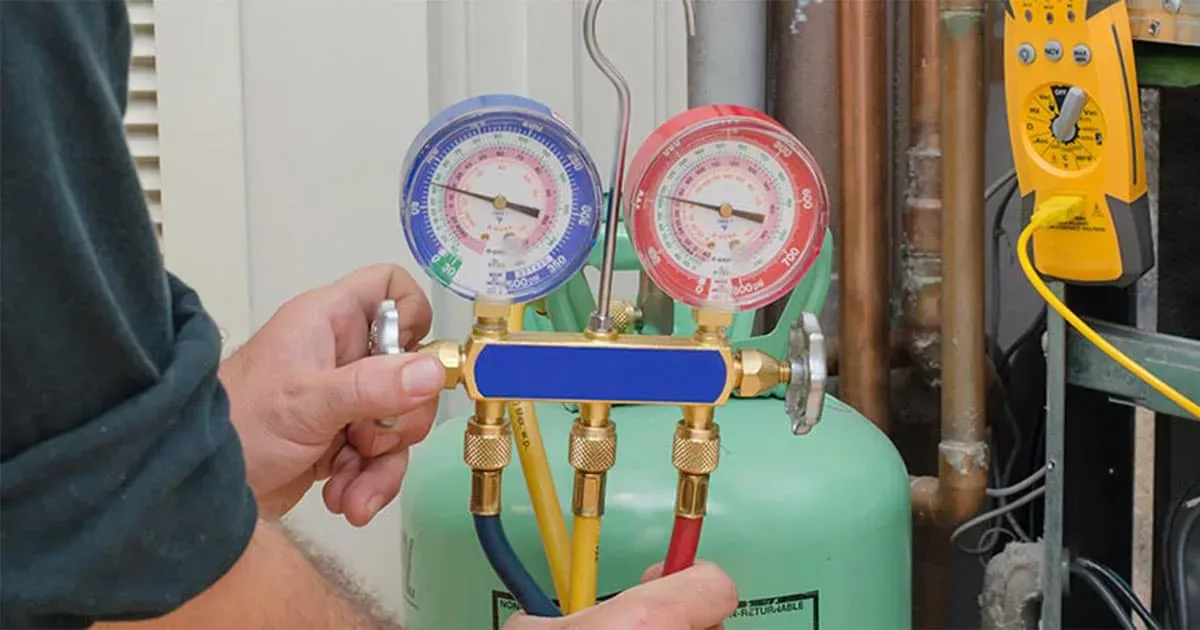
- Does Your AC Still Use R-22 Refrigerant?
- Why Is R-22 Being Phased Out?
- What Happens Now That R-22 Is Banned?
- Isn't R-410A the Replacement? Inside the R-410A Phase-Out
- What Is R-22 Being Replaced With?
- What Does R-22 Refrigerant Cost to Repair or Replace?
- Should You Repair or Replace Your R-22 System?
- Frequently Asked Questions
If your R-22 air conditioner is failing, here's the honest answer: repairing it gets more expensive every year, and replacing it now sends you straight to a modern low-GWP system. R-22 hasn't been produced or imported in the United States since January 1, 2020, so the only supply left is recovered or reclaimed refrigerant, and the price reflects that scarcity (EPA, 2020).
This guide covers how to tell whether your system still runs on R-22, why it was banned, what it actually costs to keep an old unit alive, and a twist most homeowners haven't heard: the "obvious" replacement, R-410A, is itself on the way out as of 2025. If you're weighing the bigger picture, our pages on AC repair in Sacramento and AC installation pair well with what follows.
Key Takeaways
- R-22 production and import have been banned in the U.S. since January 1, 2020. Existing systems can still be serviced with reclaimed refrigerant, but the supply keeps shrinking (EPA, 2020).
- R-410A, the refrigerant that replaced R-22, is now phasing out too. Since January 1, 2025, new residential AC and heat pump systems must use refrigerants under a 700 GWP limit, which R-410A (GWP 2,088) fails (EPA AIM Act, 2024).
- The modern replacements are R-454B and R-32, both with far lower global warming potential (466 and 675) than R-22 or R-410A.
- Despite a stubborn myth, R-22 is not flammable. It's an ASHRAE Class A1 refrigerant; the ozone layer, not fire, is why it was banned (ASHRAE).
- A good rule of thumb: replace rather than repair when the fix costs more than about half a new system, or the unit is past 10 years old.
Does Your AC Still Use R-22 Refrigerant?
If your outdoor unit is more than about 10 to 15 years old, it very likely runs on R-22, the refrigerant many homeowners still call Freon. The surest way to know is to read the data plate on the outdoor condenser, which lists the refrigerant type along with the model and serial numbers. R-22 systems were standard in homes built or re-equipped before roughly 2010, when manufacturers shifted to R-410A ahead of the EPA phase-out (EPA, 2020).
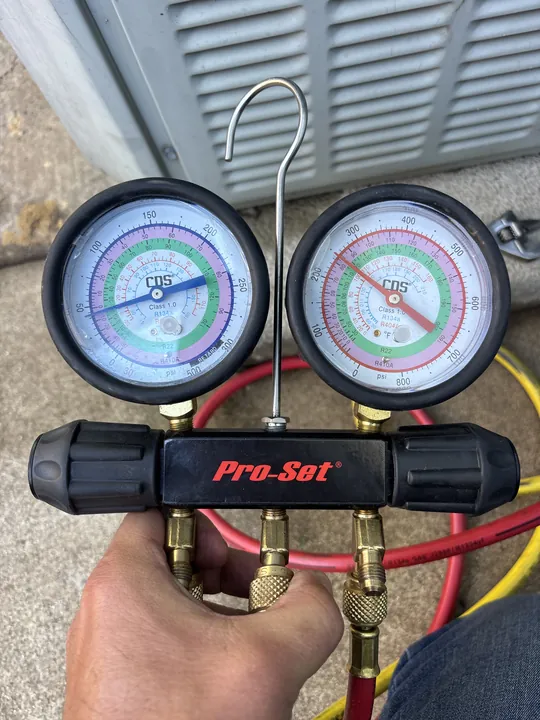
Can't find the plate or can't read it? A licensed technician can confirm the refrigerant in minutes by checking the nameplate and the system's operating pressures while it runs. Knowing what you've got is step one, because it changes every repair-or-replace decision that follows.
[PERSONAL EXPERIENCE]: On Sacramento service calls, the tell is usually age plus a copper-coil condenser that's been sitting in the side yard since the Bush administration. If the plate says HCFC-22 or R-22, every refrigerant top-off from here on is a premium charge.
Why Is R-22 Being Phased Out?
R-22 (chlorodifluoromethane) is a hydrochlorofluorocarbon, an HCFC with an ozone depletion potential of 0.05 and a global warming potential of about 1,810. Those two numbers are why the EPA phased it out under the Clean Air Act to meet U.S. obligations under the Montreal Protocol (EPA, 2020). It was a planned, decade-long wind-down, not a sudden surprise to anyone in the trade.
It Damages the Ozone Layer
The real knock on R-22 is environmental, not safety. As an ozone-depleting HCFC with a high global warming potential, a leak does double damage: it thins the ozone layer and adds to warming. Worth clearing up a common myth here, because it shows up in a lot of online articles and even a few sales pitches.
R-22 is not flammable. It carries an ASHRAE Standard 34 safety classification of A1, the lowest-toxicity, non-flammable category (ASHRAE). If someone tells you your old AC is a fire hazard because of its refrigerant, that's not accurate. A genuine refrigerant leak is more of an indoor air quality and efficiency concern than a fire one. The case against R-22 is about the atmosphere, plain and simple.
It's Expensive and Getting Scarce
With production and imports shut off, R-22 now comes only from reclaimed stock, and the price shows it. Recent 2026 supply pricing runs roughly $90 to $250 per pound for homeowners, and it can spike well past that when local supplies run thin (HomeGuide, 2026). During a Sacramento heat wave, when demand peaks, those delays and prices both climb.
It's Less Efficient Than Modern Refrigerants
R-22 also lags newer refrigerants on energy efficiency, moving heat less effectively than the chlorine-free options that replaced it. Part of that gap is the refrigerant and part is the hardware around it. Older R-22 condensers used copper coils, while modern units use aluminum coils with a better heat-transfer rate, so the efficiency penalty is really the whole aging system, not the gas alone.
Citation capsule: R-22 was phased out because it's an ozone-depleting HCFC with a global warming potential near 1,810, not because of any fire risk. Its ASHRAE 34 classification is A1, meaning lower toxicity and non-flammable (ASHRAE). U.S. production and import ended January 1, 2020 under the Clean Air Act (EPA, 2020).
What Happens Now That R-22 Is Banned?
The 2020 ban stopped new R-22 from entering the market, but it did not outlaw existing systems. The EPA is explicit: homeowners are not required to replace R-22 equipment, and licensed technicians can still service it with recovered or reclaimed refrigerant (EPA, 2020). So you have two real options: keep the system running, or replace it.
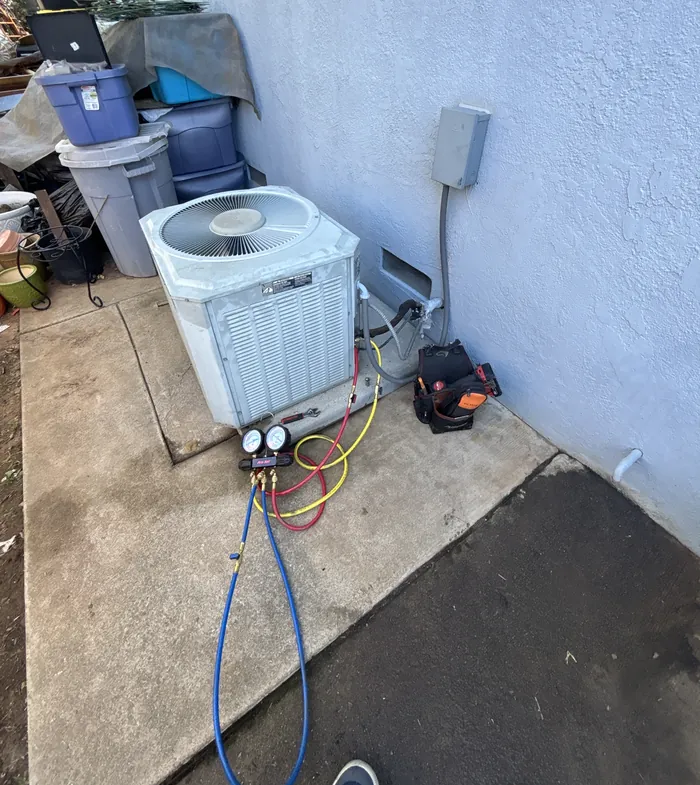
Keep it, and budget for premium refrigerant every time it needs a charge. If the system develops a leak, you'll pay to top it off again and again, and running low on refrigerant is hard on the compressor. An undercharged system makes the compressor overheat and shut down early, so the charge has to stay in a fairly narrow range, not too low and not too high, to run safely.
Replace it, and you make a one-time investment that ends the refrigerant treadmill. A new system runs on a current refrigerant, typically carries a 10-year parts warranty, and runs more efficiently, which trims the monthly bill. The upfront cost is real, but you stop pouring money into a unit that's already near the end of its life. For most homeowners with a 12-plus-year-old R-22 system, that's the better math.
Isn't R-410A the Replacement? Inside the R-410A Phase-Out
Here's the part that catches even seasoned homeowners off guard. For years, R-410A (sold as Puron) was the answer to "what replaces R-22." That advice is now out of date, because the R-410A phase-out is already underway. Under the EPA's AIM Act, new residential AC and heat pump systems installed on or after January 1, 2025 must use a refrigerant under a 700 GWP limit, and R-410A's GWP of 2,088 blows right past it (EPA, 2024).
So the industry has moved again, this time to A2L refrigerants like R-454B and R-32. Equipment built before 2025 can still be installed through a sell-through window that closes January 1, 2026, but most manufacturers switched their new lineups to R-454B or R-32 during 2025 (EPA, 2024). What does that mean for you? If you replace an R-22 system today, you skip the now-obsolete R-410A and go straight to the current standard. There's a certain irony worth noting, too.
[UNIQUE INSIGHT]: The flammability worry homeowners attach to old R-22 actually belongs to the new refrigerants, not the old one. R-22 and R-410A are both A1 non-flammable. R-454B and R-32 are A2L, meaning mildly flammable with a low burning velocity. They're safe with proper installation and tooling, but it's the opposite of how most people assume the timeline runs.
What Is R-22 Being Replaced With?
The replacement isn't one product, it's a generation of lower-GWP refrigerants, each with trade-offs your installer will weigh for your system. The headline difference is environmental impact. Here's how the four refrigerants in this story compare, with global warming potential values from the IPCC Fourth Assessment Report that the EPA's AIM Act uses, alongside each one's ASHRAE safety class:
| Refrigerant | Type | Global warming potential | ASHRAE class | Status for new home systems |
|---|---|---|---|---|
| R-22 | HCFC | ~1,810 | A1 (non-flammable) | Banned from production since 2020 |
| R-410A | HFC | 2,088 | A1 (non-flammable) | Phasing out; install window ends Jan 1, 2026 |
| R-32 | HFC | 675 | A2L (mildly flammable) | Approved, under the 700 GWP cap |
| R-454B | HFB blend | 466 | A2L (mildly flammable) | Approved, primary R-410A successor |
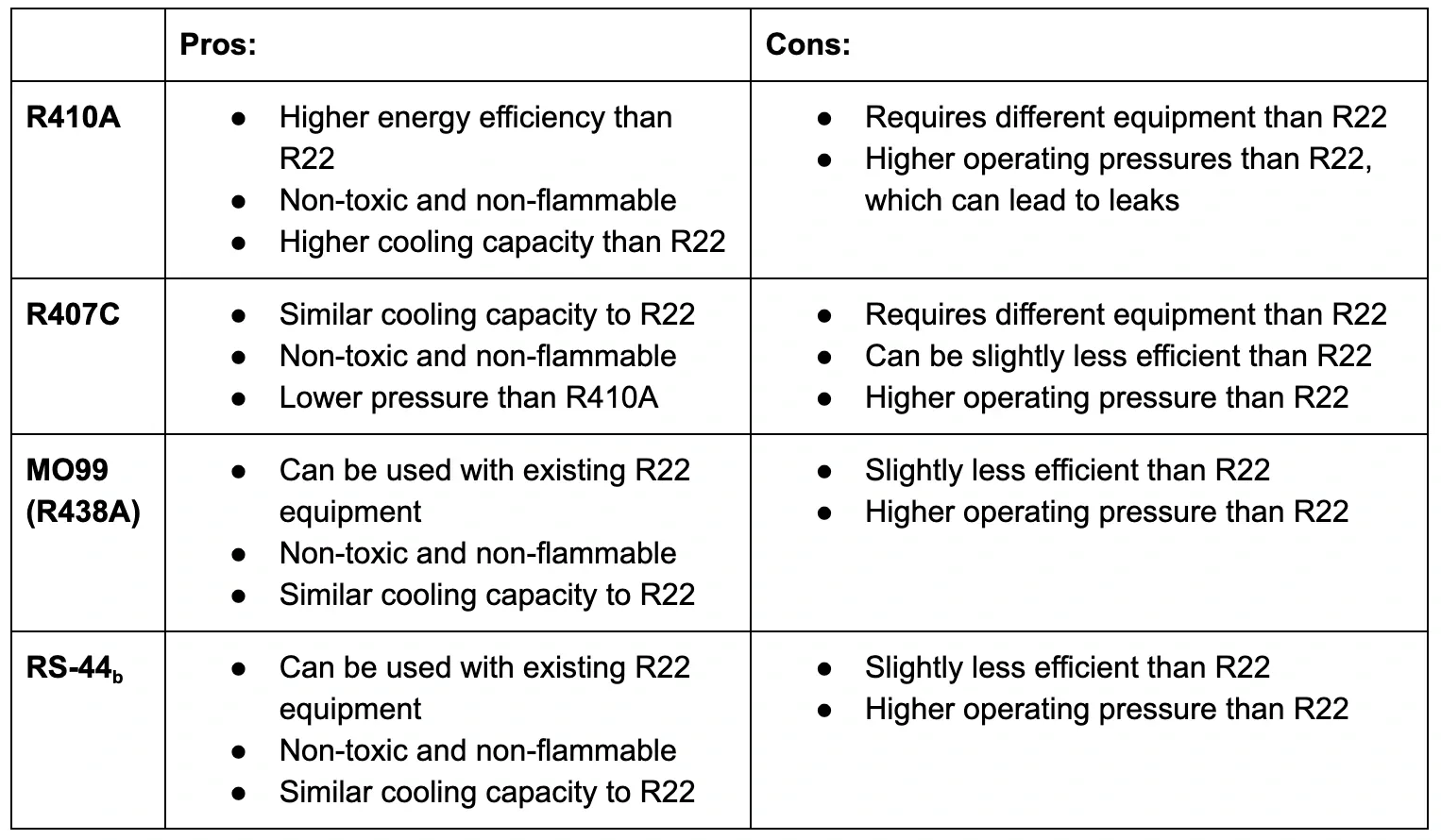
A licensed HVAC pro will match the right modern system to your home and ductwork. The one thing that hasn't changed: you can't just pour a new refrigerant into an old R-22 unit, which is the question I get more than any other.
Citation capsule: R-454B (GWP 466) and R-32 (GWP 675) are the A2L refrigerants replacing both R-22 and R-410A in new residential systems, because each falls under the 700 GWP limit the EPA's AIM Act set for equipment installed on or after January 1, 2025 (EPA, 2024). R-410A's GWP of 2,088 exceeds that cap.
What Does R-22 Refrigerant Cost to Repair or Replace?
Costs swing widely with your system's size, age, and condition, so treat these as ranges, not quotes. Customers ask me all the time whether we can replace just the R-22 outdoor unit and keep the existing indoor coil, or the other way around. The answer is no. New equipment isn't R-22 compatible, so you can't pair a modern condenser with an old R-22 coil, and converting an R-22 system to a new refrigerant doesn't work either, because the compressor oil and components are built for R-22.
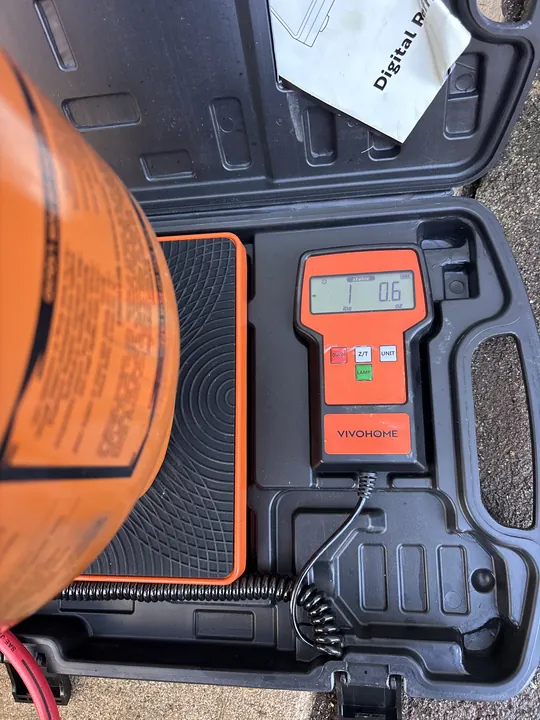
Here's a real example. Say there's a leak in an R-22 system. The technician finds the leak, then welds it, pressure-tests, vacuums the system, and recharges it. A typical residential system holds about 6 to 12 pounds of refrigerant, roughly 2 to 4 pounds per ton (HomeGuide, 2026). With R-22 at today's reclaimed prices, that kind of leak repair plus recharge often lands in the four-figure range, and it climbs as the system ages and more parts need attention.
For bigger failures, the split matters. A compressor-only replacement on an aging system generally runs about $800 to $2,800, averaging around $1,550 (This Old House, 2026), while a full system replacement runs roughly $5,000 to $12,000 by common industry estimates, depending on size and efficiency. When you're spending compressor money on a 12-year-old R-22 unit, you're often putting a premium part into a system that's near the end anyway. That's how an old AC quietly becomes a money pit.
Citation capsule: A residential AC holds about 6 to 12 pounds of refrigerant, or 2 to 4 pounds per ton (HomeGuide, 2026). A compressor-only replacement typically costs $800 to $2,800 (This Old House, 2026), while a full system replacement runs $5,000 to $12,000 by common industry estimates. On an aging R-22 unit, the larger repair rarely pays off.
Should You Repair or Replace Your R-22 System?
Lean toward replacement when the repair would cost more than about half the price of a new system, when the unit is past 10 years old, or when it has a history of repeat repairs (HomeGuide, 2026). Most R-22 systems check at least two of those boxes, which is why the decision usually tilts toward a new system once a major part fails.
Lean toward repair when the system is otherwise healthy, the fix is small, and you simply need another season or two before a planned upgrade. A minor part swap on a 9-year-old unit can be perfectly reasonable. The trap is the steady drip of refrigerant top-offs and small fixes that, added up over a couple of summers, would have covered a chunk of a replacement.
Not sure which way your system leans? A licensed technician can assess the refrigerant charge, the compressor, and the coils, then give you the honest repair-versus-replace number for your exact unit. Alpha Mechanical services all brands across Sacramento and the surrounding service area and can walk you through the options without the pressure. If a replacement is the call, our furnace replacement team can handle the heating side in the same visit. Call 916.848.5980 and we'll get your system sorted, whichever path makes sense.
Frequently Asked Questions
What happens if you put R-410A in an R-22 system?
Don't do it. R-410A operates at much higher pressures than R-22 and uses a different compressor oil, so charging it into an R-22 system can damage the compressor and cause the system to fail. The two refrigerants aren't interchangeable. Replacing an R-22 system means new, matched equipment built for a current refrigerant.
Is R-22 refrigerant flammable?
No. R-22 carries an ASHRAE Standard 34 safety classification of A1, the non-flammable, lower-toxicity category (ASHRAE). It was phased out for environmental reasons, ozone depletion and a high global warming potential, not because of any fire risk. Interestingly, the newer R-454B and R-32 refrigerants are the mildly flammable A2L ones.
Can you still buy R-22 refrigerant in 2026?
You can still have an existing system serviced with R-22, but no new R-22 has been produced or imported in the U.S. since January 1, 2020 (EPA, 2020). The only supply is reclaimed refrigerant, which is why prices run high, roughly $90 to $250 per pound and sometimes more when local stock is scarce.
How much does it cost to replace an R-22 compressor?
A compressor-only replacement on a residential system generally runs about $800 to $2,800 (averaging around $1,550), depending on size, brand, and labor (This Old House, 2026). On an R-22 system that's already 10-plus years old, many homeowners put that money toward a full replacement instead, since a new system runs $5,000 to $12,000 and resets the clock.
Should I replace my R-22 system with R-410A or R-454B?
Go with a current A2L system using R-454B or R-32, not R-410A. Under the EPA's AIM Act, R-410A is phasing out, and new residential systems installed since January 1, 2025 must use a refrigerant under a 700 GWP limit (EPA, 2024). Replacing R-22 today is a chance to land on the current standard, not last decade's.
Do I have to replace my R-22 air conditioner?
No. The EPA does not require homeowners to replace R-22 equipment, and a licensed technician can keep servicing it with reclaimed refrigerant (EPA, 2020). But with R-22 supply shrinking and prices climbing, replacement is usually the smarter long-term call once a system is past 10 years old.